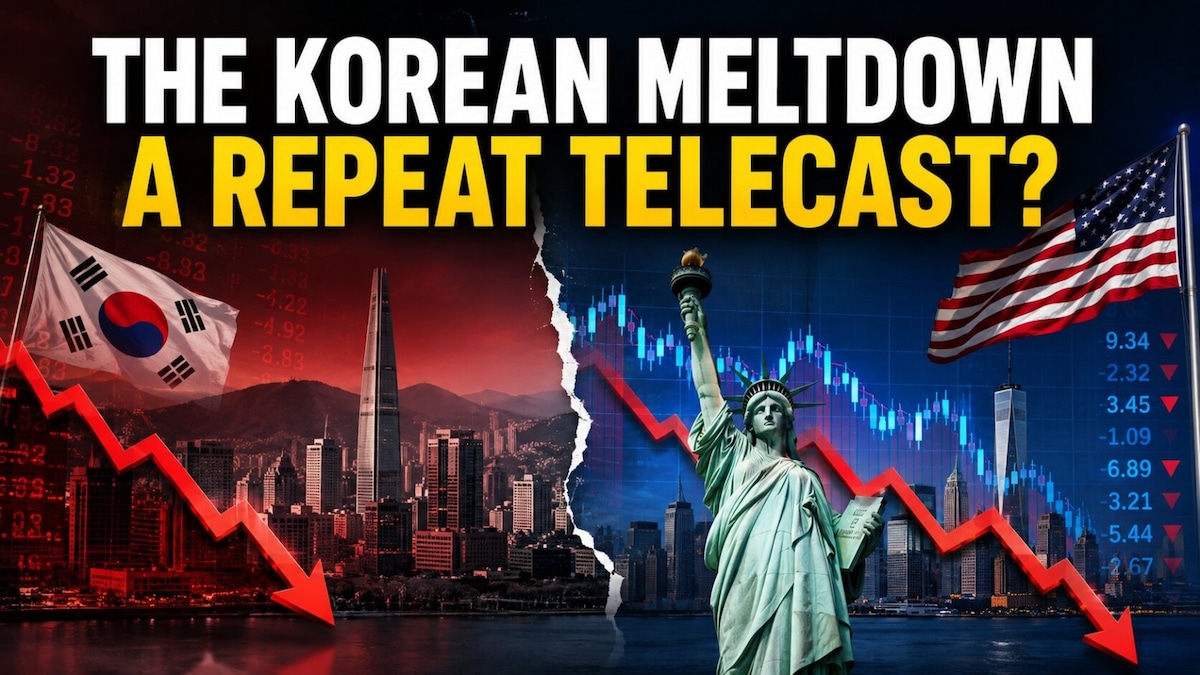
At the end of last week, Korean retail investors continued to remain net sellers, even as the KOSPI has recovered significantly from the lows of July, as per data from the Korean exchanges. On the flip side, foreign investors, who sold over $100 billion in Korean equities during the sell-off, turned net buyers.
Korean investors bought US equities worth $4.5 billion in July, of which, $840 million went in to purchasing the American Depository Receipts (ADRs) of chip giant SK Hynix. The stock became the second-most net-purchased US stock, although these investors can buy the same stock directly at home.
As of Monday’s closing, the US-listed shares of SK Hynix traded at a premium of around 10% to their Korean counterparts. They also have greater volatility due to the liquidity factor. Analysts have termed this behavior as “absolutely crazy!”
According to Korea Securities Depository, four out of the top 10 net purchased US stocks by Korean investors in July, were leveraged products. The ProShares Ultra QQQ ETF was the seventh-most purchased by Korean investors.
The most popular? Unsurprisingly, is a leveraged product – The Direxion Daily Semiconductor Bull 3x Shares ETF, or SOXL, which aims to deliver triple the daily returns of a semiconductor index. The leveraged ProShares UltraPro QQQ and ProShares Ultra QQQ were fourth and sixth most purchased respectively.
Owen Lamont, Senior Vice President at Acadian Asset Management said that such price discrepancies are warning signs of speculative excesses. He alluded to similar instances in Taiwan and India during the dot-com boom.
Some other analysts believe that the shift to the US may be due to higher quality or greater liquidity, while some could not resist at the irony of the fact that these Korean investors are buying the same stocks that were sold off in their domestic market.
The meltdown in Korea has resulted in margin loan balances declining to 27 trillion won earlier this month, the lowest level of 2026, compared to 37 trillion won at the end of June, according to the Korean Financial Investment association.
Analysts though are not worried about the fact that the Korean buying could result in higher volatility on Wall Street, as they said that these flows are relatively smaller compared to the overall turnover.