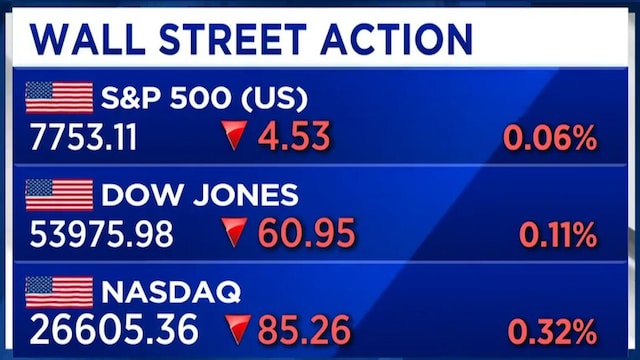
The Dow Jones fell over 430 points from the intraday high to end with losses of 180 points. The S&P 500 and Nasdaq also gave up gains from the morning session to end 0.3% and 0.6% lower respectively.
Why US Markets Fell On Tuesday?
Tech shares continue to add pressure to the indices, Alphabet in particular, which fell another 4% on Tuesday to mark its fourth day of losses in the last five sessions. The stock has been underperforming since Google announced changes to its AI labs division last week.
Nvidia also gave up early gains to end below the flat line, while Apple shares fell after a downgrade from Jefferies.
Crude Oil Prices Remain Elevated
Higher crude oil prices also soured sentiments on Wall Street. Brent crude remains near the mark of $90 a barrel, while the US Crude variant, West Texas Intermediate (WTI) is also above $83 a barrel, having gained over 11% in the last four trading sessions.
Oil prices had given up gains before the start of the session on Wall Street after Bloomberg quoted Pakistan Defence Minister Khwaja Asif saying that the US and Iran are close to “some sort of agreement” over peace and the Strait of Hormuz. However, they soon clawed back all of those losses to trade with gains again.
The US Energy Information Administration (EIA) has warned that the oil supply disruptions could last till the end of 2027 and may rise to 6,00,000 barrels per day.
What Is The Biggest Wall Street Trigger On Wednesday?
The biggest trigger for the market in today’s session would be the announcement of the consumer price inflation (CPI) figures for the month of July. The announcement will take place before market open at 6 PM Indian Time.
According to economists, the July CPI is likely to rise 0.1% on a month-on-month basis, while the core CPI, on an annualized basis is likely to fall to the lowest level since 2021.
Analysts believe that a falling CPI would further ease pressure on the Fed to raise rates in September and the markets would view that positively. However, they remain divided on the inflation trajectory going forward.
Wells Fargo believes that elevated energy product prices and stickiness in areas such as rent and medical care make a less sanguine case for near-term inflation.
On the flip side, Citigroup said that the CPI will show signs of cooling in prices beyond energy and put the focus back on domestic economic drivers.