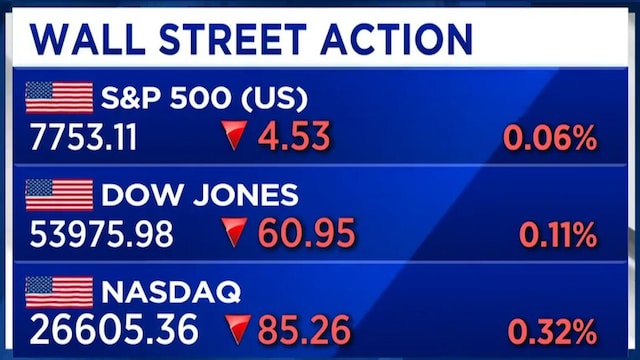
Harris said the surge in liquidity and enthusiasm around AI has shifted investor focus towards Western markets, leaving India relatively overlooked. However, valuations in emerging markets could eventually draw investors back, even as India faces challenges from AI-driven changes in jobs and services.
This is an edited transcript of the interview.
Q: Let me begin with the massive $500 billion AI infrastructure deal that Nvidia has struck with the who’s who of Wall Street managers. We’re talking about Brookfield, KKR, Apollo, Goldman Sachs, and two others, six of them in all. What are the implications of this? Are we going to see crowding out of corporate borrowers as this $500 billion comes into the market? Is this one of the reasons why we also saw pressure on the US 10-year yield? And what are the implications of this massive AI infrastructure deal that’s been struck?
A: I really think what we are seeing is an enormous increase in liquidity all round, where we are getting new players in the market that we never really had before.
Typically, it was banks or investment banks raising money, but now we have corporates that are the size of countries, large countries, that can actually raise substantial sums of money themselves, often cheaper than sovereigns, and they’re really using it to chase this AI bubble that we’re seeing.
So, it’s not really surprising. There’s this fear of missing out. I think that’s going right through the market now. It’s affecting professionals as well. We are just seeing an enormous creation of debt that’s driving this whole liquidity bubble we’re seeing at the moment.
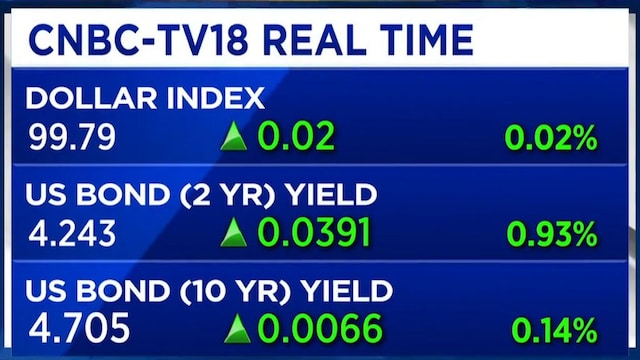
Q: For the Indian markets now, the turf is sort of muddied with rising bond yields, crude back above closer to $90 per barrel. What is the view on India sitting there?
A: I think it’s not as easy as it was. Obviously, India has a lot of what now seem to be old-economy industries. Things like some of the outsourcing call centres, these kinds of things. So, India, I think, is subject to some of these AI attacks.
But what does seem to be interesting is, even though people are trying to save money by using AI and reducing labour, there seems to be no real reduction of labour. People still seem to need people now.
I think the jury’s still out in terms of whether we’re seeing jobs moving from relatively high-paid roles, such as coding, which AI seems to be able to do at least on the simpler side, into jobs that perhaps are not as well paid in education and health. Jobs are coming out of manufacturing in the US and moving into some of these service industries.
So, we are not really seeing a reduction in jobs, but I think we are seeing quite a big shift in the kind of roles that we’re seeing. So, AI is affecting that around the world, and I think India, because it does have a lot of jobs in those sorts of areas, obviously is subject to some of these issues. We have to have the jury still out.
Q: What’s the kind of feedback you are getting with regard to the Indian markets, particularly in the pecking order, because from the emerging market basket we were underperforming by a mile? Now it seems that the FII holding has come to those levels, but they’re dipping back in. Your feedback?
A: You are right. I think what we have seen is that there’s been so much enthusiasm about Western AI markets that really the focus has moved there. So, if you’re a foreign investor, you’re chasing after the silvery things like a magpie at the moment.
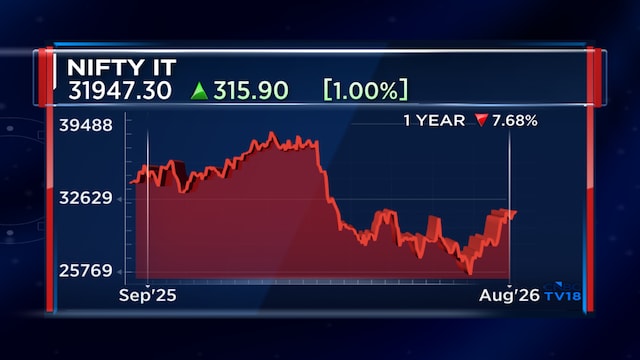
But, of course, from time to time, people will see that there’s undervaluation in some of these other markets and will move in.
It’s quite a fragile time at the moment, I think, in terms of the fact that there is so much liquidity buoying Western markets. It’s keeping them up, and a lot of the reflection, if you like, has come off many of the emerging markets.
There are some concerns about China growth. There’re some concerns about disinflation in China, so we are seeing people come out of that sector.
Watch the full conversation here

And I think what we are seeing too is the same with India: there’s been just less of a spotlight on these markets now. Normally, what you have is a movement in the Western markets, and then that reflects onto the emerging markets as people see that there’s valuation there.
Whether that’s likely to happen at the moment because of the amount of liquidity we are seeing in Western markets, I’m not sure. But if this kind of bubble continues into the second half of the year, then I think FIIs will start to look much more at emerging markets.
Catch all the latest updates from the stock market here