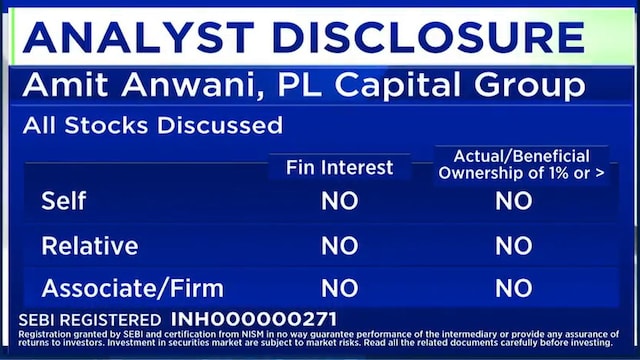
“This is a very clear-cut direction by the government to localise and to have an industry-scale production,” said Amit Anwani, Vice President, Institutional Research at PL Capital Group.
India’s defence exports stand at ₹38,000 crore (₹380 billion) and domestic production at ₹1,80,000 crore (₹1.8 trillion). The government has set a target for higher exports, a goal Prime Minister Narendra Modi referenced in his Independence Day speech, calling for the sector to expand into global markets. Anwani said industry-scale production of missiles, drones and other warfare platforms will support that export push.
Until now, the DRDO developed missile prototypes and conducted research, then transferred technology mainly to select public sector undertakings (PSUs). Anwani explained the earlier process:
“In the past, specific to missiles, we have seen few private companies involved and have developed the manufacturing capabilities, including Solar Industries, Larsen and Toubro (L&T), apart from the PSU companies like Bharat Dynamics (BDL).”
What changes for private players
Anwani said companies involved early in a missile’s development stage typically went on to win production orders, since that stage often ran long. The new transfer policy shortens that path for private manufacturers by opening the tendering process itself. “This broad base develops a very strong vendor base on the manufacturing side once the technology or the developmental stage is clear,” he said, adding this would lead to production and export growth.
He said the overall missile development cycle may not shorten, but companies that already make components such as fire control systems, propellant systems or RF seekers can now bid for larger missile system orders. This creates room for public and private companies to compete in tenders, beyond the limited scope of orders currently reserved for PSUs.
Which companies are set to benefit
From upcoming missile programmes, Anwani pointed to the Quick Reaction Surface-to-Air Missile (QRSAM) system, expected to go to Bharat Electronics (BEL) and BDL once the tender is issued. He also flagged programmes including the Akash Next Generation Missile System, Agni-4 and Pralay.
On the private side, Solar Industries has worked on Pinaka missiles, and L&T has contributed to both Pinaka and Akash systems. Anwani named component makers Astra Microwave and Apollo Micro Systems as companies working on fire control and propulsion systems for missiles, positioning them to benefit if order volumes increase.
Stock picks
Anwani preferred BEL as his top pick in the space. “Bharat Electronics at 35x 2-year forward seems attractive to me,” he said, noting the stock has traded sideways while a QRSAM order remains pending.
He also pointed to the broader defence electronics segment, where Astra Microwave, Apollo Micro Systems and Paras Defence trade between 40x and 50x earnings. Anwani said he does not expect valuations in this segment to come down given the order opportunities expected over the next five to seven years, though these three companies are not part of his coverage.
For the full interview, watch the accompanying video

Catch all the latest updates from the stock market here