
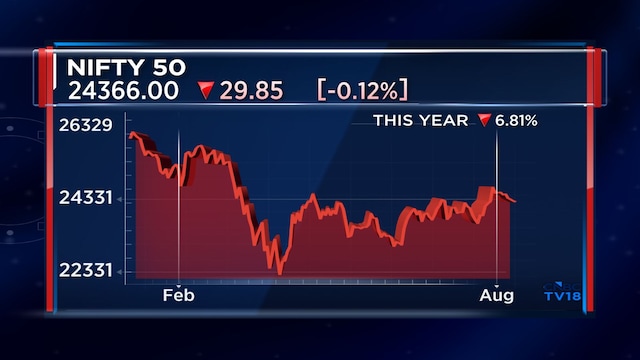
The benchmark Nifty 50 index has risen 3.6% in over two months since June, trimming its year-to-date losses to 6.6%.
The recent gains, playing out in a period when the MSCI EM Index has fallen by a similar amount, mark a shift for a market that lagged global peers since 2024, as foreign investors chased a bonanza in AI-heavy markets such as South Korea and Taiwan. That trend has been moderating though as investors weigh valuation concerns around AI-linked stocks.
Adding to the appeal of Indian assets is a degree of resilience in Indian company earnings to Middle East war risks.
“The earnings momentum in India has improved over the last three quarters and that should continue,” Shah told Reuters in an interview on Thursday.
He expects aggregate earnings growth of 14%-15% for the broader Nifty 500 universe of companies in 2027 and 2028 to form the bedrock of the market’s recovery.
Shah likened the recent underperformance in India to 2022, when the Nifty 50 slid 9% in the first half of the year before recovering to end with gains of more than 4%.
Still, Shah flagged volatility in crude oil prices as a key risk to monitor.
“Structurally, India’s dependence on crude has reduced over the last 10 to 15 years on the back of growing use of renewables, but oil prices still remain a key variable,” he said.
Carnelian Asset Management & Advisors, which oversees $1.6 billion in assets, is bullish on the pharmaceuticals, manufacturing and capital goods sectors.
In contrast, it is avoiding defence, aerospace and electronics manufacturing services companies as valuations in these segments have already largely priced in strong growth over the next three to five years, Shah said.