He sees 10-year US Treasury yields in the 4%-5% range as a sign of a healthy economy, rather than a major source of concern.
Yardeni remains bullish on the S&P 500 and has raised his year-end target to 8,400, citing stronger earnings estimates. He sees technology continuing to benefit from artificial intelligence (AI), while financials, insurers, industrials and healthcare could gain from wider AI adoption.
This is an edited transcript of the interview.
Q: In just 10 days, it will be six months since the fighting in West Asia began. This protracted, low-to-medium-intensity warfare continues with no clear end date or off-ramp. Is this the new economic reality? Do we need to adjust to a semi-permanent state of hostilities in West Asia? What’s your assessment now?
A: The answer is, right now, it definitely seems so. When the war first broke out and I heard that the US had managed to take out the main leaders of Iran, my initial reaction was that it would be a short war. Then, the very next day, I thought about it some more and came to the conclusion that it may not be a short war.
At the end of the day, we’re really going to be dealing with the Islamic Revolutionary Guard Corps (IRGC). And the IRGC is, for all practical purposes, a professional terrorist group that’s taken over a country. And they are not particularly concerned about the pain they are causing their fellow citizens. As we know, they’re willing to kill their fellow citizens if they object to what their policies are.
So, yeah, this could be protracted. This may mean that the US continues to blockade Iranian ports and tries to come up with other means to choke off the economy of Iran. Meanwhile, the IRGC will do whatever they can to keep this Strait of Hormuz closed.
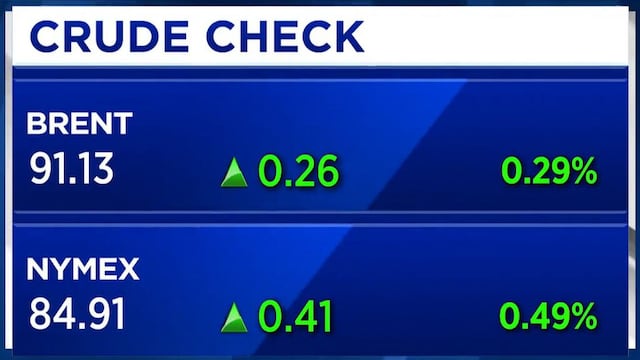
But it is fascinating that the price of oil hasn’t gone up a lot more, which does suggest that, well, oil is liquid and, one way or the other, it’s pouring out of West Asia. It’s just not getting through.
Q: On bond yields, especially on the long end in the US, how do you read it? The 30-year?
A: I am concerned, but not too concerned. I’ve been thinking that the 10-year government bond yield would, in fact, be ranging between 4% and 5% over the rest of this year and into the next couple of years.
The idea is, people keep saying that interest rates are going to stay higher for longer. Actually, interest rates are where they should be. “Higher for longer” implies they should be coming down, but the 10-year bond yield was 4% to 5% when it was normal. It was normal before the Great Financial Crisis. It was also between 4% and 5%, and before the great inflation of the 1970s, it was 4% to 5%.
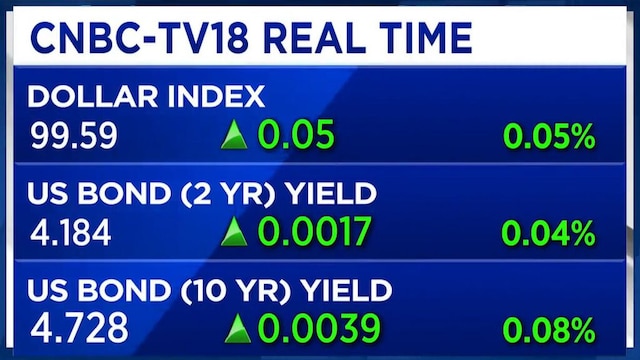
Four to 5% is a sign that the economy is healthy, that the capital markets are working as they should be working. So, I’m not particularly concerned at this point, but that doesn’t mean that others aren’t.
There’s a lot of nervousness about the fact that the 30-year bond yield is the highest it’s been since 2007. But again, that’s when bond yields were normal.
Q: The only thing is, if interest rates are where they should be, are stock prices where they should be, in relation to where bond yields are at?
A: I’m writing a piece on the possibility that the old relationship between stocks and bonds may be coming back.
I call it the Fed stock valuation model, and it does suggest that the bond market may very well be back as an important variable in determining the forward PE, the valuation multiple of the market.
And if we got to 5%, 1 divided by 5, the reciprocal would be basically the valuation multiple of the bond market, and that would be 20, which is where the valuation multiple of the stock market is right now.
So, the stock market right now is actually fairly valued relative to the bond market at around 7,800.
Q: Given all the cues that we have, if you had to be allocating fresh money to the US markets, between US markets and gold, I recall you were quite bullish on the S&P 500 as well, and a lot of the levels that you’ve given us have got taken out. If you’re putting fresh money, given the correction that we’ve seen in gold, as well as the kind of momentum we’ve seen in the US stock markets, what would the allocation be?
A: I am still bullish on the S&P 500 for the end of the year. I’ve actually raised it to 8,400 because of earnings. I’ve been told that I’m the most bullish on the Street, and my response is, actually, I’m not. It’s the analysts that are the most bullish on the Street. They keep raising their earnings numbers, and so I’m kind of following them.
Within the S&P 500, or the stock market broadly, I’ve got artificial intelligence (AI) fatigue. I think everybody’s a little tired of it. It’s hard to kind of figure out who’s going to win and who’s going to lose.
I think technology, broadly speaking, will win, and the Nasdaq 100 makes a lot of sense as a way to play that.
Other than that, I’d like to play the areas of the market, companies that will benefit from using AI, and that’s financials, life insurance companies, property insurance companies are already using it to reduce their costs, industrials will continue to build the AI infrastructure, and the hospital, the healthcare system, I think clearly could use a lot of productivity booms related to using AI.
Watch the full conversation here

And with regards to gold, I thought before the war started that gold would get to $5,500 per ounce by year-end. Then the war hit, and much to my surprise, the price of gold actually went down on that because some central banks had to sell gold in order to prop up their currencies.
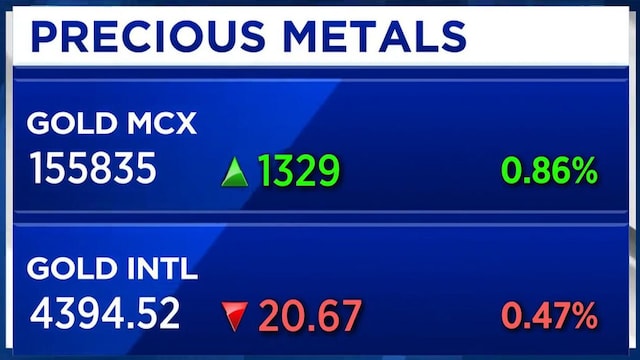
That kind of got a lot of weak hands out of the gold market. I think it made an important support level at $4,000 per ounce, and I’m now looking for $5,000 per ounce by year-end, and I’m still using $10,000 per ounce by the end of the decade.
Catch all the latest updates from the stock market here