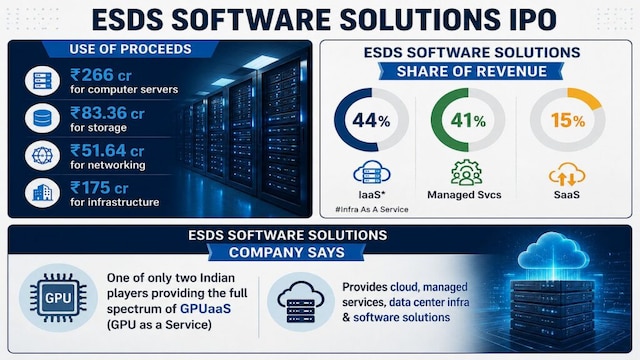
The company is one of the Indian players offering GPU-as-a-Service, which allows businesses to access expensive computing power without having to build and own the entire infrastructure themselves. Somani said the opportunity is large enough to support growth for decades. “India’s journey has just started into AI factories right now,” he said, adding that he sees AI infrastructure as a business that could continue for the next 50 to 100 years.
The economics of the business are also attractive. Somani said building a data center for an AI factory in India costs around ₹50–70 crore per megawatt, while the GPUs installed inside it can cost around ₹550 crore per megawatt. Service providers are currently charging around $5–6 per GPU per hour, with rates rising 30–35% every three months.
According to Somani, global Neocloud companies are targeting EBITDA margins of around 85%, PAT margins of about 40% and ROCE of nearly 45%. He also said GPUs are currently behaving like appreciating assets, with their prices having risen significantly over the past six months.
NeoCloud companies are specialised cloud infrastructure providers built to support AI workloads.
ESDS has already secured a large contract with Sharon AI involving 8,200 GPUs, with a minimum contractual commitment of around $1.2 billion. Somani said the company has no scope to add more GPUs to this particular AI factory, meaning any new orders will have to be fulfilled through new facilities. “Funnel we have at the moment is very large and around 14 billion dollars of funnel is there with us at the moment,” he said.
The company expects the Sharan AI deal to begin reflecting in its financials from the current financial year. Somani indicated that there is potential for the deal to generate a substantial spread for ESDS, although the company has not committed to a specific profit figure.
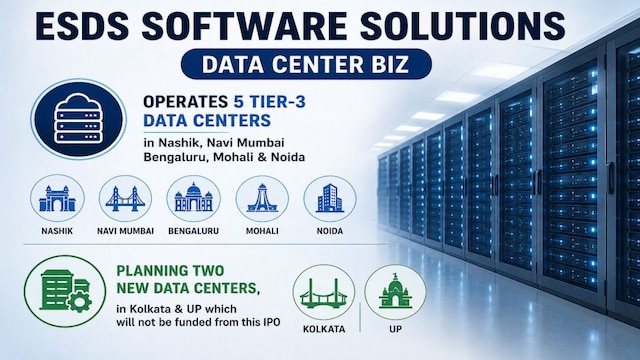
He also pointed to the rapid growth of international AI infrastructure companies as an indication of what could happen in India. Sharon AI, for instance, moved from its first 8,200-GPU deal to orders for 200,000 GPUs, while Nscale has grown from its first order in September 2025 to more than a million GPUs.
Somani expects India to see multiple companies enter the AI infrastructure business over the next one to two years. He believes the market will expand as demand for computing power increases, creating opportunities for new AI factories.
Alongside GPU infrastructure, ESDS is also pushing its Swaraj Cloud platform, which Somani describes as a made-in-India cloud platform. He said India’s digital sovereignty score currently stands at around 18 and the company’s aspiration is to take it to 95 over the next 2,000 days.
Watch the full conversation here

For ESDS, the combination of a large AI infrastructure funnel, growing demand for GPUs and its domestic cloud platform forms the basis of its long-term growth strategy. “What if I sell something today and make Rs 10-20 crore? Is that going to give me anything? Nothing compared to where we can reach in next 5, 10 years’ time. It’s peanuts,” Somani said.
Catch all the latest updates from the stock market here