
The brokerage said policy measures to decontrol natural gas and crude oil prices, coupled with the absence of a windfall tax despite the ongoing energy shock, were positive surprises that could support valuation multiples across the sector.
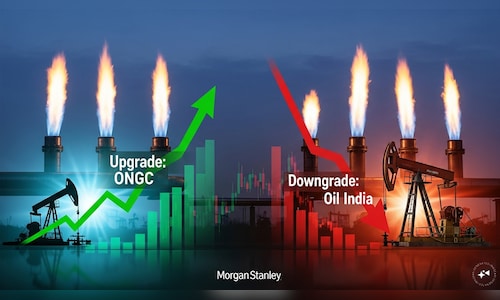
Within the space, Morgan Stanley reiterated its preference for ONGC over Oil India, citing ONGC’s superior reserve replacement ratio, higher natural gas price realisations and faster monetisation of reserves.
Why Is Morgan Stanley ‘Overweight’ ONGC?
For ONGC, Morgan Stanley maintained its “Overweight” rating with a price target of ₹345, implying a potential upside of about 33% from Tuesday’s closing price of ₹259.55.
The brokerage expects ONGC to deliver a 3% production CAGR between FY26 and FY29, driven largely by higher domestic gas output and a turnaround in profitability at its international operations.
It also highlighted ONGC’s strong shareholder returns, noting that the company has paid nearly $33 billion in dividends over the last two decades, roughly equivalent to its current market capitalisation.
Morgan Stanley expects ONGC’s dividend payouts over the next 20 years of reserve life to be twice the historical rate, supported by a projected earnings CAGR of 14%.
According to Bloomberg data, 20 out of the 31 analysts tracking ONGC have a “buy” rating on the stock, six have a “hold” and five have a “sell” rating on the stock.
Why Morgan Stanley downgraded Oil India?
In contrast, Morgan Stanley has downgraded Oil India to “Underweight” from its earlier “Overweight” rating and cut its target price to ₹404 from ₹566, implying a downside of about 15% from Tuesday’s closing price of ₹476.
Morgan Stanley cited delayed increases in natural gas selling prices, weaker refinery margins until fuel retailers recover losses, potential diesel discounts as India moves into a diesel surplus by the second half of 2027, and slower domestic production growth as key reasons for the downgrade.
The brokerage also warned of a further 6% – 7% downside risk to consensus earnings estimates as oil prices normalise once tensions in the Middle East ease.
Among the 22 analysts that track Oil India, 15 have a “buy” rating, six say “hold”, and one has a “sell” recommendation.
Shares of ONGC are down 8% in the last one month, while those of Oil India are up 4.4% so far during the same period.