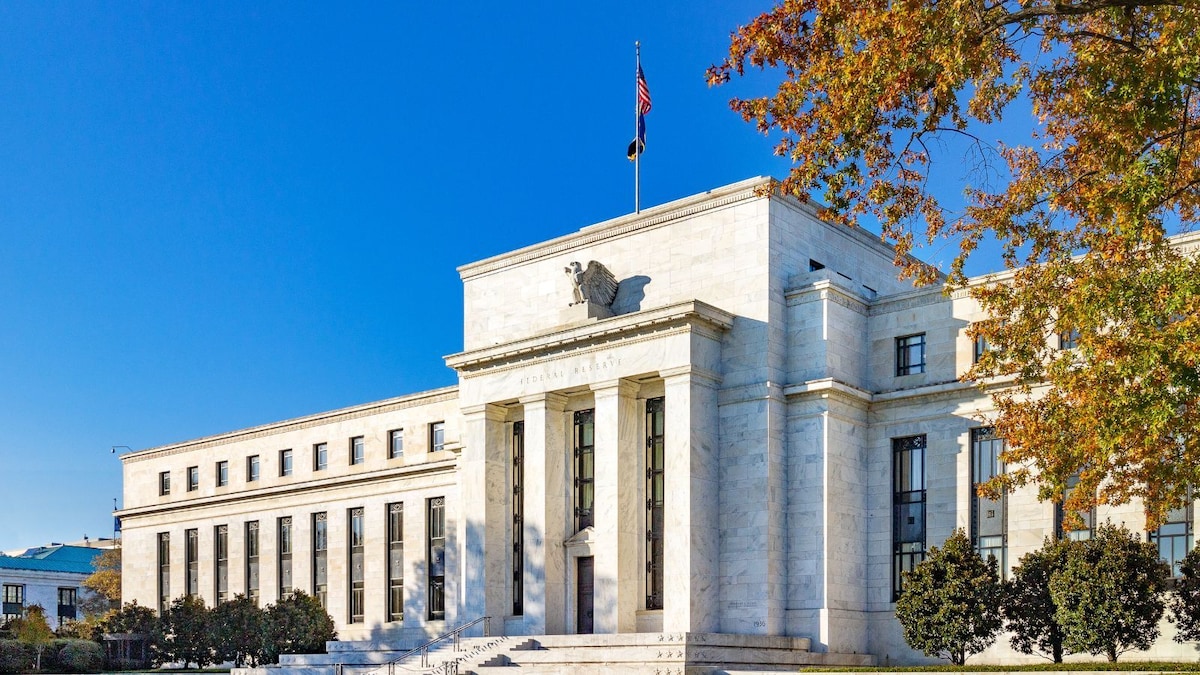
The Fed’s Office of Inspector General called attention to instances where board members at regional banks were briefed by policymakers prior to, or immediately after, policy meetings, potentially granting them access to nonpublic information that could be used for personal gain.
“We believe that incoming directors need to be made aware of their duties and the federal conflicts-of-interest statute and related criminal penalties,” the inspector general said in a report released Wednesday (September 2).
Reserve bank boards meet regularly to make recommendations to the Fed’s Board of Governors on the interest rate that commercial banks pay to borrow from the Fed’s so-called discount window. Each board typically meets with its president — who sits on the Fed’s policy-making panel — and other staff members, and sometimes hears the president’s recommendation for the discount rate, which is closely tied to the Fed’s benchmark policy rate.
ALSO READ | Fed needs a 25-basis-point rate hike in September to restore credibility: Ed Yardeni
While policymakers are prohibited from sharing information about Federal Open Market Committee meetings, where the overnight federal funds rate is set, the report said minutes from meetings between reserve bank boards and presidents showed instances in which “sensitive FOMC information could have been shared with directors.”
In one instance, a reserve bank president, speaking with directors one day after a policy meeting, held a “broad-ranging discussion about various topics, including projected inflation trends and emerging global economic uncertainty,” the report said. “Such a forward-looking discussion of economic conditions days after an FOMC meeting could cover nonpublic confidential information.”
In October 2015, the New York Fed changed its protocols around its board’s discussion of the discount rate. Minutes of the meeting show then-President William Dudley told his board that the “president’s recommendation on the discount rate might be viewed by some as conveying information about the likelihood that the FOMC will change the fed funds rate.”
The minutes also show the New York president was thereafter removed from the process of making a recommendation on the discount rate. It’s not known whether any other regional reserve banks exclude their presidents from the discount rate discussion with directors.
Included in the report was a letter from the Board of Governors responding to the IG’s findings. In it, Benjamin McDonough, the board’s secretary, and two other senior staffers pushed back against the points raised about the handling of confidential information and defended the practice of briefings with directors.
ALSO READ | Fed Chair Kevin Warsh signals rate hike if inflation fails to cool towards 2% target
The briefings didn’t create a potential for directors to obtain confidential information “because Federal Reserve System staff and policymakers are prohibited from providing confidential FOMC information to directors,” they wrote. They went on to describe the briefings as “crucial conduits of nonconfidential information that helps directors meet their responsibilities.”
A Fed spokesperson didn’t immediately respond to a request for additional comment.
Conflicts of Interest
The review also included recommendations for reducing conflicts of interest when selecting a regional bank’s leader, and when selecting the boards of directors responsible for overseeing the institutions.
While the members of the Fed’s Board of Governors in Washington are appointed by the president and must be confirmed by the Senate, the leaders of the Fed’s 12 regional banks are chosen through a more opaque process that has drawn scrutiny in recent years. The searches for regional Fed presidents are conducted by the bank’s boards of directors and selections must be approved by Fed governors.
Some selections for regional presidents have taken an unusually long time, while others were scrutinised for the appearance of conflicts of interest. The report released Wednesday recommended that regional banks using external search firms to identify candidates should monitor and disclose any potential conflicts of interest between the firms and the candidates. Banks are not currently required to identify or report these conflicts, the report said.
In late 2022, the appointment of Austan Goolsbee faced criticism because his wife was an executive at the search firm hired by the Chicago Fed to help find a new president. For some, that created at least a perception of a conflict of interest, though the Chicago Fed said at the time that Goolsbee’s wife had no involvement in the search.
Patrick Harker’s appointment to the Philadelphia Fed in 2015 raised broad concerns about the lack of transparency around the selection process. Harker, who retired from the Fed last year, was a member of the regional bank’s board during the search. He had initially declined to be considered for the job, but changed his mind after the board’s first choice dropped out very late in the process.
ALSO READ | Jackson Hole: Fed speeches that moved markets, and what Kevin Warsh may signal this year
That helped increase calls in Congress for the process to include more public input and generally be more transparent. Now, the presidential searches typically include public forums and published information about the selection committee. But those haven’t done much to speed up the process.
The Fed’s watchdog also drew attention to the process for selecting some portions of the regional boards, which may grant one class of directors outsize influence over the makeup of the board.
The IG found that at 9 of the 12 reserve banks, Class A directors — those representing banks — are involved in recruiting or approving the Class C directors, who are supposed to represent the public and are appointed by the Board of Governors.
“The involvement of Class A directors in the selection of Class C directors may give member banks undue influence over the composition of the entire board of directors,” the report said. The IG recommended the Board of Governors provide reserve banks with written guidance clarifying the process for selecting Class C directors.