
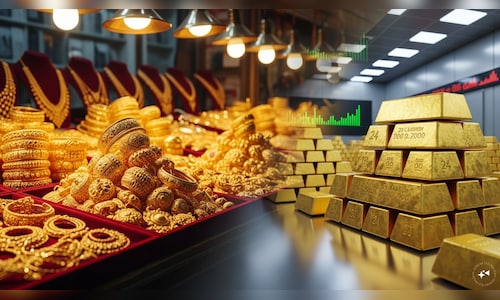
In India, gold discounts have widened to record levels after a sharp increase in import duties and weaker retail demand triggered a sudden slowdown in buying. Dealers are now offering gold at discounts of up to $207 an ounce over official domestic benchmark prices, a steep jump from just $15 an ounce last week.
The main trigger has been policy action. India raised import tariffs on gold and silver to 15% from 6%, while also tightening rules for duty-free imports used by jewellery exporters by capping eligible shipments at 100 kilograms per licence. These measures have pushed up domestic prices and reduced the incentive for fresh purchases.
As a result, domestic gold prices briefly surged to ₹1.64 lakh per 10 grams earlier this week — the highest in more than two months — before easing to around ₹1.60 lah per 10 grams. But higher prices have discouraged jewellers and retail buyers, leading to a sharp drop in demand and a rise in scrap supply entering the market.
Dealers say the situation reflects a classic demand shock: when prices rise too quickly due to policy and cost changes, consumers step back, leaving excess supply in the system and forcing discounts to widen.
At the same time, the global backdrop has added pressure. Spot gold is down about 2.8% this week as higher energy prices keep inflation concerns alive and reinforce expectations that interest rates will stay higher for longer. That has kept investors cautious across bullion markets.
While India is seeing weakening physical demand, China is moving in the opposite direction. Gold there continues to trade at premiums of $15–$20 an ounce over global benchmark prices, broadly unchanged from last week.
The difference lies in demand composition. Chinese buying has been supported by steady investment interest and strong industrial consumption, particularly from solar and electronics manufacturers. Industry participants also point to aggressive stockpiling, aided by changes in tax and export incentive structures.
According to ANZ, stronger Chinese demand is likely to cushion the impact of weaker Indian consumption, even as policy tightening weighs on one of the world’s largest physical markets.
Across other Asian hubs, gold pricing remains mixed — with small premiums in Singapore, flat-to-premium trade in Hong Kong, and slight discounts in Japan.
–With Reuters inputs