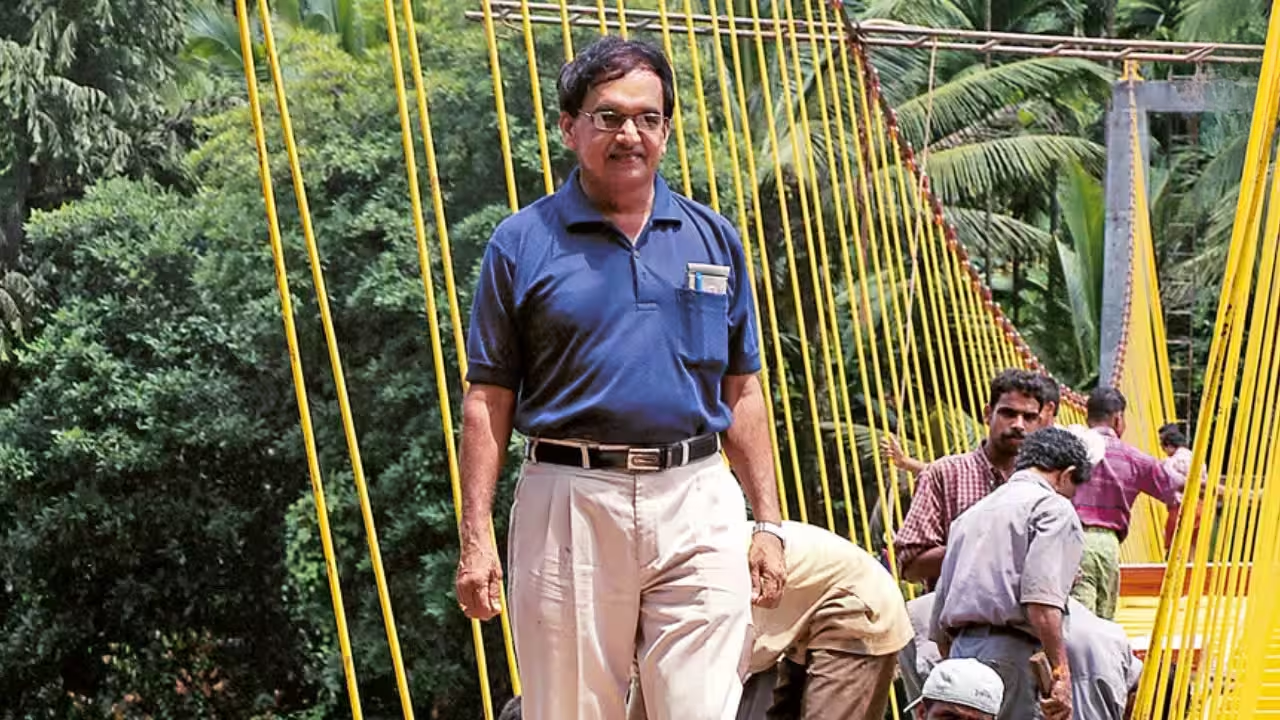
For Girish Bharadwaj, a bridge was not simply a structure over a river. It was a way for a child to reach school, a patient to get to a hospital and a farmer to take produce to the market. Bharadwaj, the Karnataka engineer popularly known as the ‘Bridge Man of India’ had built more than 140 low-cost suspension footbridges across India, many of them in remote rural areas where rivers and difficult terrain had kept villages cut off.The Indian government honoured him with the Padma Shri in 2017 for his contribution to rural connectivity and social service. According to a TOI report, his bridges connected isolated communities across Karnataka, Kerala and other states, bringing education, healthcare and markets within easier reach.
From mechanical engineer to ‘Bridge Man’
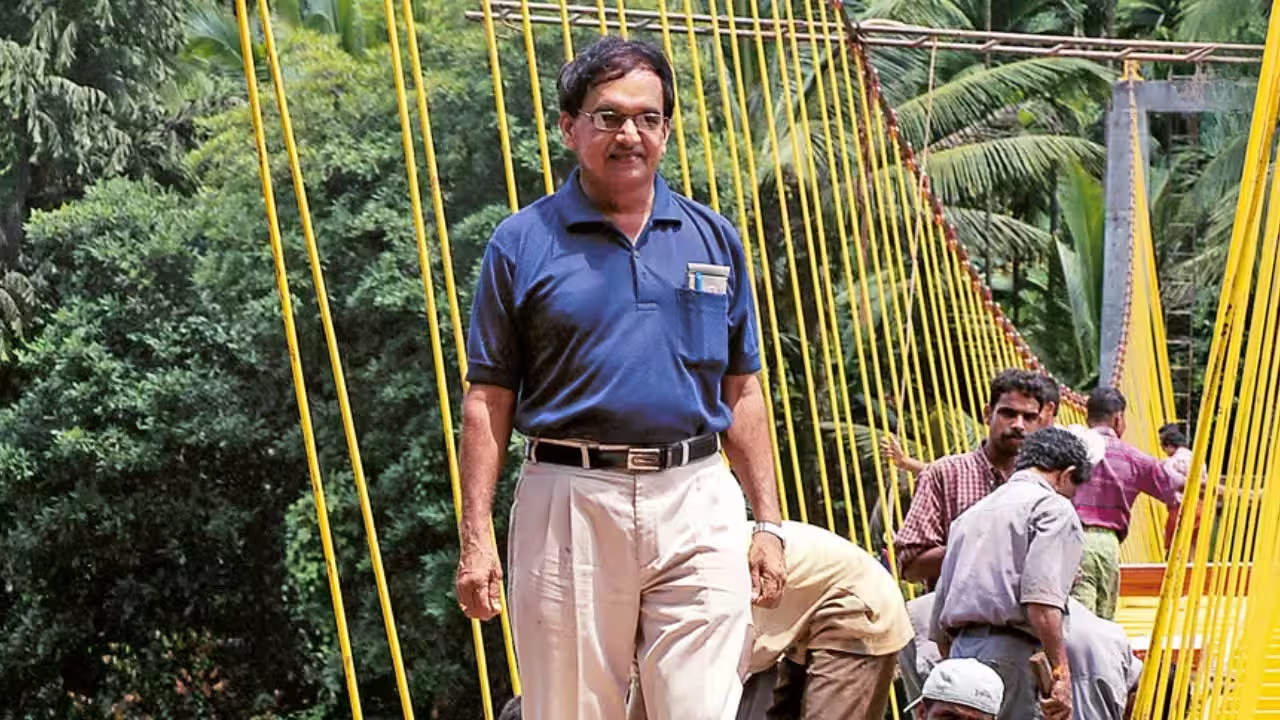
His father played an important role in deciding the direction of his career.
Born on May 12, 1950, Bharadwaj grew up in Aletty, a remote village in Sullia taluk. He completed his mechanical engineering degree in 1973. His father played an important role in deciding the direction of his career. Instead of encouraging him to take a conventional government or company job, his father advised him to use his technical knowledge to help farmers.Bharadwaj initially followed that advice by working in rural engineering services. He started an agro service centre with a friend in 1973 and later established Rational Engineering Industries in Sullia in 1975, where he worked on equipment such as pump sets and gobar gas plants. Bridge building came later, almost by accident. In 1989, villagers in his native area approached him for help in building a footbridge across the Payaswini river. It was not something he had formally specialised in. But people were struggling to cross the river, particularly during the monsoon and he couldn’t see that continuing.With help from fellow engineers, technical references and local participation, he designed and built his first suspension bridge. The project became the starting point of a career that would take him to some of India’s most difficult rural locations. As reported by The New Indian Express, the first bridge was completed for less than Rs 2 lakh.
140 bridges, mostly for rural India
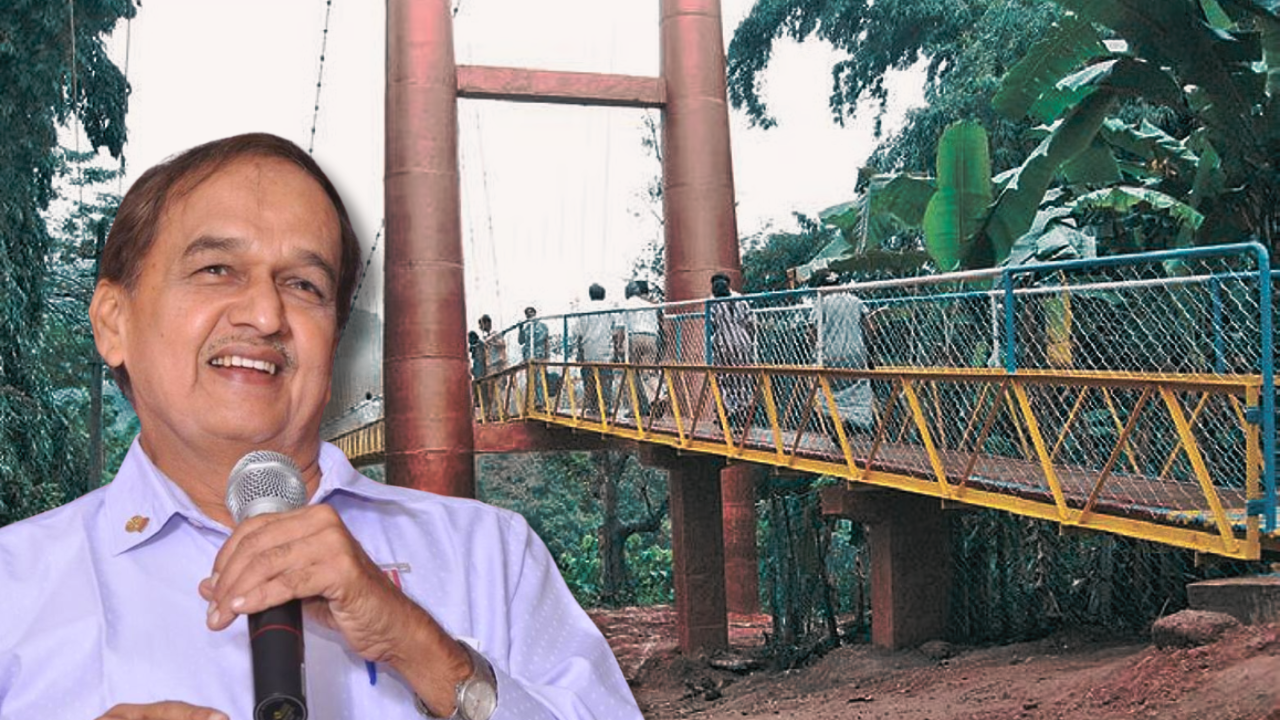
About 120 of his 140 bridges were built primarily for rural connectivity, while others served tourism-related purposes.
The first bridge was followed by many more. Over the next three decades, Bharadwaj built more than 140 hanging footbridges across different parts of India. As per a TOI report, about 120 of his 140 bridges were built primarily for rural connectivity, while others served tourism-related purposes.His work extended beyond Karnataka to states including Kerala, Odisha, Andhra Pradesh and Telangana. The bridges were designed to be considerably cheaper and simpler than conventional large bridges, making them suitable for places where a major infrastructure project could take years or require far greater investment.Bharadwaj also adapted his designs to local conditions rather than simply copying large suspension bridges elsewhere. According to reports, he studied famous structures including San Francisco’s Golden Gate Bridge and Japan’s Akashi Kaikyo before developing designs suited to Indian rural locations.His projects were not always easy. He and his workers often spent months at remote construction sites. Some locations were deep inside forests and beyond regular communication networks. The Padma Shri citation noted the dangers involved, including wildlife and threats from Maoists in some areas. It also highlighted Bharadwaj’s practice of living alongside his workers in tented camps during construction.His work earned him a reputation far beyond engineering circles. Villagers fondly referred to him as the ‘Visvesvaraya of Sullia’, according to Karnataka Deputy Chief Minister DK Shivakumar, who paid tribute to Bharadwaj after his death.
A Padma Shri for engineering that reached the ground
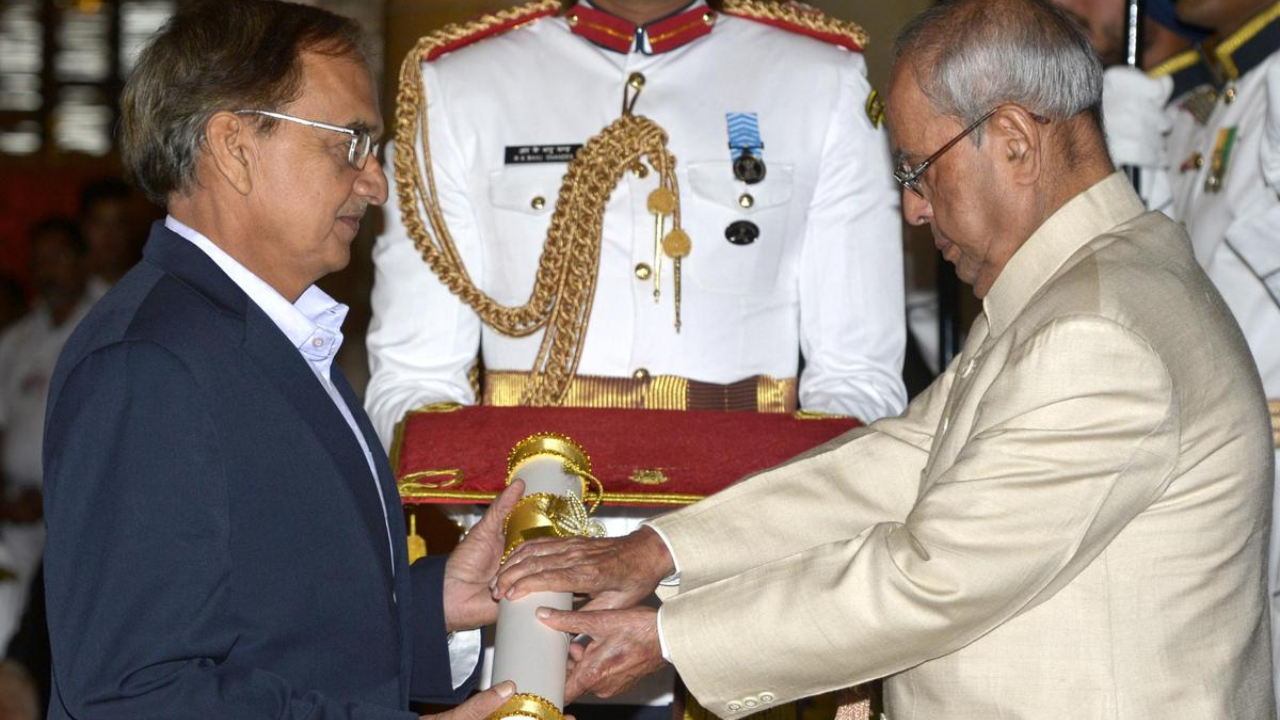
“Bridge Man of India,” passed away on July 7, 2026, at the age of 76.
In 2017, the Union government recognised Bharadwaj with the Padma Shri. The award citation praised his dedication, teamwork and willingness to work in isolated locations. His contribution was also recognised through other awards, including theDr Kota Shivarama Karantha Huttoora Prashasthi.Girish Bharadwaj, popularly known as the “Bridge Man of India,” passed away on July 7, 2026, at the age of 76. Following his death this year, Karnataka leaders and people from the communities he served paid tribute to him. The Karnataka government announced a state funeral for the engineer.Bharadwaj is survived by two sons and a daughter. His wife had predeceased him. For decades, he worked in places where a river could decide whether a village remained connected or isolated. He did not build India’s biggest bridges. He built the ones that people in those villages needed. And that is why, long after the engineer’s death, the name ‘Bridge Man of India’ is likely to remain attached to the structures he left behind.