The shift is helping bring formal credit to people who may previously have struggled to get a loan, while also changing how lenders assess borrowers and manage risk.
Loans are moving from days to minutes
Digital technology has dramatically shortened the time it takes to process a loan. Processes that once involved physical paperwork, manual credit checks and cheque-based disbursals could take several days or even weeks. They can now often be completed in minutes using electronic KYC, automated credit assessment and instant payments through systems such as UPI and IMPS.
The change could be particularly significant in rural areas. The report points to the Unified Lending Interface, or ULI, and digital land records such as Bhu-Aadhaar as tools that could reduce approval times for loans used to buy tractors, support dairy businesses and fund farm equipment from weeks to less than 30 minutes.
Credit is moving closer to the point of purchase
Borrowing is also becoming more closely tied to everyday spending.
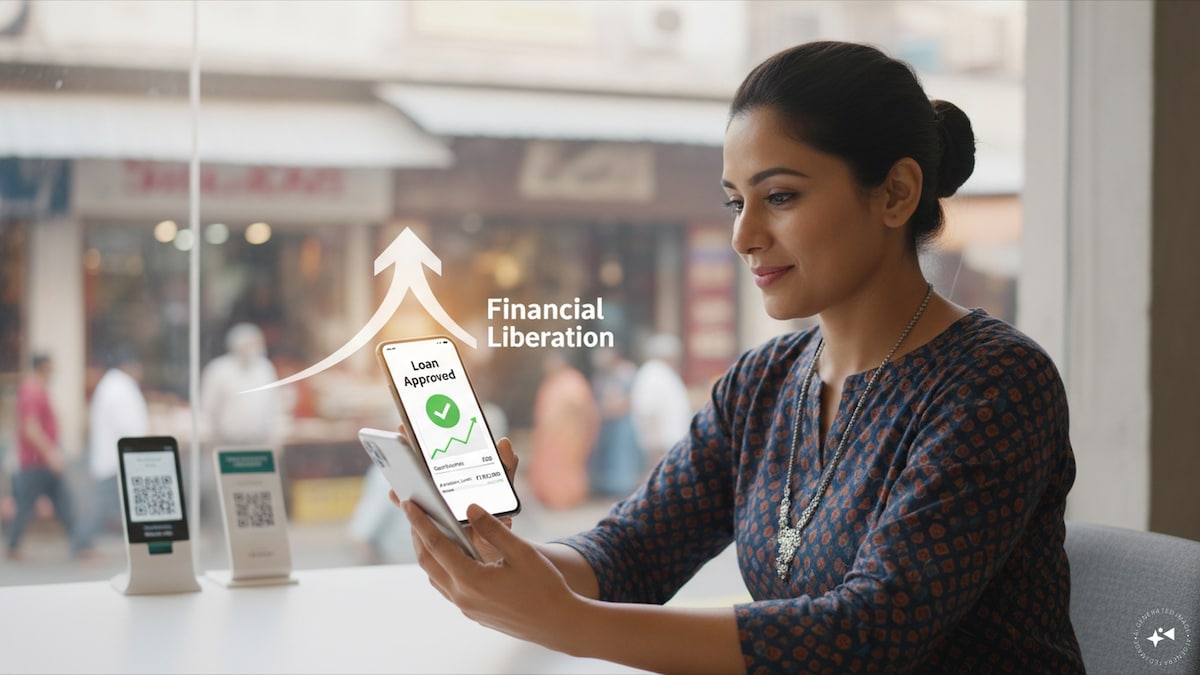
Credit linked to UPI allows consumers to use pre-approved credit lines through apps such as Google Pay, PhonePe and BHIM and access funds when they make a purchase using a merchant QR code.
The report says this could help people who have little or no formal credit history. Instead of immediately offering large loans, lenders can start with smaller credit limits and increase them as borrowers demonstrate a record of timely repayment.
Over time, these first-time borrowers could become eligible for products such as credit cards and home loans. Equifax estimates that wider adoption of Credit on UPI could bring more than 200 million people who currently have little or no formal credit history into the formal credit system.
AI is changing who gets approved
Artificial intelligence is also changing how lenders evaluate borrowers.
Traditional lending models can struggle to assess people with limited credit histories, including informal workers, rural borrowers and small-business owners. AI-based systems can consider a wider range of behavioural and financial information, potentially allowing lenders to assess such borrowers more closely rather than rejecting them simply because they have a thin credit file.
The report says this could reduce the high rejection rates seen among such borrowers and make the lending process more consistent by reducing the scope for subjective decisions.
Equifax estimates that the New-to-Credit market could grow by 35%-40%, creating a potential $370 billion opportunity by 2030.
Good repayment could mean cheaper loans
Technology could also change how much borrowers pay for credit.
Instead of relying solely on fixed interest-rate categories, lenders can use a borrower’s repayment behaviour to adjust pricing. Customers who consistently repay on time could potentially qualify for lower rates.
AI tools could also help borrowers avoid missing payments. The report says lenders may increasingly use changes in income and other financial patterns to identify signs of financial stress before a payment is missed and offer borrowers options such as adjusting the loan tenure.
Reminders through WhatsApp, SMS or lending apps can also be timed around a borrower’s income and spending patterns.
More safeguards for borrowers
As digital lending expands, regulators have also introduced measures aimed at protecting consumers.
Key Fact Statements require lenders to spell out important loan terms, including the annual percentage rate, processing fees and recovery-related charges, before a borrower agrees to the loan.
Digital borrowers also have a minimum three-day cooling-off period in which they can exit eligible loans without penalty, subject to applicable rules.
Privacy protections restrict lending apps from accessing information such as a borrower’s contacts, photographs and call records unless it is legitimately required for the lending process. Borrowers can also approach the Reserve Bank of India’s Integrated Ombudsman Scheme, or RB-IOS, to raise complaints.
Bringing more people into formal credit
The changes are opening up borrowing to groups that have traditionally found it harder to access formal loans.
Young people with limited credit histories can begin building a record through smaller loans. Women running small businesses are gaining access to unsecured business credit, while gig and platform workers can be assessed using their cash flows, rather than relying entirely on traditional salary records.
Rural borrowers are also benefiting from the use of financial data through the Account Aggregator framework. Equifax said the system has already facilitated more than 100,000 loans worth ₹20,777 crore.
Taken together, alternative data, digital lending and tighter consumer safeguards are changing the way credit works in India. The bigger shift may be that getting a loan is becoming less dependent on having a traditional salary, a long credit history or access to a bank branch.