
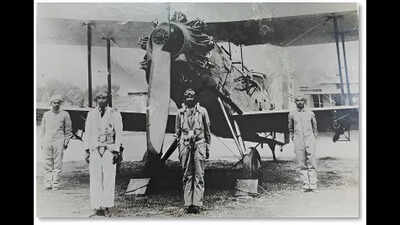
When the Indian Air Force was taking shape in the late 1920s, the British administration faced a challenge.While six Indian cadets were to be sent to the Royal Air Force College at Cranwell for pilot training, the new force also needed Indian mechanics to maintain and service its aircraft.
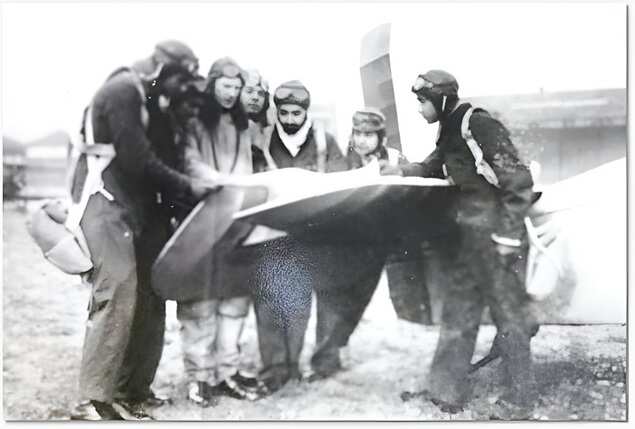
Six Indian cadets were selected for training at Cranwell in 1929, while artisans trained in Karachi to form the IAF’s first unit. (Picture credit: IAF)
According to a historical account shared by the Indian Air Force on X in 2023, training a qualified aircraft mechanic under the prevailing British system took five years.But the new recruits had barely two to three years before the pilots were expected to return. The RAF initially looked to the Ishapore Rifle Factory for trained mechanics and later turned to the Indian Railways.
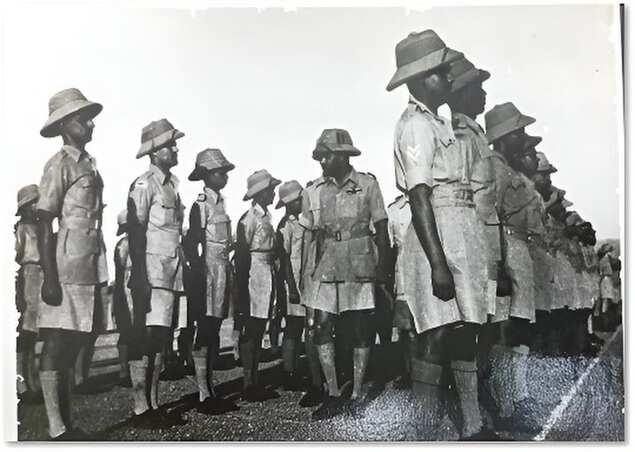
The term ‘Sepoy’ was considered confusing due to its use in the Army, prompting a search for a distinct name for IAF personnel. (Picture credit: IAF)
The mechanics were to undergo training at the RAF Aircraft Depot in Karachi, learning how aircraft worked and how to maintain them. The RAF also planned to retain experienced British personnel to train and guide the Indian recruits.Even their designation became a matter of discussion. According to the IAF, British officials felt that using the rank of “Sepoy” could create confusion with the Army. In 1932, the ranks were renamed to give the new air force personnel a distinct identity. This was how the rank of ‘Hawai Sepoy’ came into being.
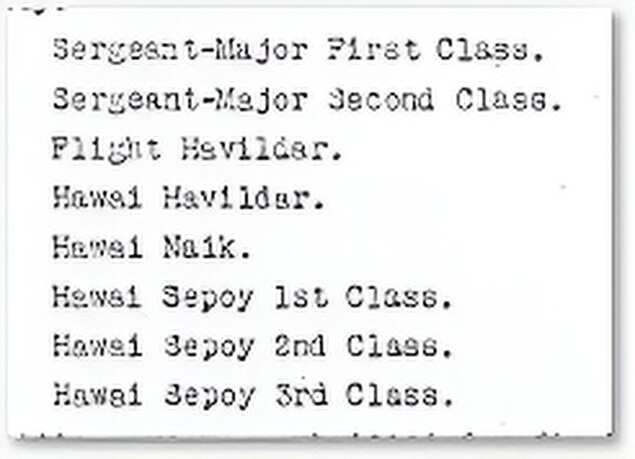
In 1932, eight IAF ranks were renamed to distinguish them from Army ranks, giving rise to the Hawai Sepoy. (Picture credit: IAF)
When the IAF’s first operational flight took place from Karachi on April 1, 1933, 19 Hawai Sepoys formed part of the small unit alongside six RAF-trained officers and four Westland Wapiti biplanes.Among the best-known Hawai Sepoys was Harjinder Singh, who later became an officer in 1942, earned his pilot’s wings in 1950 and eventually retired as an Air Vice Marshal. According to the IAF’s account, he also helped modify Westland Lysander aircraft with improvised bomb racks for operations against Japanese forces during World War II.