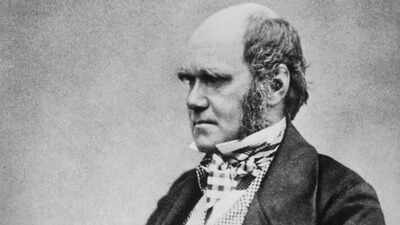
People generally remember Charles Darwin as the man who transformed science. His name immediately brings thoughts of evolution, natural selection and discoveries that changed how human beings understand life itself. Most people imagine him surrounded by notebooks, specimens and scientific observations. The picture that often comes to mind is of someone deeply absorbed in ideas and research, a person whose world revolved around logic and careful study.That image is understandable, but this quote reveals a different side of him. It does not sound like the words of a scientist presenting a theory. It sounds more like someone sitting quietly and thinking about life after years have passed. There is something unexpectedly personal in it. It almost feels like Darwin stepping away from facts and observations for a moment and speaking as an ordinary person looking back.“If I had my life to live over again, I would have made a rule to read some poetry and listen to some music at least once every week.”The quote is gentle. There is no grand lesson hidden inside dramatic language. There is no intense message about changing the world. Yet people often find themselves stopping for a second after reading it because it feels strangely familiar. Many people spend years building careers, managing responsibilities and trying to move forward, only to realise later that certain small joys quietly disappeared somewhere along the way.
Quote of the day by Charles Darwin
“If I had my life to live over again, I would have made a rule to read some poetry and listen to some music at least once every week.”
What is the meaning behind the quote by Charles Darwin
Looking closely, Darwin’s words seem to be about much more than poetry or music. The quote appears to talk about balance and the parts of life people unintentionally neglect while focusing on other things. It suggests that success and productivity alone may not create a complete life experience.Darwin was not saying science had no value. He spent his life pursuing knowledge and understanding the world. Still, he seems to be recognising that human beings need different kinds of nourishment. Facts and information feed one part of the mind. Music, art and literature seem to feed another part entirely. One helps people understand the world. The other often helps people feel it.Many people probably recognise this pattern in their own lives. Someone may love reading when they are younger, but gradually stop because life becomes busy. Someone may once listen carefully to music but later treat it as background noise while working. The change usually does not happen suddenly. It arrives quietly and without much attention.Perhaps that is what makes Darwin’s observation feel personal. It is not a warning about dramatic mistakes. It is a reminder about small things that disappear slowly.
Why people often postpone the things they enjoy
Human beings are surprisingly good at postponing happiness. People often believe there will always be another time to return to things they love. Someone says they will start reading again after work becomes easier. Someone decides they will travel later. Someone promises themselves they will make time for music, writing or old hobbies eventually.The problem is that “eventually” has a strange habit of moving further away.Daily life usually feels urgent. Emails arrive. Responsibilities increase. Small problems demand immediate attention. People naturally focus on whatever appears important at that moment. The activities that bring quiet enjoyment rarely create urgency. Poetry never sends reminders. Music never demands attention. Personal interests usually wait patiently in the background.Months pass, and then years pass.Sometimes people suddenly realise they have not touched something they once loved for a very long time. That realisation often feels surprising because nobody remembers making a conscious decision to stop.Life simply became crowded.Darwin’s quote seems to recognise exactly that experience.
Why logic alone does not always create a full life
People sometimes separate science and art into completely different worlds. Science becomes associated with reason and analysis. Art becomes associated with emotions and creativity. The division sounds neat, but real life often appears less organised than that.Many scientists throughout history cared deeply about literature, music and creative thinking. Likewise, artists often possess extraordinary observation skills and analytical abilities. Human beings rarely operate entirely from one side of themselves.Creativity itself often depends on imagination. Discoveries sometimes begin with curiosity and unusual ways of seeing problems. Music and poetry can influence thought in ways people do not always recognise immediately.Darwin seems to suggest that removing those experiences entirely may create an imbalance. Someone can continue achieving goals and still feel that something quieter has been missing.That idea probably feels familiar to many people today.
Why modern life makes this quote feel surprisingly current
One interesting thing about Darwin’s words is that they sound relevant despite being connected to a completely different era. He lived long before smartphones, social media platforms and constant digital interruptions. Yet the quote almost feels like it was written for modern life.People today consume enormous amounts of information every day. Messages appear constantly. Notifications compete for attention. Work often continues outside offices and follows people into their homes.Because of that, many experiences become rushed.People listen to music while answering emails.People scroll through articles without really reading them.People consume content continuously, but spend less time sitting quietly with things.Darwin’s reflection feels like a reminder that some experiences deserve attention rather than speed. Poetry and music may simply represent anything that allows people to slow down and reconnect with parts of themselves that productivity does not always reach.
Looking at Darwin beyond evolution and science
Charles Darwin spent years observing patterns in nature and developing ideas that reshaped scientific understanding. His work changed biology permanently and influenced generations of researchers.Still, people often forget that famous individuals also have private reflections and regrets. They question decisions. They wonder about paths they did not take. They think about things differently with age.Darwin reportedly reflected later in life that his intense focus on scientific work had affected his appreciation for poetry and music. Readers have found those thoughts interesting because they reveal someone looking beyond achievements and considering the emotional parts of life.That creates a more human picture.People often see historical figures as achievements rather than individuals.Quotes like this remind readers that even remarkable people looked back and wondered whether certain things deserved more attention.
Other famous quotes by Charles Darwin
- “A man who dares to waste one hour of time has not discovered the value of life.”
- “Ignorance more frequently begets confidence than does knowledge.”
- “The love for all living creatures is the most noble attribute of man.”
- “I am not apt to follow blindly the lead of other men.”
- “It is not the strongest of the species that survives, but the one most responsive to change.”
Why Darwin’s words still stay with readers
Some quotes become memorable because they encourage ambition and achievement. Others remain in people’s minds because they create recognition. Darwin’s words probably belong in the second category because they remind people of things they may have quietly pushed aside.Someone reading this quote may suddenly think about books sitting untouched on shelves. Another person may remember music they once loved. Somebody else may think about an old hobby that disappeared beneath responsibilities and routines.The details differ for everyone, but the feeling underneath remains similar. Life moves quickly, and people adapt to its demands. Then, sometimes a simple sentence from someone who lived centuries ago creates an unexpected thought that lingers for a while.Maybe the small things people postpone were never really small at all.