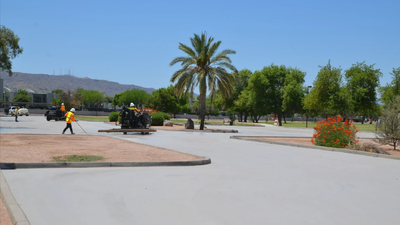
Painting city streets with a light-coloured, reflective coating can cool the asphalt underneath, but it can also increase heat exposure for people walking on the road. That unexpected trade-off emerged from a major trial in the American Southwest. In 2020, the City of Phoenix Street Transportation Department coated 36 miles of neighbourhood roads and a public parking lot with CoolSeal, a grey, water-based asphalt treatment designed to reduce the urban heat island effect. Researchers from Arizona State University (ASU) studied the treated roads for a year. Their findings showed that while the coating successfully lowered road temperatures, it also created a more complicated situation for pedestrian comfort and safety.
Why the roads became cooler
Traditional dark asphalt absorbs large amounts of sunlight and can reach temperatures of up to 180°F during the hottest summer periods. The roads also store heat and slowly release it after sunset, keeping urban areas warm through the night. To reduce this effect, Phoenix applied a reflective coating to selected residential streets across eight council districts. ASU researchers found that the treated roads were 2.4°F cooler at sunrise and 10.5 to 12°F cooler around midday. The coating also lowered temperatures below the road surface. Because the pavement reflected more sunlight instead of absorbing it, the treated roads stayed much cooler than older asphalt. City engineers also noted that lower temperatures below the surface could help roads last longer, potentially reducing maintenance costs over time.
The problem for pedestrians
Despite the cooler pavement, researchers found an unexpected effect on people walking nearby. To understand how people actually experience outdoor heat, ASU researchers used a mobile weather station called “MaRTy”. The equipment measures mean radiant temperature, which looks at the amount of heat radiation absorbed by the human body outdoors. The coating reflected sunlight away from the road, but the energy did not simply disappear. Much of the reflected heat moved sideways and upwards into the surrounding area, exposing pedestrians to more radiation. The ASU study found that the average mean radiant heat exposure for pedestrians increased by about 5.5°F on coated streets during the hottest part of the day. “Perhaps the most meaningful measurement is the mean radiant temperature,” ASU scientist Ariane Middel said during the project.
What it means for city planning
The Phoenix findings have attracted attention from urban planners as cities around the world look for ways to deal with rising temperatures. Similar projects in other cities, including Los Angeles, have found similar trade-offs, with cooler road surfaces but greater heat exposure for people at street level. Researchers say reflective road coatings should not be treated as a complete solution to extreme urban heat. Human comfort depends on more than the temperature of the pavement. Shade from trees, buildings and other structures can make a major difference. “If you’re standing over one of these surfaces on a hot day, you’re still going to be hot if you’re not in the shade,” said Jennifer Vanos, an associate professor in ASU’s School of Sustainability who worked on the research. “So if we really want to be pushing towards true solutions to the heat problems, it’s not going to be just paint all the streets white. You’re going to have to really keep thinking about shade.” Later phases of the Phoenix programme continued to test newer versions of the coating, including CoolSeal 2.0, while the city expanded its Cool Corridors Program. City officials are using the research to understand which neighbourhoods can benefit most from reflective materials. Open residential streets and parking areas with little natural shade may need additional measures, particularly trees and shade structures, to ensure that efforts to cool the pavement do not increase heat exposure for pedestrians.