
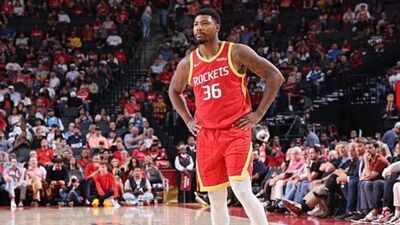
Marcus Smart knows what it feels like to watch someone he loves fight cancer. His older brother, Todd Westbrook, battled leukemia and died in January 2004 when Smart was just nine. Years later, the NBA guard began visiting young patients in hospitals and looking for ways to make their stays easier. That effort led to the Smart Carts initiative, which gives children access to games, tablets and ways to connect with loved ones during long hospital stays.
How Marcus Smart’s childhood inspired his work with young cancer patients
Before Marcus Smart became an NBA player, he was a young boy trying to understand his brother’s illness. Todd Westbrook had been diagnosed with leukemia as a child. Smart spent time in hospitals with his family and saw how cancer affected patients and the people who cared for them.Todd’s death left Smart struggling with grief and anger. He got into fights and eventually attended an alternative school. In a December 2025 interview with Andscape, Smart spoke about facing difficult experiences at a young age.“I lost my brother at a young age. I lost a couple family members. I lost some friends. And at a young age, I had to deal with and see things that you probably shouldn’t see,” Smart told Andscape.Those experiences helped him understand what children in hospitals might be going through. They still want to play, spend time with friends and enjoy ordinary activities, even when illness keeps them away from their usual lives.After joining the Boston Celtics in 2014, Smart began visiting children at Boston Children’s Hospital. He did not turn the visits into publicity opportunities. Instead, he spent time with patients and talked to them about their interests.A 2022 report by The Athletic described how Smart visited children individually and tried to give them a break from their hospital routines. During one visit, a young patient gave him a bracelet and pink hair extensions after losing her hair during chemotherapy. Smart wore the bracelet and kept the hair extensions, creating a personal connection with the child.He later invited her to a Celtics community hero gala. After his mother, Camellia, died of bone marrow cancer in September 2018, Smart also hosted a private dinner for families staying in accommodation near Boston Children’s Hospital.His support came from personal experience. He understood that cancer affects entire families, including children who may struggle to understand what is happening around them. His visits gave him a way to offer companionship to patients going through difficult days.
How Smart Carts bring games and connection to children’s hospitals
Smart’s hospital visits helped him identify a practical problem. Children who spend long periods in hospital rooms can become bored and isolated. Hospitals also need ways to store, charge and distribute electronic devices for patients.That led to the Smart Carts initiative through his YounGameChanger Foundation. The mobile units carry tablets, gaming consoles and other electronic devices. They help children access entertainment and educational activities while staying connected with family and friends.Per Athletic, the foundation partnered with Lenovo and Walmart to supply devices for the carts. A Dec. 2025 Andscape report said the programme had supplied 30 carts to at least 16 hospitals. These figures reflect the reporting available at that time.The carts do not provide medical treatment. Their purpose is to give young patients a welcome distraction and help them enjoy activities that can be difficult to access during extended hospital stays.Smart explained the idea in his interview with Andscape.“These Smart Carts are a way for kids and their families to connect with society and with each other,” he said. “It takes them out of this world of negative news, needles and puts them back in a normal place where they feel like normal people, kids again.”Hospitals have also used the devices to support video calls and virtual activities. The Athletic reported in 2022 that some facilities used the carts to help patients connect with relatives who could not visit in person.At Franciscan Children’s Hospital, the carts helped staff provide devices for video calls. One family in Maine used video calls to stay connected with their infant son, who was receiving hospital care about seven hours away. The calls also helped the family learn aspects of his care before his return home.The example shows how the initiative can serve purposes beyond gaming. A child can play a game during a long afternoon, while a parent can use a video call to remain part of their child’s daily life despite being far away.Smart has also worked with other athletes to expand the programme. In 2024, he partnered with Buffalo Bills quarterback Josh Allen to bring Smart Carts to Oishei Children’s Hospital in Buffalo.
How Marcus Smart’s foundation supports children beyond hospitals
Smart’s charitable work extends beyond the Smart Carts. Through the YounGameChanger Foundation, he supports education, mentoring, sports and STEAM programmes for young people in underserved communities.The foundation’s programmes aim to help children develop academically and personally. Its work includes mentoring and opportunities to explore science, technology, engineering, arts and mathematics.Smart’s own journey gives this work a personal connection. He played college basketball at Oklahoma State before the Boston Celtics selected him sixth overall in the 2014 NBA Draft. His basketball career gave him a platform to reach more young people, but his interest in helping children began with experiences long before he entered the league.He has also supported bone marrow donor awareness efforts through partnerships with Be the Match and Aflac. The work reflects his connection to families affected by cancer after losing both his brother and mother to the disease.Smart cannot remove the challenges young patients face, but he can help make their days a little easier. His foundation combines personal visits with practical programmes that reach children in hospitals and communities.In his interview with Andscape, Smart spoke about the value of giving others time and support. “And sometimes all it takes is a little bit of time,” he said.For Smart, that time can mean sitting with a child, listening to their interests or helping them connect with a family member. The Smart Carts take the same idea further by making games and communication tools available to more patients.His family’s experience with cancer remains part of the reason behind his work. Through the initiative, the Houston Rockets star has found a practical way to support children facing long hospital stays and help them enjoy moments that feel a little more like normal life.