
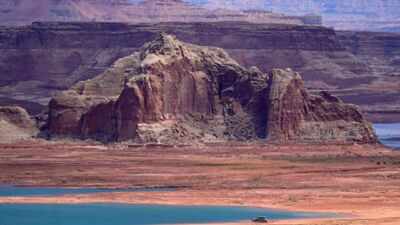
Scientists have suggested that instead of continuing to keep large amounts of water in Lake Powell, the reservoir should gradually be drained and the water stored in Lake Mead instead.The proposal comes as both reservoirs continue to struggle with low water levels after years of drought. The Colorado River supplies water to around 40 million people across the western US and irrigates more than 5 million acres of farmland.Zanna Stutts, programme director at the Glen Canyon Institute, told KUTV that it is time to rethink the purpose of the Glen Canyon Dam, which created Lake Powell.“If we have the courage to take a step back and think about, ‘Why was Glen Canyon Dam built? Is that still working?’ The answer is no,” she said.Earlier this year, the US Bureau of Reclamation took emergency steps to keep Lake Powell’s water level from falling too low. These included sending extra water from the upstream Flaming Gorge Reservoir and reducing the amount of water released to Lake Mead.However, Stutts said these actions only provide temporary relief. “We can’t keep doing this,” she said. “This is reservoir triage that we’re working with right now, instead of thinking about long-term strategies to work with the actual amount of water that the river can provide.”
Why is Lake Powell becoming a problem?
Glen Canyon Dam was designed decades ago based on expectations that the Colorado River would carry much more water than it does today.River flows have fallen by about 20 per cent since around 2000, meaning there is now much less water available than engineers expected when the dam was built.Another issue is that the dam does not have a low-level outlet. This means about 6 million acre-feet of water below a certain level cannot be released downstream.Because of this, although Lake Powell is reported to be about 23 per cent full, a large amount of that water cannot actually be used.
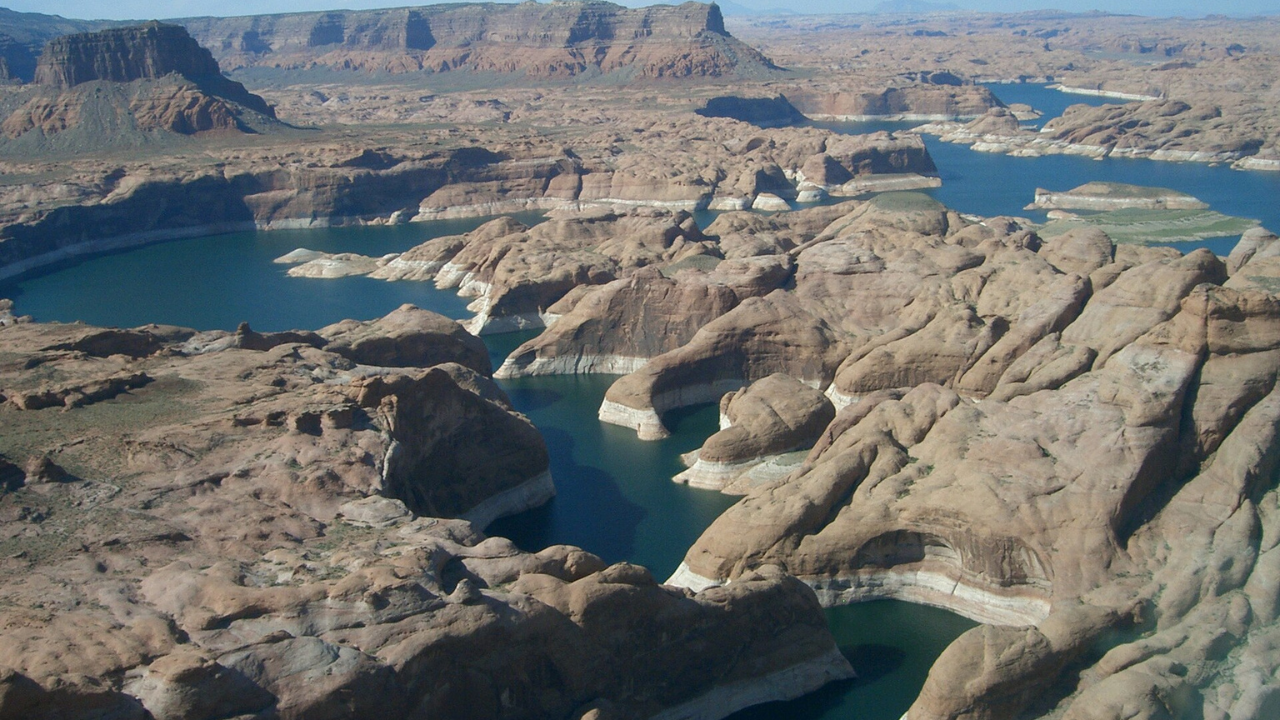
Lake Powell in 2007 | Wikimedia Commons
What is the proposed plan?
Water from Lake Powell could be moved to Lake Mead through tunnels built around the base of Glen Canyon Dam.Under the proposal, the Colorado River would once again flow freely through Glen Canyon instead of being blocked by the reservoir. The dam itself would remain in place and could still be used as an emergency backup reservoir if Lake Mead fills up again during wetter years.The plan would end hydropower generation at Glen Canyon Dam. However, falling water levels are already threatening the dam’s ability to produce electricity.
What US government says
The US Bureau of Reclamation said Congress has required Lake Powell and Lake Mead to be managed together since the Colorado River Basin Project Act of 1968.A bureau spokesperson told Newsweek that Lake Powell remains important for water supply, hydropower generation and protecting key infrastructure across the river system.The bureau said the agency is continuing to work with partners, tribes and other stakeholders to manage the ongoing drought using the best available science. The bureau is also developing new operating guidelines for the Colorado River to improve long-term stability.