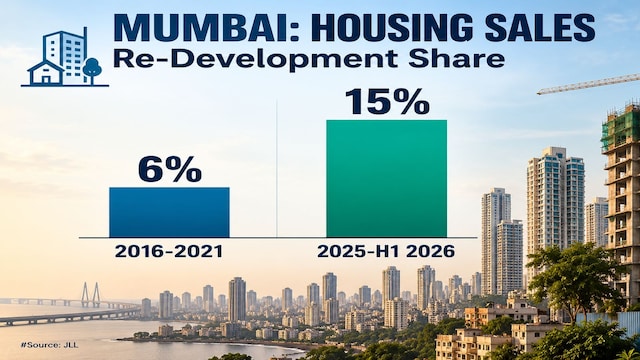
JLL’s data backs that view. Since 2020, more than 1,000 new redevelopment projects have launched, and redevelopment now makes up 13.5% of new housing launches in Mumbai. On the sales side, redevelopment housing accounted for just 5.6% of total sales between 2016 and 2021.
Between January 2025 and June 2026, that share rose to 14.7%. The report also counts more than 13,500 cess buildings and over 1,600 self-redevelopment societies that have already approached developers, pointing to a large pipeline still to come.
Sodi said, “In the next 5 to 7 years, you will see more and more share of redevelopment projects being announced in the overall housing.”
Sodi pushed back on the idea that redevelopment itself is driving up costs. He said the bigger factor is infrastructure and connectivity, which re-rate land prices regardless of whether a project is a redevelopment or built on open land.
Buyers who are sensitive to cost, he said, should look at peripheral markets that are still five to seven years from maturing. But he noted most buyers are choosing to pay more to live in established locations rather than wait.
Sodi said the market is fairly balanced between value-based redevelopment in core areas like Bandra, Khar, Juhu and Vile Parle, and volume-based redevelopment in the eastern and western suburbs.
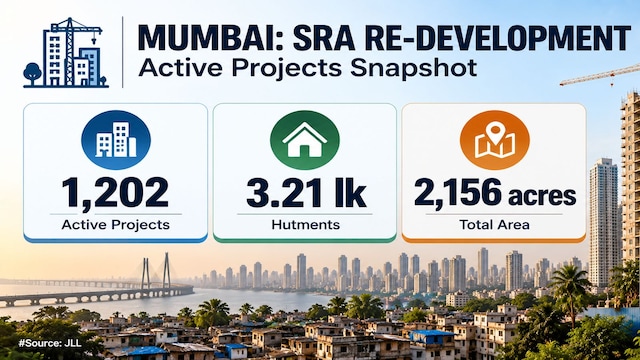
Margins on redevelopment projects depend heavily on execution, Sodi said, since developers have to manage tenant rehabilitation, rent payouts, approvals and financing over a long cycle.He said Slum Rehabilitation Authority (SRA) projects will be a growing part of this pipeline, helped by recent policy changes that make large SRA developments easier to execute. That has drawn in larger, institutional developers, including DLF, Lodha and Prestige, which he said are better placed to fund and manage patient, long-duration projects.
Sodi named execution delays, approval timelines and financing issues, including problems with property titles or tenant relocation, as the biggest risks in redevelopment, higher than in a standard greenfield project.
On the newer trend toward cluster redevelopment over single-building projects, Sodi said buyers should weigh amenities and floor space index (FSI) against a longer wait, and should also check whether the developer behind a cluster project is an established, institutional player.
He said, “I wouldn’t say overheated,” rejecting the idea that the pace of redevelopment activity in Mumbai signals a bubble, and called the current dip in national sales volumes a momentary shift rather than the start of a price correction, pointing to continued job creation, including from new Global Capability Centres (GCCs), as support for housing demand.
For the full interview, watch the accompanying video

Catch all the latest updates from the stock market here