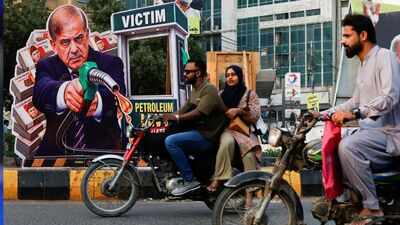
Pakistan on Thursday announced a fresh set of austerity measures, including a 50 per cent cut in fuel allocations for government vehicles and a ban on official foreign travel and the purchase of new government vehicles. The measures come as rising global oil prices threaten fuel, gas and power supplies.The measures, approved by the Pakistan cabinet, will remain in force for three months as the government seeks to reduce fuel consumption and public expenditure.Under the new restrictions, markets will have to close by 9 pm, while marriage halls can operate until 10 pm and restaurants until 11 pm. Drug stores and medical laboratories have been exempted.Fuel allocations for government vehicles will be reduced by half, although vehicles used by the armed forces, law enforcement agencies and essential services will not be covered by the cut.The Shehbaz Sharif government has also ordered a five per cent reduction in non-employee-related expenditure and prohibited official foreign visits and domestic travel for meetings, directing officials to use virtual meetings instead.Official dinners have been banned, except those hosted for foreign visitors and delegations. The purchase of new government vehicles has also been prohibited, while procurement of durable goods has been restricted, with IT purchases exempted.The measures come two days after Pakistan raised petrol prices by PkR 4.10 per litre and high-speed diesel (HSD) by PkR 6.41 per litre. Petrol now costs PkR 384.34 per litre, while HSD is priced at PkR 415.83.Global oil prices have risen amid continuing conflict and supply concerns in West Asia, including attacks on energy infrastructure in Saudi Arabia and the temporary closure of its East-West oil pipeline following an aerial attack.The austerity package is the second such effort this year. Pakistan introduced similar measures in March, including a temporary school shutdown, reductions in government fuel use and greater reliance on remote working.Earlier the government had introduced the Prime Minister’s Fuel Relief Scheme from Wednesday, offering motorcycle, rickshaw and small-car owners a subsidy of 100 rupees (36 US cents) per litre on a capped monthly quota.The programme, however, has faced implementation difficulties. Karachi resident Mohammad Musharraf told Reuters: “First of all, you have to register your vehicle. Then you have to register your mobile phone. How can an illiterate person survive if the conditions are so difficult?”The energy pressures extend beyond transport. Reuters reported that Pakistan’s power sector could require up to 400 million cubic feet of gas a day through winter, while only two LNG cargoes had been confirmed for September.