
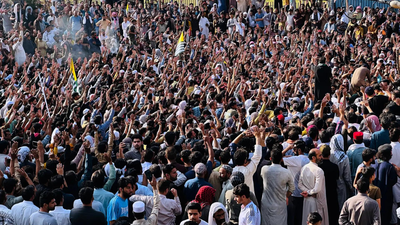
Two former so-called prime ministers of Pakistan-occupied Kashmir (PoK) lost their traditional strongholds in the third phase of elections, according to unofficial results released on Tuesday, while incumbent premier Faisal Mumtaz Rathore of the Pakistan People’s Party (PPP) retained his seat.The latest results came after voting in four constituencies on Monday, with the election process again overshadowed by violence and allegations of rigging. Polling in the remaining seven constituencies was postponed over concerns about the law-and-order situation and is expected to be held on August 21, according to the region’s election commission.The PPP won two of the four seats contested in the third phase, while the Pakistan Muslim League-Nawaz (PML-N) and the Awami Dast-o-Bazu Party won one each. The latter is backed by both Jamaat-e-Islami and Pakistan Tehreek-e-Insaf (PTI).Former prime minister and Muslim Conference president Sardar Attique Ahmed Khan, who was backed by the PML-N, lost the seat in Western Bagh’s Dhirkot constituency to Awami Dast-o-Bazu Party candidate Sardar Sajid Iqbal, according to unofficial results. The seat had been held by the Muslim Conference/PML-N since 1985.In Central Bagh, PPP’s Zia Qamar retained the seat, defeating PML-N candidate Mushtaq Minhas. Former premier Sardar Tanveer Ilyas, who joined the Istehkam-i-Pakistan Party, secured only a few thousand votes.The result in Eastern Bagh remained pending after authorities ordered a re-poll at 12 polling stations. PML-N candidate Sardar Mir Akbar was leading based on results from 174 of the constituency’s 186 polling stations, followed by PPP candidate Sardar Qamaruz Zaman Khan.The election comes against the backdrop of a striking shift in the Pakistani government’s treatment of the protest movement that has rocked PoK for months.Just days before the final phase of voting, Pakistan’s defence minister Khawaja Asif had described the protesters as “enemies of Pakistan” and ruled out talks with them. But Prime Minister Shehbaz Sharif’s adviser Rana Sanaullah subsequently said 99% of those associated with the Joint Awami Action Committee (JAAC) were “patriotic brothers”, promising that a PML-N government would engage with the group and seek to resolve its demands.The reversal in rhetoric came as the PML-N emerged as the dominant force in the election and prepared to form the next government in the region. The party has secured 25 of the 45 directly elected seats so far, while the PPP has won 12 and the Awami Dast-o-Bazu Party one.The first two phases, held on July 27 and August 2, were also marked by violent protests and allegations of widespread rigging, with the PML-N and PPP accusing each other of electoral malpractice. Supporters of the two parties clashed at several polling stations.The JAAC has been protesting across the region since early June, with demands including the abolition of 12 refugee seats that it says can be used to influence the formation of governments in PoK.The group has alleged that more than 40 people were killed during violence surrounding the first phase of voting and that around 400 protesters had been killed since the protests began. The Pakistani government has rejected the higher figure as exaggerated, while Sanaullah has acknowledged that deaths from the unrest were in the “double figures”.India does not recognise Pakistan’s control over the territory, maintaining that Jammu & Kashmir and Ladakh are integral and inalienable parts of India and describing Pakistan’s presence in areas under its control as “illegal and forcible occupation”.