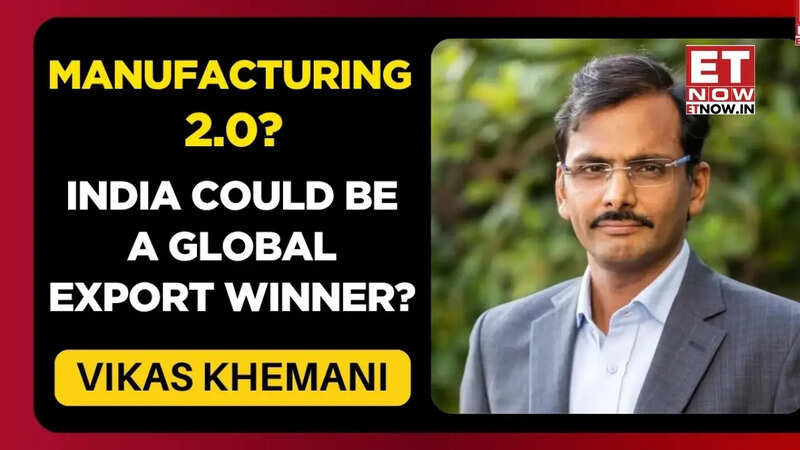
Carnelian Asset Management & Advisors’ Vikas Khemani remains constructive on Indian equities, citing stronger-than-expected Q1 earnings, resilient economic growth and robust systemic credit expansion. He believes the positive momentum is likely to continue, supported by healthy growth drivers across sectors. Khemani is particularly bullish on pharma, healthcare and CDMO businesses, while also highlighting long-term opportunities in manufacturing, driven by the China+1 strategy, new free trade agreements and improved competitiveness. He maintains a positive outlook on IT services despite AI-related concerns and sees power as a key structural growth theme. For tactical opportunities, he favours PSU banks and chemicals.
“I think this reflects the underlying resilience of the economy and the strength of the key growth drivers. This trend is likely to continue going forward. Overall, most sectors are performing well,” he added.
Khemani expresses continued conviction in the pharma/CDMO space, citing strong drivers and credit growth.
He said, “On a structural basis, we remain very positive on the CDMO, pharma and healthcare sectors. The key growth drivers for these industries continue to be very strong, and I do not see them changing anytime soon. Once the broader drivers and tailwinds are in place, performance becomes more stock-specific and dependent on individual company fundamentals. It is always a combination of both factors. Overall, we continue to maintain a positive outlook on the sector.”
Khemani remains bullish on the manufacturing sector, noting a transition driven by China+1, new FTAs and currency competitiveness.
He said, “India’s manufacturing sector currently accounts for around 15-16 per cent of GDP, but over the next decade, this share is expected to rise to 20-25 per cent. Such a significant shift in the composition of GDP is relatively rare and creates substantial opportunities whenever it occurs.”
“In fact, we recently published a note on what we call “Manufacturing 2.0,” highlighting the emergence of new growth drivers. The traditional factors we have discussed for some time — such as the China+1 strategy and India’s improving competitiveness, remain firmly in place,” Khemani further said, adding, “In addition, two important developments have taken place over the past year and a half. First, amid changes in global trade dynamics and US tariff policies, India has moved ahead with free trade agreements, gaining access to additional markets worth approximately $1.5 trillion. This has opened a significant window of opportunity for Indian manufacturers. These benefits are unlikely to be reflected in a single quarter; rather, they are expected to play out over the next three to five years or even longer.”
Adding to this, he said, “Second, following the West Asia conflict, the Indian currency has depreciated by around 13–15% against many of its trading partners. The combination of expanded market access and a weaker currency has strengthened the competitiveness of Indian manufacturers, particularly those focused on import substitution and exports. This provides an additional boost to the manufacturing opportunity. That said, a favourable tailwind does not mean that every stock or every sector will benefit equally. Manufacturing is a broad universe, but areas linked to import substitution and exports appear particularly promising. These include sectors such as automobiles and auto components, chemicals, defence, capital goods and textiles. Overall, the opportunity looks durable and is likely to remain attractive over the long term.”
Khemani maintains that IT services companies are essential for implementing AI tools and are poised for continued returns.
He said, “When the AI investment narrative was at its peak, we had already reduced our exposure to the theme before it became widely popular. As a result, we were significantly underweight at the height of the AI trade. At that time, when many investors were questioning the long-term relevance of IT services companies, we took the view that these companies were here to stay, particularly in the enterprise space. While AI technologies are undoubtedly becoming an integral part of the future, IT services firms will continue to play a crucial role in implementing, integrating and managing these technologies for businesses. Today, there appears to be growing recognition that the long-term value of IT services companies is not disappearing. However, the sector remains relatively under-owned and out of favour with many investors. In our view, this creates an opportunity, and we believe IT companies can deliver attractive returns in the years ahead.”
“It is important to remember that market narratives do not determine outcomes. Investment decisions should be based on hard data and underlying business realities. From a first-principles perspective, it is clear that IT services companies remain relevant, and order books continue to be healthy. These firms are undergoing another phase of technological transition to adapt to emerging AI-driven requirements, something they have successfully navigated multiple times in the past. We believe they are well positioned to do so again,” Khemani added.
Khemani expresses continued conviction in the banking sector.
He said, “There have been several positive surprises this earnings season, ranging from stronger-than-expected systemic credit growth in the banking sector to encouraging results from many manufacturing companies. While every earnings cycle inevitably brings some disappointments, the overall performance has been better than anticipated. Market expectations were that Q1 earnings would be subdued, but the actual outcomes have been quite different. Throughout this period, we maintained that investors should stay focused on the long term, as investment horizon often determines outcomes. Our view was that while the first quarter might be challenging, the rest of the year would likely be much stronger.”
“The underlying economic momentum remains robust, with most key growth drivers continuing to support the economy. In particular, systemic credit growth has been a pleasant surprise and has contributed significantly to the strength seen across the banking sector. This trend is also reflected in the overall growth and performance of the banking system,” Khemani added.
With power being a derivative play on AI and global reinvestment, Khemani views this sector as a long-term growth area.
“Power remains a very strong structural growth driver. One of the key derivative plays of the AI revolution is increased demand for power, and this trend is likely to persist. India already requires significant additions to power capacity, while globally the sector is witnessing a fresh investment cycle,” Khemani said, adding, “Capacity constraints are already becoming visible across parts of the industry, which reinforces the long-term opportunity. The main consideration for investors is balancing valuations against growth prospects, a discussion that is largely stock-specific. More importantly, from a broader perspective, the sector continues to enjoy strong tailwinds, and the long-term outlook remains highly favourable.”
For short-to-medium-term opportunities, Khemani points to PSU banks and chemicals as sectors that look particularly interesting from a risk-reward perspective.
“At this point, PSU banks appear quite interesting from an investment perspective. The chemicals sector also looks attractive. That said, stock selection remains critical, and investors should focus on company-specific fundamentals rather than taking a broad sectoral approach,” Khemani said.
He added, “overall, these two segments currently offer a favourable risk-reward profile and could present attractive opportunities over the short to medium term.”
(Disclaimer: The above article is meant for informational purposes only, and should not be considered as any investment advice. ET NOW DIGITAL suggests its readers/audience to consult their financial advisors before making any money related decisions.)