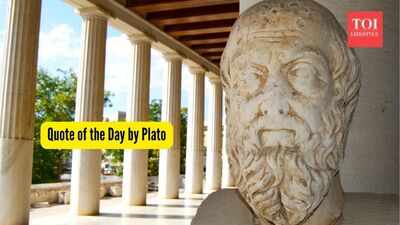
Plato’s philosophy is timeless and relevant for every age. More than 2300 years after his death Plato remains one of the most influential thinkers in the history of humankind. His ideas shaped philosophy, politics, education, ethics, science and even religion. All students of philosophy eventually come across Plato, not only because of his genius as a thinker, but because of the questions he asked, which are profoundly relevant today: Justice is the notion of moral rightness based upon ethics, rationality, law, equity, fairness and religion. It also includes the fair and equitable enforcement of laws (judicial systems and due process of law). Justice is also the idea of fairness and moral rightness which is used to guide behaviour and decision making. What makes a good society? Can knowledge improve us as human beings? What is the purpose of schooling? How shall leaders be selected?Unlike many of the other ancient thinkers whose ideas have been lost to history, Plato left behind dozens of written dialogues that are still being studied throughout the world. His influence can be felt in modern democracies, educational institutions and debates over equality, far from the confines of philosophy classrooms. Plato was born into an aristocratic family in Athens, Greece around 428 or 427 BC. He was born at a time of great upheaval in Greece, the Peloponnesian war, fought between Athens and Sparta. Growing up in a politically unstable environment had a strong influence on his ideas of leadership and government.Plato, when he was young desired to be a politician. But all of this changed when he became a student to one of the greatest philosophers in history, Socrates. Socrates believed the path to truth was through questioning assumptions and engaging in dialogue. He did not preach, but rather asked probing questions which led people to examine their beliefs.Plato loved his teacher a great deal. In 399 BC, the government of Athens tried Socrates on charges of corrupting the youth and impiety and sentenced him to death. Plato believed the trial was a terrible failure of democracy and of justice. He witnessed the murder of his mentor, which changed his life and led him to write down the teachings of Socrates.Plato travelled around the Mediterranean for a few years after the death of Socrates. Historians believe he travelled in Egypt, southern Italy and Sicily where he met mathematicians, scientists and followers of the philosopher Pythagoras.Travel broadened his intellectual horizons and strengthened his conviction that education was the bedrock of a just society. Around 387 BCE, Plato founded the Academy in Athens, one of the first institutions of higher learning in the world. Some schools concentrated on rhetoric or vocational training, but the Academy encouraged its students to study mathematics, philosophy, astronomy, politics and ethics in combination. The Academy survived for almost 900 years, which is one of the longest surviving educational institutions in recorded history.IdeologyPlato thought that reality was more than what humans could see with their senses. He says that the physical world is always changing, and so is always imperfect. Real knowledge is knowledge of the eternal truths and not of the appearances. One of his most famous philosophical ideas is the Theory of Forms which states that everything we see is an imperfect version of an ideal form. For example, all beautiful objects reflect the perfect idea of beauty but none of them is absolutely beautiful. He felt reason should govern human life, too. Feelings and desires are important but without the balance of wisdom they can lead people astray. This emphasis on rational thinking became a mainstay of Western philosophy.Famous worksPlato wrote some thirty dialogues, many of which have Socrates as the main character. Rather than lecturing in a straightforward fashion, he led discussions that delved into complex ideas. His most famous works include-The Republic The Symposium, Phaedo, The soul and immortality and Apology. His most influential work however remains the Republic, particularly in his notions of education, leadership and social organisation.Plato’s progressive thoughts on educationTo Plato education was not merely acquisition of knowledge, or training for a job. He believed education had a change of character and allowed people to find truth. He felt that it should be the aim of education for all children to develop the body and the mind. All were to play the importance of physical training, music, mathematics, philosophy and ethics.Perhaps most controversially for the time, Plato argued that women should be educated the same as men, if they were to do the same jobs in society. In ancient Greece, women had far fewer opportunities for education than men. In this connection, however, Plato’s views were surprisingly progressive, especially in regard to the women of the guardian class in his ideal state.Foundations of philosophy Almost all branches of Western philosophy, from ethics and political philosophy to metaphysics, have emerged from a dialogue with Plato’s thought. His belief that education should be about critical thinking rather than rote memorisation still resonates through universities. His ideas on justice, leadership and government are the foundation of political theory.The focus on logic and mathematics in Plato’s work resulted in a systematic approach to scientific inquiry.Perhaps the most famous expression of the remarkable extent of Plato’s influence is the statement by the philosopher Alfred North Whitehead that the history of Western philosophy is a “series of footnotes to Plato.”Quote of the Day by PlatoOne of the most iconic lines of Plato are, “If women are expected to do the same work as men, we must teach men and women the same things.” Plato says society cannot reasonably expect equal performance if it provides unequal preparation. If two people are going to share the same responsibilities they need to be given the same opportunity to learn, develop skills and gain experience. The quote is not really about gender at its heart. It is about fairness, fairness and equal opportunity. Plato’s education should be adjusted to the individual’s capacities and duties, not social expectations or traditional roles.The statement is a challenge to a contradiction that still exists in many societies today. Women and men are expected to contribute equally in the workplace, public life and leadership, but unequal access to education, training or opportunities continue to create barriers. Plato realised that without a common basis of education for all people, there could be no real equality. The quote also reveals his general philosophy that talent is not dependent on sex. In The Republic, Plato argued that some women have the same natural abilities as men and should therefore be educated in the same way. Modern readers would question many of his suggestions for an ideal society, but his insistence that education be available to capable women was remarkably prescient for the fourth century BCE.More generally, the quotation is not solely about women and men. It’s a lesson for the ages on opportunity and merit. Equal access to learning should come with expectations at school, the workplace and society. People succeed not just because they are expected to succeed, but because they have the knowledge and skills to succeed. The quote continues to echo in today’s conversations about equal access to quality education, professional development, and leadership opportunities. It reminds us that true equality starts long before someone walks into a workplace or takes on a responsibility, it starts in the classroom.Plato died between 348 and 347 bc, but his influence has never diminished. His writings continue to inspire philosophers, educators, political theorists and ordinary readers looking for deeper answers about truth, justice and human potential.His idea of education as a process of developing wisdom, not merely practical skills, is still of great currency. His belief in stronger societies when opportunity is based on ability, not prejudice, is just as enduring. Over twenty-three centuries later, Plato’s work still inspires people to ask hard questions, challenge assumptions and pursue knowledge with humility.” His most famous remark on the education of men and women equally is a reminder that fairness is not just a matter of sharing responsibilities equally, but of giving everyone an equal chance to prepare for them.