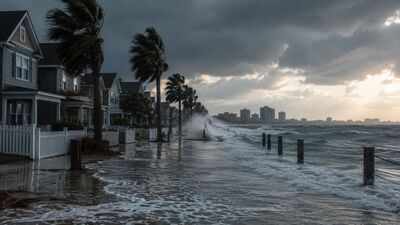
Coastal flooding that was once considered unusual is becoming a more familiar part of life in many parts of the world, and rising sea levels appear to be a major reason why. A new international study suggests that the gradual increase in ocean height has fundamentally changed how often exceptionally high sea levels occur, making damaging coastal flooding more frequent than it was a century ago. The findings point to a long-term shift rather than a series of isolated weather events, indicating that even ordinary tides and storms can now produce impacts that previously required far more exceptional conditions. According to research published in Nature, titled “Human-driven sea-level rise has quadrupled the frequency of coastal sea-level extremes since 1900”, the influence of human-driven sea-level rise is now evident across much of the global coastline, reshaping flood risk in ways that can already be measured through historical observations.
Study finds extreme coastal flooding is happening more often
The study examined more than a century of sea-level observations collected from tide gauges around the world and combined those records with climate model simulations to understand what has changed over time. Instead of focusing only on how much sea level has risen, the researchers investigated how often extreme coastal water levels now occur compared with the past.According to the study, the typical frequency of what would historically have been considered a one-in-100-year coastal sea-level event has increased dramatically on a global scale. The analysis also indicates that human-driven sea-level rise has, by itself, made these extreme events several times more likely than they were around the beginning of the twentieth century.
Why Rising Sea Levels Are Making Coastal Flooding Worse’
Coastal flooding is influenced by many factors, including tides, storm surges, seasonal climate patterns, and local geography. While these factors still matter, the research suggests that their effects are increasingly being amplified by a higher baseline sea level. According to the authors, human-driven warming has become the primary force behind the long-term rise in relative sea level since the 1960s. As oceans expand with warming temperatures and additional water enters the sea from melting land ice, the starting point for every tide and storm becomes slightly higher. That means weather events which might once have remained below flooding thresholds are now more capable of pushing water onto land.
Why some coastlines face greater flood risk than others
The researchers found that natural climate variability still affects how flood risk changes from one coastline to another. Regional weather patterns, ocean circulation and land movement continue to influence local conditions, meaning some places experience larger changes than others.Even so, the study concludes that these natural variations are now secondary across much of the world’s coastline when compared with the influence of human-driven sea-level rise. Rather than creating a completely new type of flooding, rising seas are increasing the chances that familiar coastal processes will reach damaging levels more often.
Why coastal communities may need to rethink flood risk planning
The research adds to growing evidence that coastal communities may need to rethink how flood risk is assessed. Infrastructure, drainage systems, transport networks and coastal defences are often designed using estimates based on the historical frequency of extreme water levels. If those probabilities have already shifted, planning based solely on records may underestimate future exposure.According to the study, recognising the human contribution to changing flood risk could help strengthen adaptation planning and improve how coastal hazards are incorporated into policy and long-term decision-making. The authors argue that attribution science can play an increasingly important role in managing future coastal risks as sea levels continue to rise.