
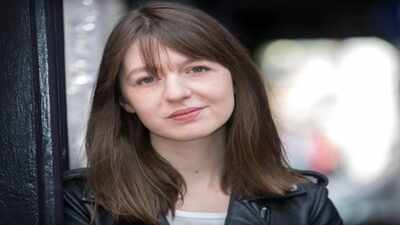
“Life is the thing you bring with you inside your own head.”― Sally Rooney, Normal PeopleIn the quiet, emotionally-fraught spaces of Irish author Sally Rooney’s novels, young people sit in cramped Dublin flats, scroll through instant messages, and struggle to bridge the terrifying distance between what they feel and what they are able to say. This core philosophy—a distinct trait of young people everywhere, especially Gen Z—is what made Rooney get the moniker of “voice of this generation”.Connell and Marianne, the protagonists of Normal People, are at their most vulnerable when they have the most to say to each other yet cannot find the words. They are intelligent and highly educated. They are also acutely conscious of social hierarchies that shape their lives. Yet they repeatedly misinterpret each other’s deepest needs. They possess profound psychological insight into one another, yet they consistently fail each other in ways that seem almost inexplicable. One gets to see this as a reader, and marvel at it because it mimics our real lives so much.What made Conell and Marianne’s relationship so affecting to millions around the world is that Rooney does not offer either character the comfort of being entirely right. They are capable of both tenderness and cruelty – often within the span of a single conversation. It feels so familiar, isn’t it?That’s the power of Rooney. She established her reputation writing about people who are far more articulate than they are certain – quite telling of our times. Her characters can fluently dissect late capitalism and structural inequality, but they struggle to understand their own relationships. They think, argue, retreat, contradict themselves, and hurt the people they love.What made Rooney such a compelling chronicler of her generation was her understanding that having the right opinions did not necessarily make anyone a better human being. Yet this internal narrative nuance stands in stark contrast to the uncompromising political stances taken by Rooney in her public life.The tension between the novelist who embraces the ambiguity of human nature; and the public figure who insists on absolute moral commitments has created one of the most intriguing cultural conundrums of the times we live in.
The art of intimate uncertainty
Rooney’s fiction operates on a fundamental truth: political correctness does not grant emotional immunity. In her debut novel, Conversations with Friends, the protagonist Frances, and her friend Bobbi, navigate complex romantic entanglements while maintaining a veneer of radical left-wing sophistication.Bobbi identifies as a communitarian anarchist, while Frances’s mother is a social democrat. They debate global geopolitics, class privilege, and structural oppression over dinner tables, yet their private actions are routinely marked by emotional cowardice, deceit, and moral carelessness.For instance, Frances reflects in Conversations with Friends that political theory often functions as an analytical shield against personal vulnerability: “Things and people moved around me, taking positions in obscure hierarchies, participating in systems I didn’t know about and never would… You live through certain things before you understand them. You can’t always take the analytical position,” says she.In Normal People, class dynamics press heavily upon Connell and Marianne, but these structural forces do not dictate a straightforward moral narrative. When the two characters discuss the economic inequities of Trinity College or the absurdity of capitalist markets, their shared political consensus does not save them from hurting one another.Rooney perfectly captures the tragedy of young intellectuals who understand the systemic roots of world problems but remain helpless to fix their own emotional lives.This thematic inquiry deepens in Beautiful World, Where Are You with long, philosophical email exchanges between Alice, a successful novelist, and Eileen, an underpaid editorial assistant. They obsess over global civilizational collapse, climate catastrophe, and political futility.Yet, amidst these macro-level anxieties, their primary concerns remain interpersonal: who loves whom, who replied to a text message, and how to find happiness in a fragile world. Eileen encapsulates this paradox in an email to Alice: “Maybe we’re just born to love and worry about the people we know, and to go on loving and worrying even when there are more important things we should be doing.”Across her novels, Rooney portrays human relationships as messy, non-linear, and resistant to dogmatic formulas. Her characters ask open-ended questions about how to live ethically under broken economic systems, but the stories themselves refuse to supply simple, moralizing answers.

Connell and Marianne, in Normal People, have the most to say to each other yet cannot find the words
The Paradox: Inner vulnerability vs. outer righteousness
In her public life, however, Rooney abandons the nuanced doubt of her fiction in favour of an uncompromising political posture. While her fiction is celebrated for its soft, probing exploration of human error, her real-world political identity is defined by absolute clarity and an unwillingness to tolerate dissent or ambiguity.This contrast became starkly evident in October 2026, when Rooney agreed to withdraw her entire book catalog from sale in the United Kingdom (UK) following her public pledge to donate book royalties to Palestine Action.There is a profound distinction between critiquing right-wing policies or opposing war and actively pledging financial backing to a radical direct-action group (that was officially proscribed as a terrorist organization by the British government under anti-terrorism legislation). Under British law, remitting earnings to a proscribed group carries severe criminal liabilities.When her publisher, Faber, clarified that continuing to supply her books in the UK had become legally impossible without committing a crime, Rooney accepted the total commercial removal of her works—including Normal People, which had sold over one million copies in the UK market alone. She also canceled public appearances in the UK, citing the threat of arrest.This action forces a critical question: How does an author whose creative work is devoted to understanding human vulnerability end up embracing a political framework so absolute that it leaves no room for legal, social, or moral gray areas?
Herd mentality, moral aggrandizing, and the ideological trap
Rooney’s real-world stance offers a case study in the socio-psychological tensions of contemporary cultural elites. Her trajectory highlights several defining psychological dynamics of our cultural moment, like the paradox of fighting totalitarianism with absolute dogma. The irony is not lost here.In modern political discourse, activism often adopts the very traits it claims to oppose. In attempting to resist injustice or authoritarian policies, activists frequently drift into binary, uncompromising mindsets.Rooney’s real-world posture mirrors this dynamic: while her fiction critiques the suffocating nature of rigid social systems, her political statements exhibit an unyielding and totalizing moral certainty. It raises a troubling psychological question: Why do intellectuals who champion human empathy in their art so easily adopt rigid, black-and-white dogmas in their politics?
Moral aggrandizing and performative certainty
In the age of social media and elite ideological bubbles, holding radical political views has become a form of social currency. ‘Moral aggrandizing’—the impulse to demonstrate personal moral superiority through extreme political purity—drives public figures to take ever more rigid stands to prove their dedication.In her fiction, Rooney brilliantly satirizes characters who use progressive jargon to cover up their selfish behaviour. As Bobbi tells Frances in Conversations with Friends: “You underestimate your own power so you don’t have to blame yourself for treating other people badly. You tell yourself stories about it.”Yet in her public life, Rooney appears susceptible to the very trap her characters fall into: prioritizing an ideological gesture over the complex realities of dialogue, nuance, and engagement.
The strange world of cultural elites
Why do contemporary literary figures so often line up behind identical political stances? Is it because modern cultural landscape incentivizes groupthink? Where dissenting from the orthodoxy of one’s social or artistic peer group carries heavy personal and professional costs?While Rooney’s public actions are framed as radical defiance against state authority, they simultaneously align with the ideological expectations of her elite literary community. The desire to remain morally pure within one’s tribe often outweighs the willingness to engage with the messy, uncomfortable compromises of real-world politics.
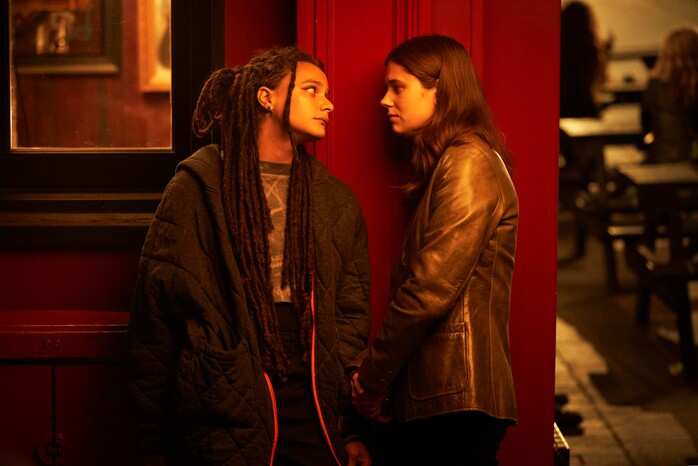
In Conversations with Friends, Frances and Bobbi navigate messy relationships beneath a veneer of left-wing sophistication.
The novelist vs. the dogmatist
Sally Rooney is not the first writer to embody this conflict between the open-ended empathy of literature and the rigid certainty of public ideology. Literary history is filled with authors whose creative works embraced human ambiguity while their personal lives were defined by unyielding doctrine.Milan Kundera and the trap of the ‘agelast’: Czech novelist Milan Kundera devoted his essay collection The Art of the Novel to exploring the threat that political dogma poses to creative literature. Kundera argued that the novel is the domain of the “wisdom of uncertainty”—a space where no one owns the absolute truth and where human actions are treated as open questions.Kundera borrowed the term agelast (Greek)—meaning “one who does not laugh” or lacks humour—to describe ideological zealots who believe the truth is self-evident and that everyone must agree with them. He warned that dogmatists cannot tolerate literature because fiction insists on ambiguity, whereas ideology demands absolute obedience.Rooney’s novels belong firmly to the Kunderan tradition of doubt, yet her public political persona risks morphing into the very agelast Kundera warned against — an ideologue who demands absolute, non-negotiable moral alignment.Leo Tolstoy: The compassionate novelist vs. the moral zealot: Russian novelist Leo Tolstoy provides another historical parallel. In War and Peace and Anna Karenina, Tolstoy showed an astonishing capacity to empathize with deeply flawed human beings. His characters make disastrous mistakes, harbour contradictory motives, and wander in spiritual darkness, yet Tolstoy treats them with profound narrative grace.In his later life, unfortunately, Tolstoy underwent a radical shift. He embraced a rigid, uncompromising form of Christian anarchism, denounced his own literary masterpieces as immoral, and issued severe, black-and-white moral decrees to his followers.Rooney’s choice to allow her books to be withdrawn from UK bookstores brings her underlying paradox into sharp focus. It leaves readers and critics with fundamental questions about art, psychology, and public life in our era.The questions that stand out are:
- Why do modern intellectuals create art that celebrates human imperfection while adopting public stances that tolerate no imperfection at all?
- Has political activism in the cultural sphere become less about achieving practical outcomes and more about demonstrating moral purity?
- When an author insists on binary answers in the real world, does it inevitably undermine the open-ended empathy that makes her fiction so moving?
Rooney’s fictional characters—Connell, Marianne, Frances, and Alice—are fascinating because they are flawed, uncertain, and are constantly asking how to love and live in a confusing world. They remind us that human beings are rarely as clean or consistent as their political theories.Yet as long as the author holds firmly to uncompromising positions in her public life, the tension will remain between the novelist who explores the uncertainties and contradictions of being human and the public figure who appears unwilling to make room for doubt.