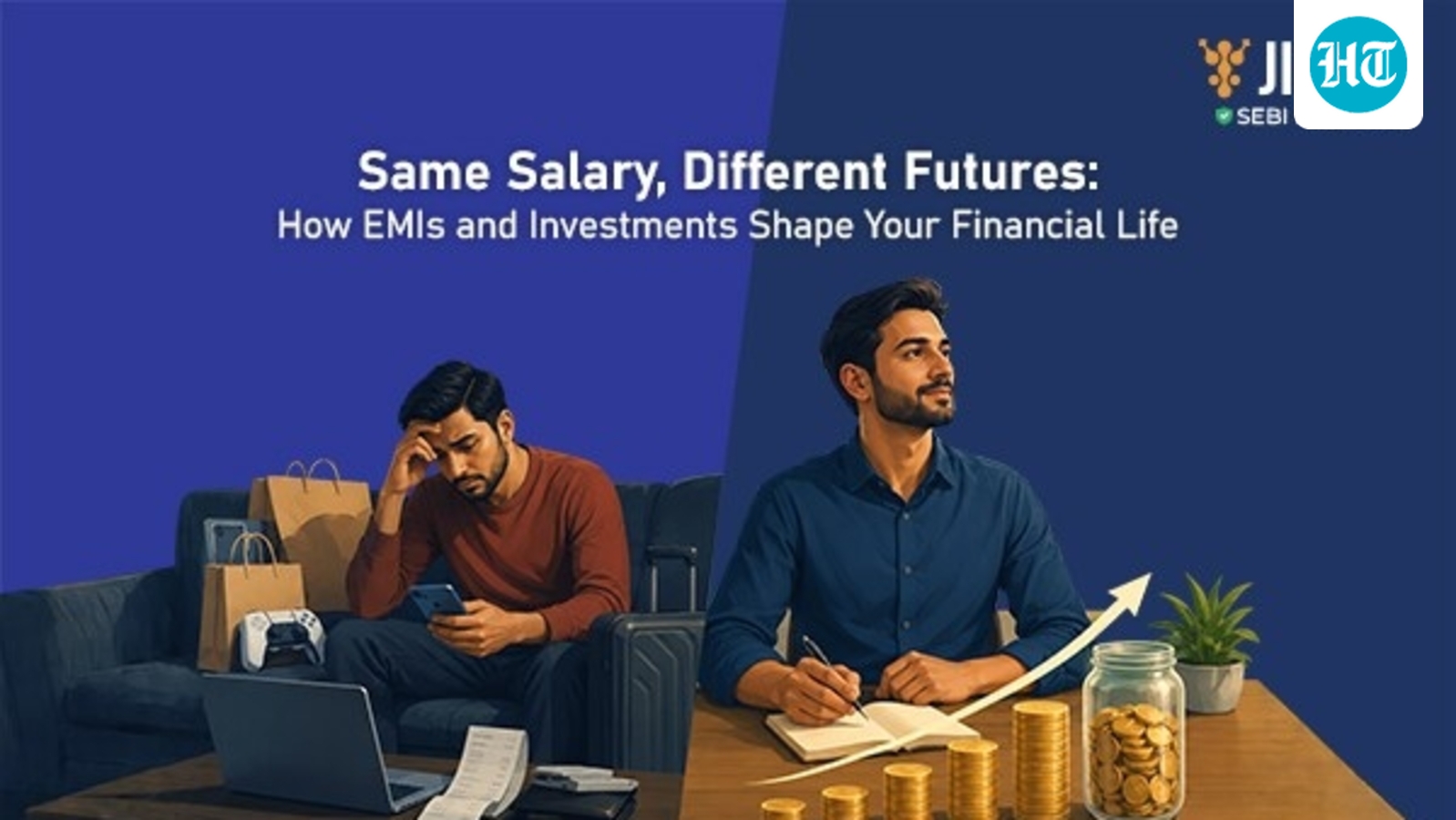
Ayush and Krish have a lot in common. Both have around six years of corporate experience and take home close to ₹1.5 lakh a month. Yet their finances tell two very different stories.
Ayush starts every month with nearly ₹45,000 committed to EMIs for his phone, PS5, sofa, and a 2025 vacation. He manages to invest around ₹10,000 a month.
Krish, on the other hand, has no lifestyle EMIs, invests close to ₹70,000 every month, and has built a ₹3 lakh emergency fund”> ₹3 lakh emergency fund.
While their incomes are the same, their financial momentum is very different.
When EMIs Start Eating Into Your Salary
EMIs are not inherently problematic. A home loan can help finance the purchase of a long-term asset, while a car loan may be practical when a vehicle is necessary.
The equation changes when EMIs become the default method for funding lifestyle expenses. A premium phone may cost ₹10,000 a month. A holiday may add another ₹20,000. Furniture and gadgets add a few thousand more. Individually, each EMI looks manageable. Together, they can quietly absorb a large part of monthly income.
For Ayush, nearly 30% of his take-home salary is already committed before rent, groceries, and other expenses are accounted for.
The real cost is not just what he pays every month. It is what that money is no longer available for: an emergency fund, investments, a home down payment or other future goals.
Ayush Can Gradually Create More Room
Ayush does not need a dramatic lifestyle overhaul.
One way to reduce the pressure is the debt snowball method, where smaller outstanding loans are cleared first while regular payments continue on the others. Each completed EMI releases cash flow monthly.
Suppose his ₹10,000 phone EMI ends. Instead of replacing it with another gadget, the EMI can be directed toward prepaying his other outstanding EMIs or can be invested.
His current ₹10,000 monthly investment”> ₹10,000 monthly investment could then increase to ₹20,000 and gradually rise as more EMIs are paid off.
The shift may seem small initially, but it changes the direction in which his salary is moving. Less money goes toward past consumption, and more begins building future assets.
Krish Is Moving Into the Next Stage
Krish faces a different challenge.
He has already built an emergency fund and a strong investment habit. His next phase is about giving different parts of his portfolio different roles.
Equity investments can continue to focus on long-term growth, while some money can be allocated toward shorter-term goals and more stable assets.
This is where bonds can become relevant.
If most of Krish’s ₹70,000 monthly investments currently flow into equity mutual funds, adding investment-grade corporate bonds, government securities, or other fixed-income instruments can diversify the portfolio.
Bonds can also generate regular income. Over time, these cash flows can create an income buffer alongside his salary.
The interest can be reinvested, accumulated for future expenses, or used to build another layer of financial flexibility.
For Krish, therefore, the investment journey is moving from simply accumulating assets to combining growth, diversification, and income.
The Difference Becomes Bigger With Time
Ayush invests ₹10,000 a month, or ₹1.2 lakh a year.
Krish invests ₹70,000 a month, or ₹8.4 lakh a year.
₹7.2 lakh every year”>That is a difference of ₹7.2 lakh every year.
Over ten years, Krish would have contributed ₹72 lakh more toward investments, even before considering any investment returns.
The gap did not come from earning a higher salary. It came from what happened to the salary after it was deposited into the bank account.
Lifestyle inflation often works quietly. A better phone, another subscription, a bigger holiday, or one more EMI rarely feels significant on its own.
Investing works the same way in reverse. An additional ₹5,000 or ₹10,000 invested every month may not look transformative today, but if done consistently, it can materially change the financial picture over time.
Same Income, Different Outcomes
Ayush and Krish do not represent a choice between spending and saving. Both can travel, buy good phones, and enjoy their incomes.
But in Ayush’s case, the difference is in how much of today’s salary is committed to yesterday’s purchases and how much is being directed toward tomorrow.
A high salary can fund a good lifestyle. But the portion that is consistently converted into savings and investments is what gradually builds financial flexibility.
Ayush and Krish earn the same amount today.
Their choices could make their balance sheets look very different a decade from now.
Note to the Reader: This article is part of Hindustan Times’ promotional consumer connect initiative and is independently created by the brand. Hindustan Times assumes no editorial responsibility for the content.