
Soil stores more than three times the carbon found in the atmosphere, making it an important part of Earth’s carbon cycle. However, rising temperatures can affect how much carbon remains in the ground. A 12-year field experiment at the University of Oklahoma has found that rainfall plays a critical role in determining whether warming causes soil carbon losses or gains.The study, published in Nature Climate Change, titled ‘Drought amplifies warming-induced soil carbon loss in a decade-long experiment’, found that warming reduced soil carbon by 12.2% under drought conditions but increased it by 6.7% under wet conditions. The findings also point to soil microbes as key drivers of these contrasting responses.
A 12-year experiment revealed how drought and rainfall affect soil carbon levels
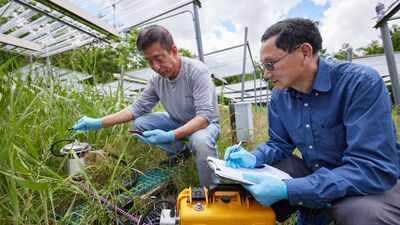
According to the University of Oklahoma, the experiment took place at the Kessler Atmospheric and Ecological Field Station in Oklahoma. Researchers investigated how warming affected soil carbon under different precipitation conditions over 12 years. They found that the effects of warming depended on whether the soil experienced drought or wet conditions. Warming reduced soil carbon by 12.2% under drought conditions, while it increased soil carbon by 6.7% under wet conditions.The researchers said the long-term experiment addressed an important gap in existing research, as most previous studies lasted fewer than five years.
Why soil carbon needs to be studied over longer periods
Researchers said differences in earlier findings may be linked to the short duration of many experiments. Soil carbon cycles slowly, meaning studies lasting fewer than five years may not capture its long-term responses to warming. Jizhong Zhou, director of the Institute for Environmental Genomics and George Lynn Cross Research Professor in the School of Biological Sciences, said, “This discrepancy likely arises because most studies rely on snapshot data from relatively short experiments, ignoring the long-term temporal dynamics of soil carbon under warming, particularly in conjunction with co-occurring changing factors like drought, wet conditions, and land-use change”.
Warming increased microbial activity and carbon loss during drought
The researchers found that carbon losses during drought primarily resulted from declines in mineral-associated organic carbon. This form of carbon has long been considered stable and resistant to decomposition. Warming increased microbial metabolic activity under drought conditions, causing microbes to consume carbon at higher rates. Under wet conditions, warming suppressed the same activity.These contrasting responses were accompanied by changes in microbial community composition and the prevalence of carbon-degrading genes. The researchers said these microbial changes appear to be the primary mechanisms through which warming and precipitation interacted to influence soil carbon.
Soil microbes improved predictions of future soil carbon changes
The researchers incorporated microbial dynamics into an ecosystem model to assess whether including these processes improved predictions of soil carbon changes. The model produced substantially better predictions when microbial measurements were included. The findings note that ecosystem models that exclude microbial processes may produce inaccurate projections of soil carbon dynamics.The study highlights the importance of accounting for interactions between warming, precipitation, and soil microbes when estimating future changes in soil carbon storage. Its results also point to the need to consider drought conditions when assessing how soils respond to a warmer climate.