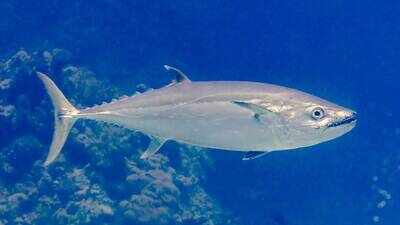
A long-standing scientific theory linking the extinction of dinosaurs to the evolution of modern tuna has been challenged by a new Yale University study. Researchers have found that the asteroid strike that wiped out non-avian dinosaurs 66 million years ago did not directly trigger the evolution of large, fast-swimming, warm-blooded predators such as tuna.The findings, published in the journal Proceedings of the Royal Society B, suggest that tuna and their relatives evolved their defining characteristics gradually over tens of millions of years rather than rapidly after the mass extinction event.
New study challenges popular dinosaur extinction theory
For years, scientists believed that the asteroid impact responsible for the Cretaceous–Paleogene (K-Pg) extinction created an ecological opportunity for tuna and other large marine predators to thrive. According to this theory, these fish filled the vacant ecological roles left behind by extinct marine reptiles and other large predators, much like mammals diversified after the disappearance of dinosaurs.However, the new research paints a different picture.The Yale team combined genetic data with fossil evidence to build what they describe as the most comprehensive evolutionary tree yet for the Scombridae family, which includes tuna, mackerel and several other fast-swimming fish species.While the analysis showed that the ancestors of these fish appeared around the time of the asteroid strike, it found that their large body size and ability to regulate body temperature evolved much later.
Tuna evolved over millions of years, not immediately after asteroid impact
Lead author Chase Brownstein, a graduate student in ecology and evolutionary biology at Yale, said the study found no evidence that the dinosaur extinction directly caused tuna to evolve into the predators they are today.“Our results demonstrate the K-Pg extinction did not trigger the evolution of tunas and related large, endothermic predators,” Brownstein said.He explained that the body structures of these predators developed gradually over tens of millions of years and that there is no clear connection between the evolution of warm-bloodedness and large body size in these fish.According to the researchers, different forms of endothermy, the ability to regulate body temperature, evolved independently three separate times within the Scombridae family. At least two of these evolutionary events occurred 10 to 15 million years after the asteroid struck Earth.The study also found that increases in body size happened at different points throughout the group’s evolutionary history rather than during a single period following the mass extinction.Overall, today’s tuna and mackerel evolved their modern body plans over roughly 50 million years, the researchers said.
Findings could help tuna conservation and human health research
Senior author Thomas Near, a professor of ecology and evolutionary biology at Yale, said understanding how tuna evolved could support conservation efforts for commercially important species such as the Atlantic bluefin tuna, whose populations have declined significantly because of overfishing.Near also said the findings may have broader scientific relevance.“Understanding that endothermy independently evolved multiple times in tunas and mackerels provides insight into the fundamental machinery underlying metabolism and thermoregulation,” he said.While he stressed that there is no direct link, he noted that studying how these biological systems evolved over millions of years could improve scientists’ understanding of metabolic processes involved in human conditions such as obesity, diabetes and metabolic syndrome.The research was supported by the Yale Training Program in Genetics, the Bingham Oceanographic Fund of the Yale Peabody Museum, and the National Science Foundation.