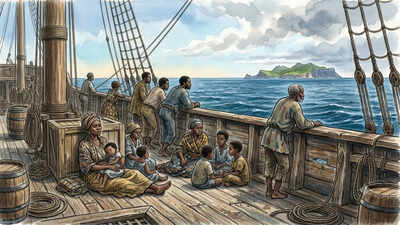
Nearly 200 years after thousands of Africans were rescued from illegal slave ships and taken to the remote island of Saint Helena by the British royal navy, scientists have uncovered new clues about where many of them came from and the journeys they were forced to make before crossing the Atlantic.The research, published in the journal Science, combines historical records, chemical analysis of teeth, computer modelling and ancient DNA to reconstruct the childhood origins of 152 people buried on the island, Live Science reported.The findings show that some came from coastal parts of western Central Africa, while others were taken from regions hundreds or even thousands of kilometres inland, which means that their forced journeys often began long before they were put on slave ships.Researchers say the study not only adds to the historical record but also helps restore part of the identities of people whose lives were erased by the transatlantic slave trade.
The story of rescue
Saint Helena is a small volcanic island in the South Atlantic Ocean, located more than 1,000 miles off the west coast of Africa. Between 1840 and 1863, the British Royal Navy intercepted hundreds of illegal slave ships that were heading to the Americas.The ships’ captives were brought to a ‘Liberated African establishment’ on Saint Helena after being freed. During that period, nearly 27,000 Africans arrived on the island.However, freedom did not mean survival for everyone. Around 8,000 people died soon after reaching the island because of severe illness, malnutrition and diseases that had spread aboard the overcrowded slave ships.For many years, little was known about these individuals. Their graves remained forgotten until construction work for Saint Helena’s airport led archaeologists to uncover two unmarked mass burial sites during excavations in 2007 and 2008.Since then, local organisations and researchers have worked together to learn more about the people buried there and ensure they are remembered with dignity.
The research
The research team examined the teeth of 152 individuals recovered from the burial sites. Instead of looking only at bones or DNA, the scientists combined several methods to build a more complete picture of each person’s life.One of the most important tools used was strontium isotope analysis. Strontium is a naturally chemical element found in rocks, soil, water and food. Different regions have different combinations of strontium isotopes based on their geology.When children grow, the food and water they consume leave these chemical signatures in their tooth enamel. This does not change as they age which acts like a permanent record of the where a person grew up.By comparing the chemical signatures in the teeth with detailed geological maps of Africa, researchers estimated where each individual was most likely raised.The team also used ancient DNA to understand broader ancestry and compared the results with historical records describing where intercepted slave ships had departed.According to Professor Vicky Oelze from the University of California, Santa Cruz, using different methods together produced much stronger evidence than relying on just one.“The strength of this study lies in bringing together evidence that speaks to different parts of a person’s life history,” she said, as quoted by University of California, Santa Cruz.“Isotopes tell us about childhood environment, ancient DNA about deeper ancestry, and historical records about the ships and ports involved. Together, they allow us to narrow uncertainty in ways none could do alone,” she added.
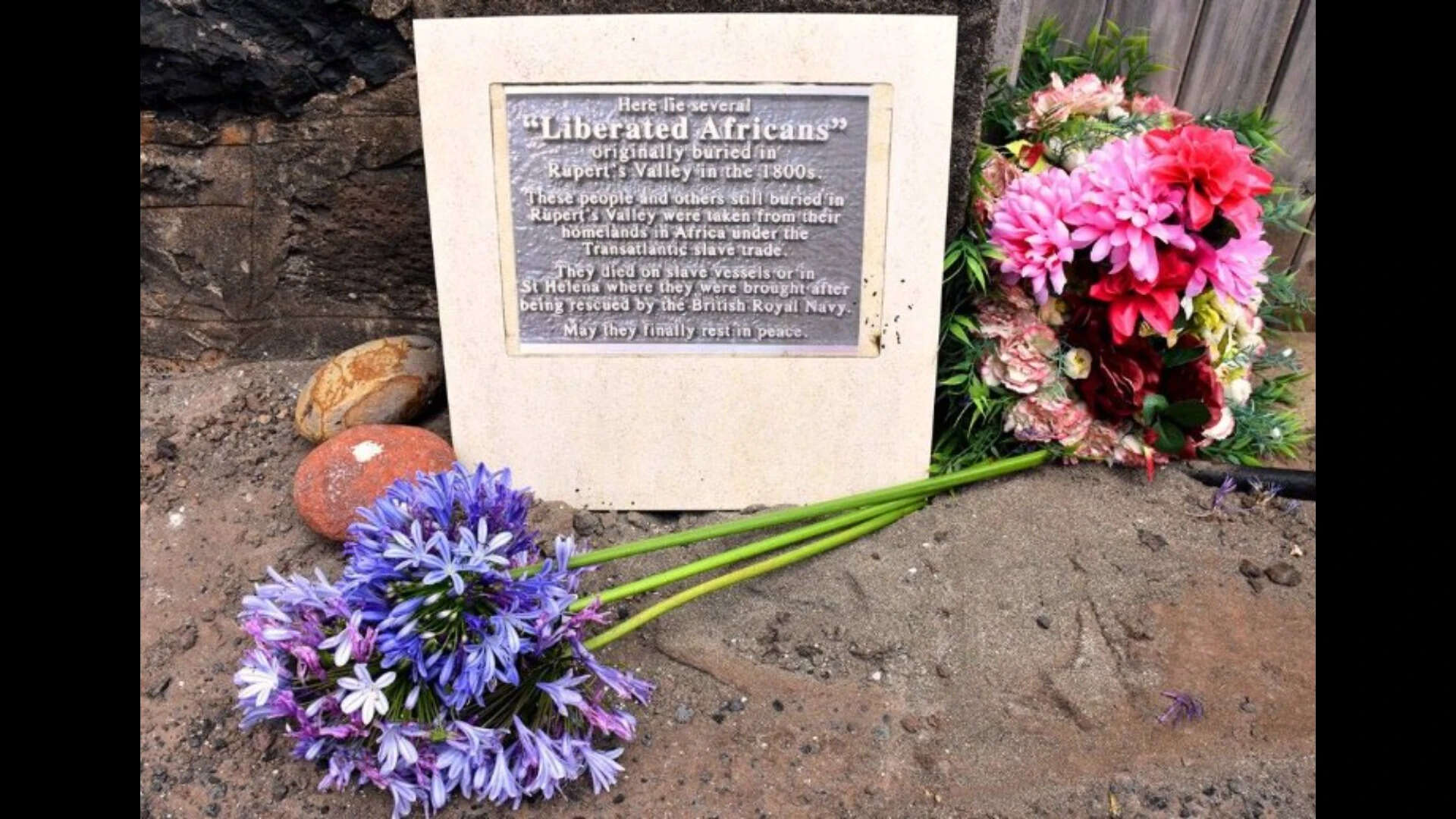
A commemorative plaque on Saint Helena island. Photo credit: St Helena Government
Western Central Africans
The study found that many of the people had childhood chemical signatures matching coastal or near-coastal areas of western Central Africa.This agrees with historical records showing that many slave ships intercepted by the Royal Navy had left ports located in what is now Angola and the Congo region.However, not everyone came from the coast. Some people had isotope patterns linked to inland regions, including interior Angola and parts of southeastern Africa. These findings suggest that many captives had already been forced to travel long distances across Africa before they even reached the coast.Researchers believe some were moved hundreds or even thousands of kilometres before being loaded onto slave ships bound across the Atlantic.
The child slaves
The scientists looked even more closely at 41 individuals by analysing different teeth that formed at different stages of childhood.This approach helped them determine whether a person had lived in the same place while growing up or had moved.Most individuals showed similar chemical signatures across different teeth, suggesting they spent their early years in roughly the same region.But several people had clear differences between their teeth. In some cases, changes were even found within a single tooth as it was developing. These differences were evidences that some children were relocated in childhood itself.One example highlighted in the study involved a man who died between the ages of 19 and 25. His teeth suggest that he moved from inland Angola to the coast when he was between about seven and nine years old. Researchers say it is possible this movement was connected to his enslavement.
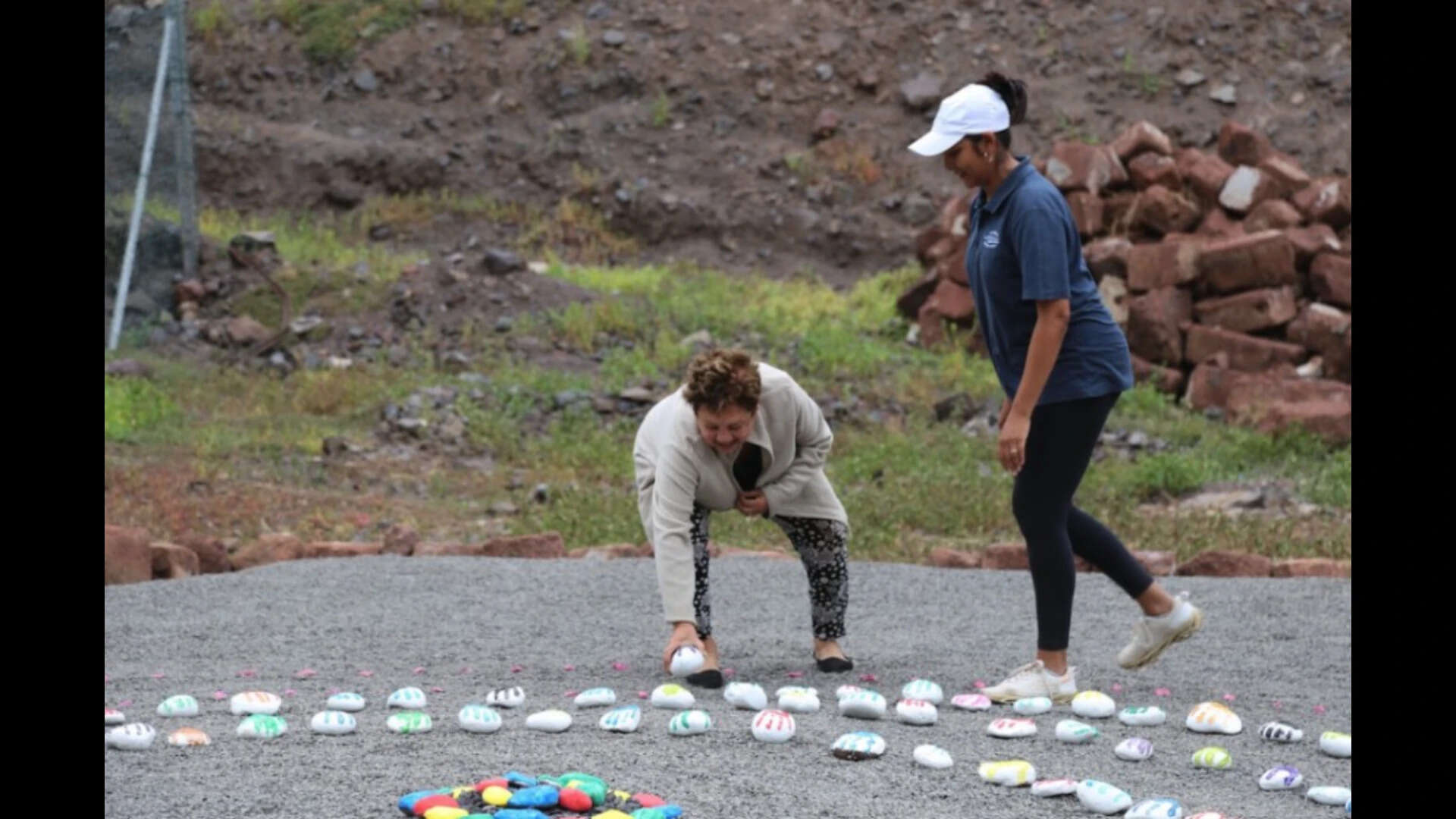
In 2023, schoolchildren’s handprints were painted on pebbles collected from the beach where the Liberated Africans first landed on Saint Helena and placed at the reburial site. Photo credit: Saint Helena National Trust.
DNA findings
Researchers also analysed ancient DNA from 20 individuals. The genetic results showed connections with present-day populations living in Gabon and northern Angola, while also revealing considerable diversity among the people buried on Saint Helena.The DNA evidence matched historical accounts written by Royal Navy personnel, who reported hearing several different languages among the rescued captives, including Congo and Benguela dialects.Together, the historical documents, isotope evidence and DNA analysis point to a population that came from many diff erent communities across Central Africa rather than a single location.
Restoring histories
The research was carried out with the involvement of the Saint Helena community. Following the discovery of the burial sites, the Liberated African advisory committee was established under the Saint Helena National Trust to guide decisions on research, remembrance and reburial. The remains were respectfully reburied on the island in 2022.Researchers considered whether the remains could be returned to African countries, but the study found that identifying one specific homeland for many individuals would be difficult because their likely origins often covered several regions.