
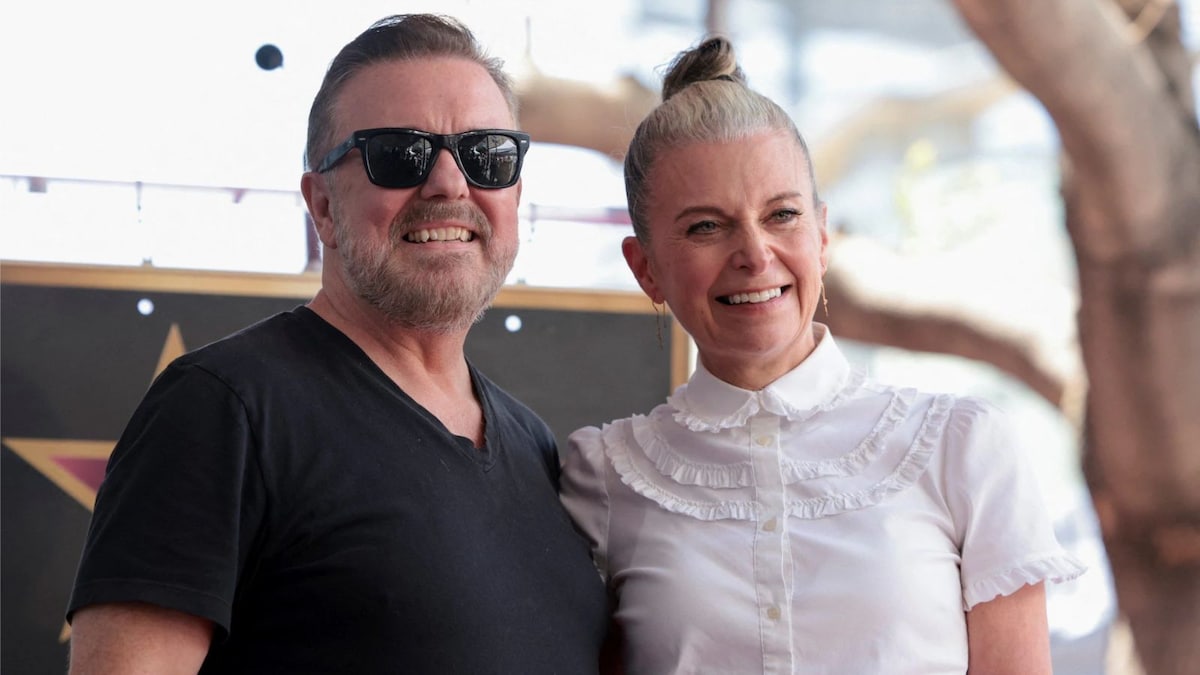
According to a report by The Telegraph, the 65-year-old comedian has been in a relationship with novelist Fallon since 1982. Gervais had previously said there was no reason for them to marry, joking that it would not be “before the eyes of God, as there is no God”.
However, speaking to Saga Magazine, Gervais said the prospect of inheritance tax could change his mind.
“And that will be the reason I marry. But if it wasn’t for that… Why? It’s mad,” he said, describing inheritance tax as “horrible”.
“I’ve got to get around to marrying before I die,” he added.
Gervais also questioned the need for a formal marriage given the length of his relationship with Fallon.
“How more married can you be? We share all our money, we’ve been living together for 40 years. Some marriages don’t last a year,” he said.
Why marriage could reduce Gervais’s inheritance tax bill
Under UK inheritance tax rules, tax is generally charged at 40% on an estate above the tax-free threshold of £325,000. The threshold can rise to £500,000 when a main residence is passed to a direct descendant.However, assets passed between spouses can generally be transferred without an inheritance tax charge.
For Gervais, this could be significant given his property holdings. The Telegraph reported that these include a seven-bedroom home in Hampstead, North London, valued at around £15m, featuring a cinema, bar, gym, steam room, sauna and wine cellar. He also has a planned mansion in Marlow, Buckinghamshire, and an apartment in New York.
The comedian sold another New York apartment on East 63rd Street last year for $1.4m (£1m), below the $1.66m he and Fallon paid for it in 2008, according to The Telegraph.
Gervais and Fallon do not have children. The comedian has previously said he did not want to have children, citing the amount of time he would have had to dedicate to raising them.
Inheritance tax has become an increasing concern for UK families, with the number of estates liable for the levy expected to rise. The Telegraph reported that close to 10% of estates could be subject to inheritance tax by 2031.
The newspaper attributed the increase partly to frozen inheritance tax thresholds, which have allowed rising property prices and other asset values to bring more estates into the tax net.
The government is forecast to collect a record £14.5bn from inheritance tax, while the number of estates expected to be liable is projected to reach 63,100 in 2029-30, compared with 32,200 families forecast to have paid in the previous year, according to The Telegraph.