
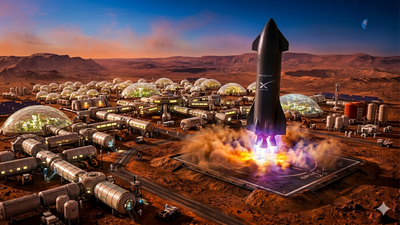
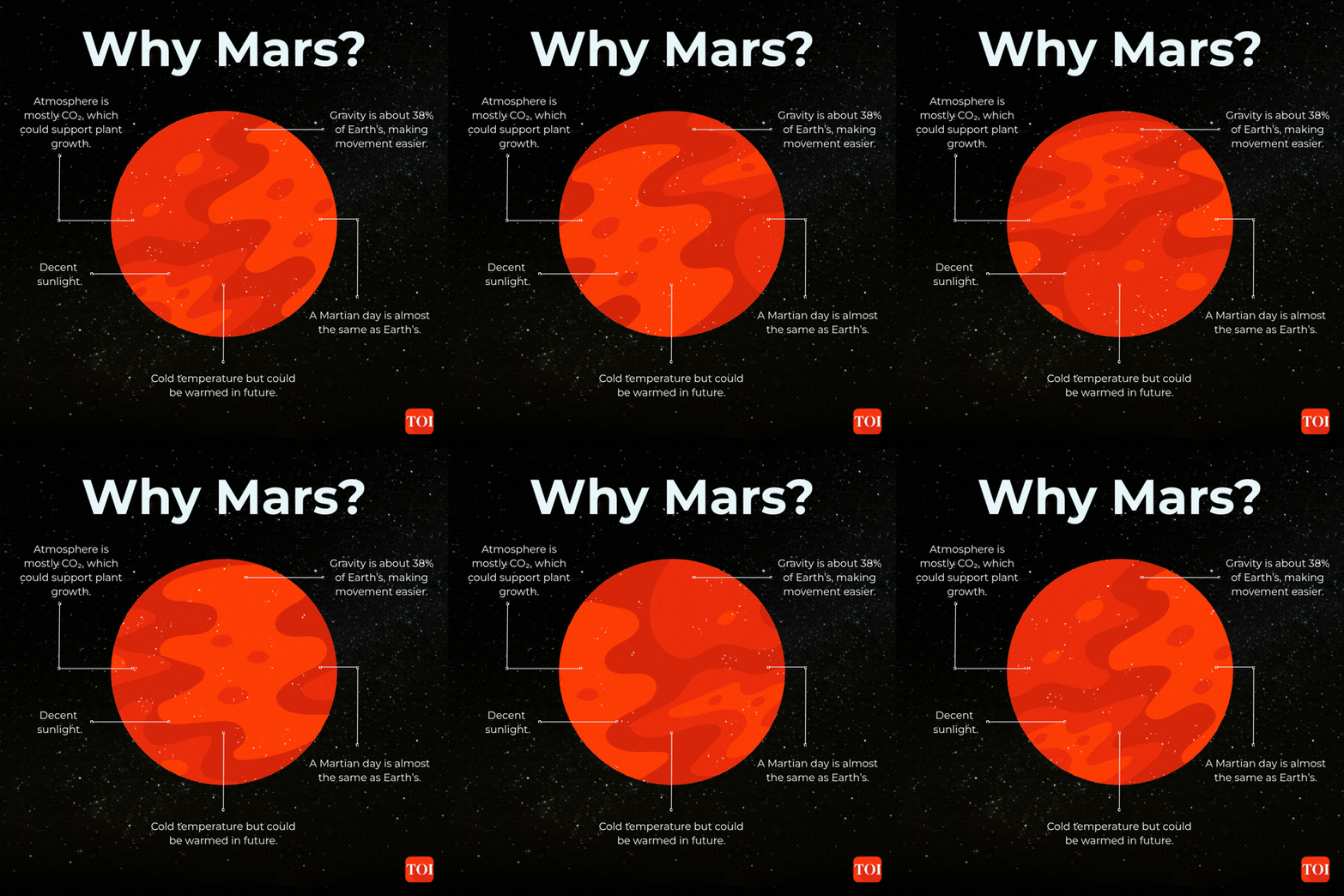
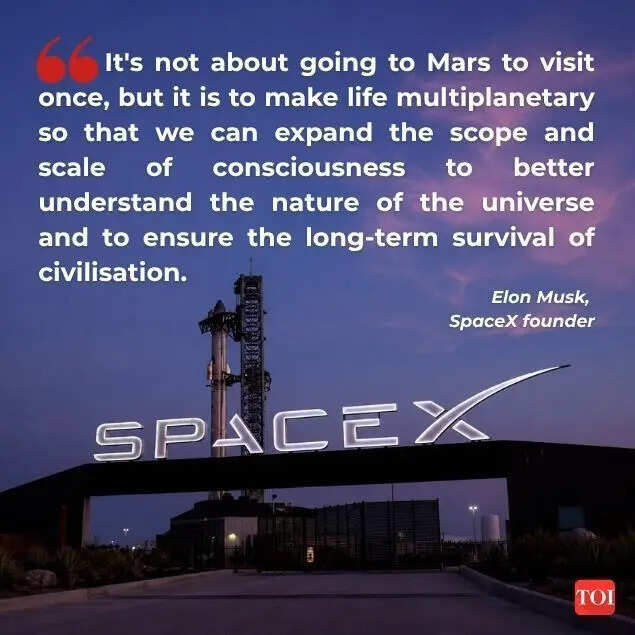
The world’s first trillionaire has promised to take you to Mars, but can he?Elon Musk, the world’s richest man, is no longer just looking at Earth, but straight at the little red planet: Mars. The SpaceX founder has an interstellar dream: not just to visit the red planet, but to help build a permanent human settlement there, turning humanity into a multi-planet species.As Musk puts it, “it is to make life multi-planetary so that we can expand the scope and scale of consciousness… and ensure the long-term survival of civilization.”This obsession isn’t new. Musk has been chasing the idea since the early 2000s, convinced Earth is a bit too fragile for long-term comfort. In his view, Mars is basically “life insurance” for humanity, a backup planet in case Earth ever has a really bad day.But the reality check is harsh. Mars isn’t just an average little planet far away, it’s cold, dry, and completely unfriendly to human life. You don’t just land and settle in. Getting there is only step one. But the reality check is harsh. Mars isn’t just an average little planet far away, it’s cold, dry, and completely unfriendly to human life. You don’t just land and settle in. Getting there is only step one.
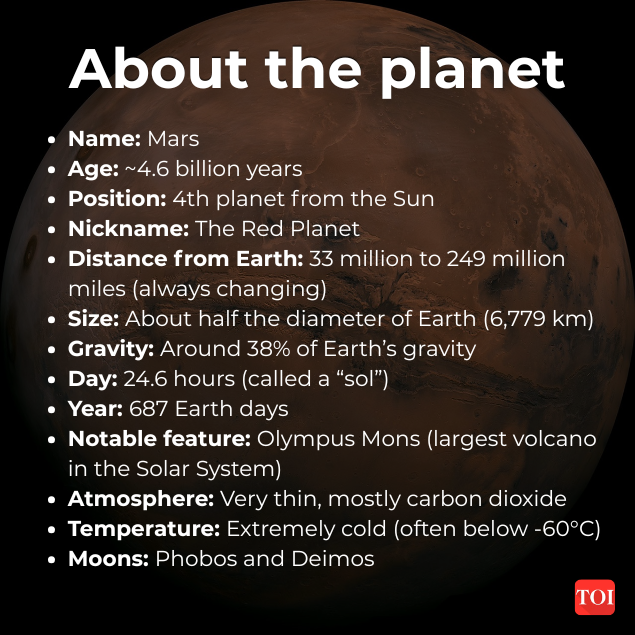
The real challenge is survival, building reliable systems for air, food, energy, and shelter that can actually keep humans alive for the long haul. One missing piece, and the whole mission is back to square one.This is exactly what SpaceX does building powerful, reusable rockets with one big aim: to make space travel less of a once-in-a-lifetime event and more like a scheduled shuttle service, at least in theory. The long-term vision sounds simple, but the execution is a herculean task: create a transport system that can run regular trips between Earth and Mars.For Musk, Earth isn’t the final stop, it’s just a temporary home. The tech mogul has repeatedly warned that eventually “all life on Earth will be destroyed by the Sun” as it slowly expands. So humanity has time, but not forever, with estimates pointing to roughly 450 million years before Earth becomes uninhabitable.
Starship and beyond
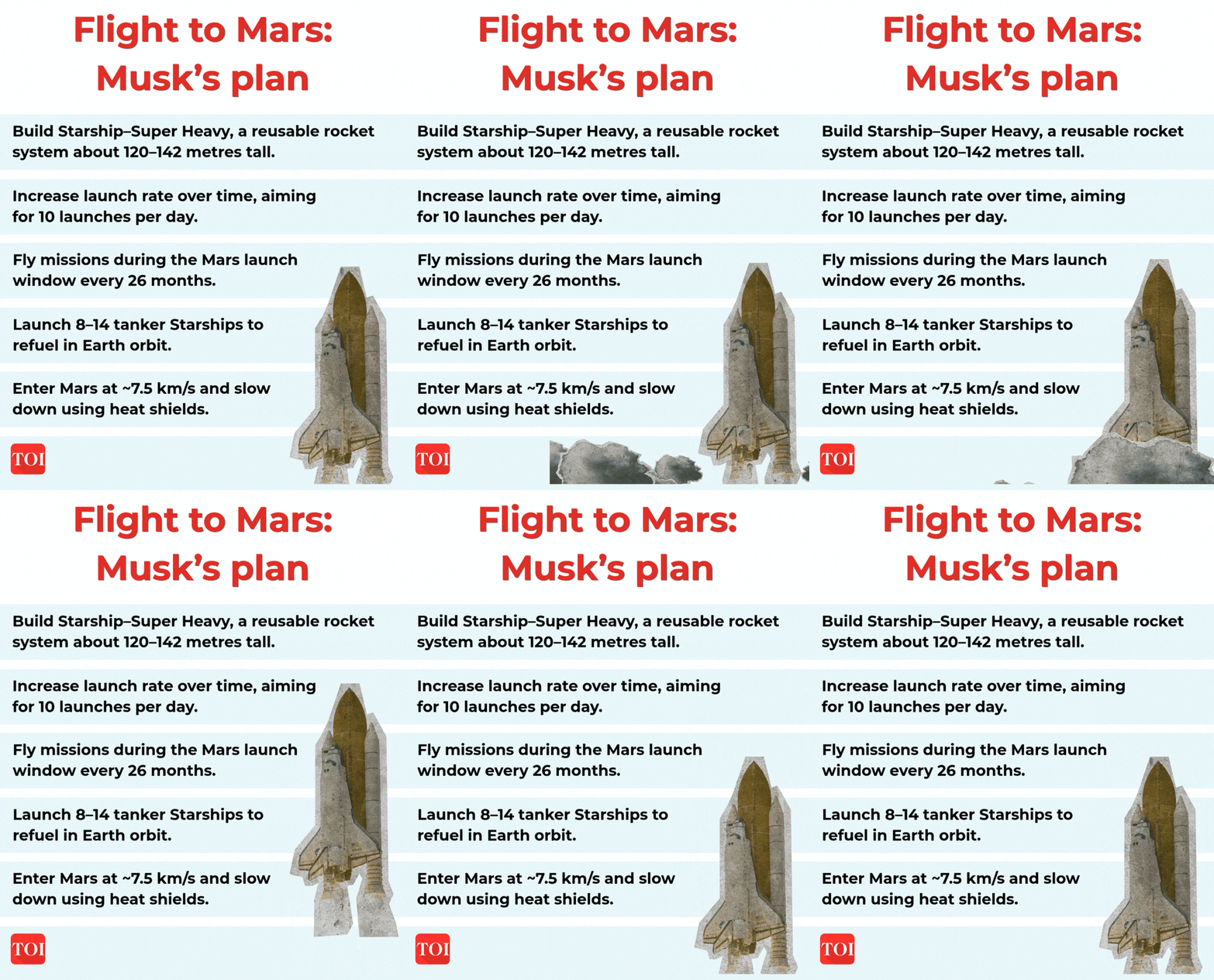
As the backbone of this ambition stands the most powerful launch system ever built: the Starship-Super Heavy stack.The fully integrated system reaches heights of approximately 120–142 metres depending on configuration, making it the largest operational rocket system in human history. It is designed as a fully reusable transport architecture capable of lifting 100–150 tonnes to orbit.
System overview
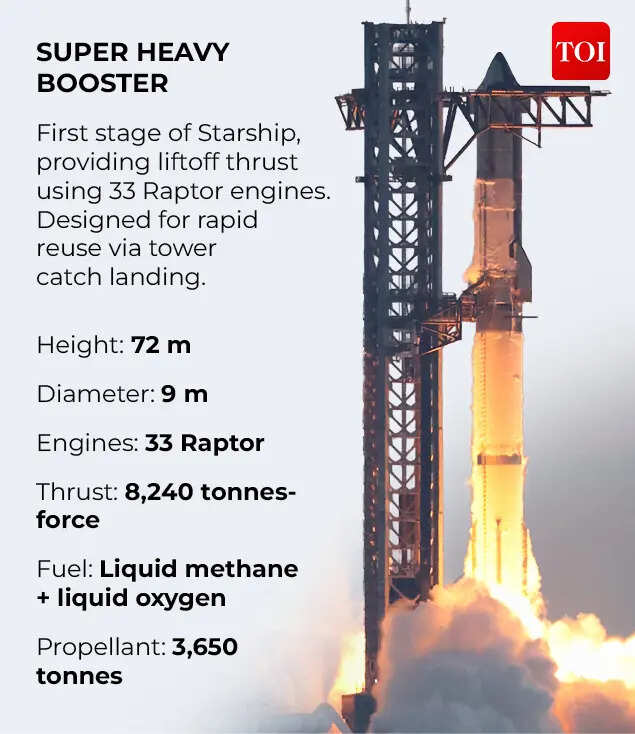
The vehicle consists of two primary stages:1. Super Heavy Booster (First Stage)This booster is designed not to be discarded, but recovered. In a radical departure from conventional rocketry, it is intended to return to the launch site and be caught mid-air by mechanical arms on the launch tower—an infrastructure system informally known as “Mechazilla.”
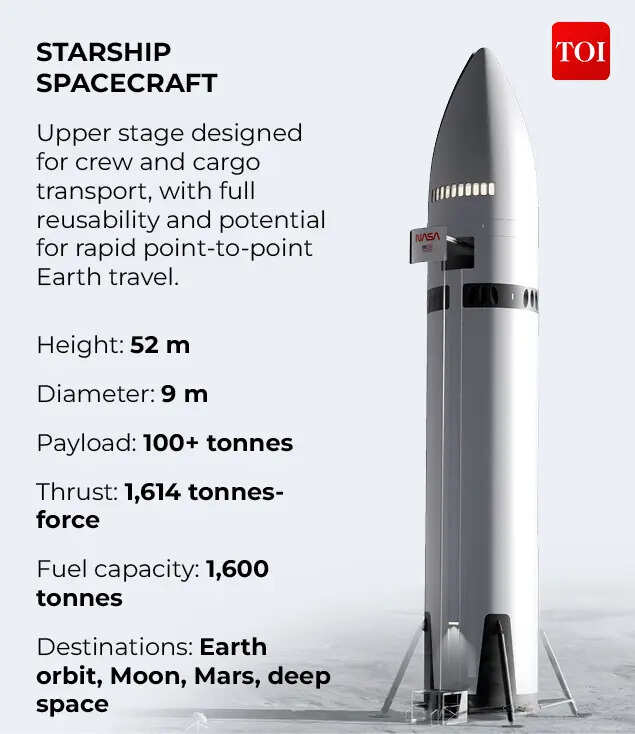
2. Starship Upper Stage (Spacecraft)This upper stage is the actual interplanetary vessel. It is expected to carry cargo, humans, and eventually full settlement payloads to Mars.Together, the system is not just a rocket, it is a reusable transportation network designed to make spaceflight economically scalable.
The entire architecture depends on one of the most advanced rocket engines ever built: the Raptor engine.Raptor uses a full-flow staged combustion cycle, burning liquid methane ($CH₄$) and liquid oxygen ($LOX$). This design achieves extreme efficiency and high chamber pressures exceeding 300 bar.Methane was chosen deliberately over kerosene or hydrogen for two critical reasons:First, it burns cleanly, reducing engine degradation and enabling rapid reuse. Second, and more importantly, it can theoretically be produced on Mars using local resources.This second factor is the backbone of Musk’s interplanetary strategy: in-situ resource utilisation (ISRU). If methane can be manufactured on Mars, return missions become possible without hauling fuel from Earth.
The orbital puzzle
Getting to Mars is not a direct trip, it is a logistical relay.Starship cannot carry enough fuel from Earth to both reach Mars and return. Instead, it must be refuelled in orbit.Now, imagine refuelling an aircraft mid-flight, but in space, with giant rockets carrying super-cold fuel. SpaceX plans to launch 8 to 14 Starships carrying fuel into Earth’s orbit. These fuel tankers would then have to meet up with the Mars-bound Starship in space and transfer huge amounts of methane and oxygen while floating in zero gravity.The challenge is extreme. Cryogenic fuels boil rapidly in space due to solar radiation, meaning any delay or leak could result in total mission failure.If orbital refuelling does not work at scale, the Mars architecture collapses entirely.
The interstellar journey: From Earth to Mars
Once refuelled, the spacecraft must wait for the Hohmann transfer window, an alignment between Earth and Mars that opens roughly every 26 months. During this window, Starship performs a trans-Mars injection burn, accelerating to escape Earth’s gravity and begin a six-to-nine-month journey through deep space.
Throughout the voyage, astronauts would face prolonged microgravity, radiation exposure, and psychological isolation unlike anything experienced in human history.Upon arrival, the vehicle must survive atmospheric entry at speeds exceeding 7.5 km/s. Mars’ atmosphere is only about 1% as dense as Earth’s, making traditional parachutes ineffective for large spacecraft.Instead, Starship relies on aerodynamic drag and a dramatic manoeuvre known as the “belly flop,” in which it descends horizontally before flipping upright using its engines for a powered landing.
Testing reality — Fly fast, learn fast
SpaceX follows a simple approach: build fast, fly fast, fail fast, and learn fast. From 2023 to 2026, its Starship programme moved quickly, with steady progress but also several setbacks, where every test flight added important lessons.In 2023, the first full Starship tests faced big failures. IFT-1 (April 2023) ended in a self-destruct over the Gulf of Mexico after engine problems and loss of control. IFT-2 (November 2023) improved with the first successful hot-stage separation, but both stages still failed during flight.In 2024, things started to improve. IFT-3 (March 2024) reached space and tested systems like payload doors and fuel transfer, but both stages were lost during re-entry. IFT-4 (June 2024) was a major step forward, with both stages successfully making a controlled splashdown.Later that year, IFT-5 (October 2024) became a historic moment when the Super Heavy booster was caught mid-air by the launch tower’s “Mechazilla” arms, the first time this was ever done. But the Starship upper stage still struggled, especially during re-entry and heat stress.From late 2024 into 2025, testing focused on reuse, in-orbit engine restarts, and improving heat shield performance. Booster catches became more reliable, but upper-stage issues continued, limiting full mission success.By 2026, testing slowed at times due to regulatory reviews and technical checks. Still, progress continued step by step toward fully reusable, orbital-capable Starship missions.SpaceX originally hoped to use the 2026 Earth–Mars alignment for early uncrewed missions, but delays and shifting priorities pushed the plan back.
- 2026 focus: Instead of Mars, SpaceX is focusing on long-duration Earth orbit tests and orbital refuelling, which are key steps before deep-space travel.
- 2028 target: Uncrewed cargo missions are now planned for the 2028 launch window to test Mars landing and delivery of about 10-tonne payloads.
- Crewed missions: If those succeed, human missions could follow in the 2028–29 or 2030–31 windows, depending on readiness.
Roadblocks to the Mars mission
Mars isn’t just far away, it comes with a long list of tough problems that make the journey and survival extremely challenging:Landing heavy spacecraft on marsMars has a very thin atmosphere, which makes it difficult to slow down large spacecraft. Human missions would involve very heavy vehicles of about 50–100 metric tons, far heavier than anything landed so far.Current systems cannot handle this scale, so new approaches like inflatable decelerators (tested in 2022) and supersonic retropropulsion are being explored, but both are still not fully proven.Fuel storage and production challengesRocket fuel must stay liquid for months in deep space, but extreme temperature swings and radiation can slowly degrade or reduce fuel, putting missions at risk. To solve this, future missions may produce fuel on Mars using CO₂ from the atmosphere and water ice:CO₂ + 4H₂ → CH₄ + 2H₂OHowever, this process requires megawatt-scale energy systems, likely nuclear reactors, which are not yet available on Mars.
Radiation exposure risksAstronauts traveling to Mars would be exposed to galactic cosmic rays and solar radiation for long periods. This increases cancer risk and can damage the brain and nervous system, while also reducing cognitive and physical performance over time.Life support system reliabilityOxygen and water recycling systems must run continuously for years without any external support. Even small failures in these tightly closed systems could quickly become life-threatening.Human health and isolation effectsLong-duration missions cause muscle and bone loss due to microgravity, along with psychological stress from isolation. Once on Mars, the low gravity environment adds further long-term physical challenges, slowly changing how the human body functions.Communication delays and blackoutsCommunication with Earth is heavily delayed, with signals taking 4 to 24 minutes one way. During solar conjunction, there can be a complete communication blackout lasting about two weeks, meaning crews must handle emergencies entirely on their own.Unproven systems and long timelinesMany key technologies needed for Mars missions, including large-scale life support and in-orbit refuelling, are still unproven at the required scale. Because of these challenges, experts say that even small human settlements on Mars may take much longer than expected, despite ongoing development and ambitious plans.