What is the new UPI MDR?
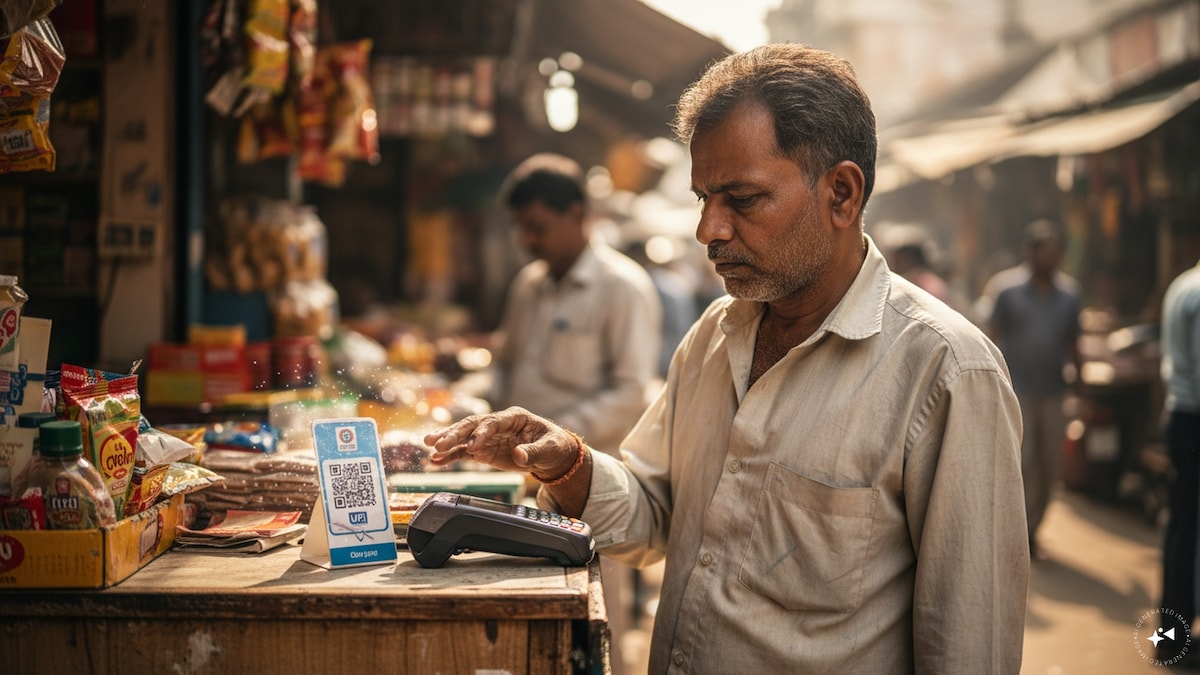
Under NPCI’s new framework, a 0.4% MDR will apply to eligible person-to-merchant (P2M) UPI transactions above ₹2,000, subject to a maximum MDR of ₹300 per transaction. The framework takes effect from October 15.
The MDR is a merchant-side charge. Customers will not be charged for making UPI payments, and person-to-person (P2P) transactions remain outside the MDR framework. UPI P2M transactions up to ₹2,000 also remain free under the standard structure.
For example, a 0.4% MDR on a ₹5,000 eligible merchant transaction works out to ₹20.
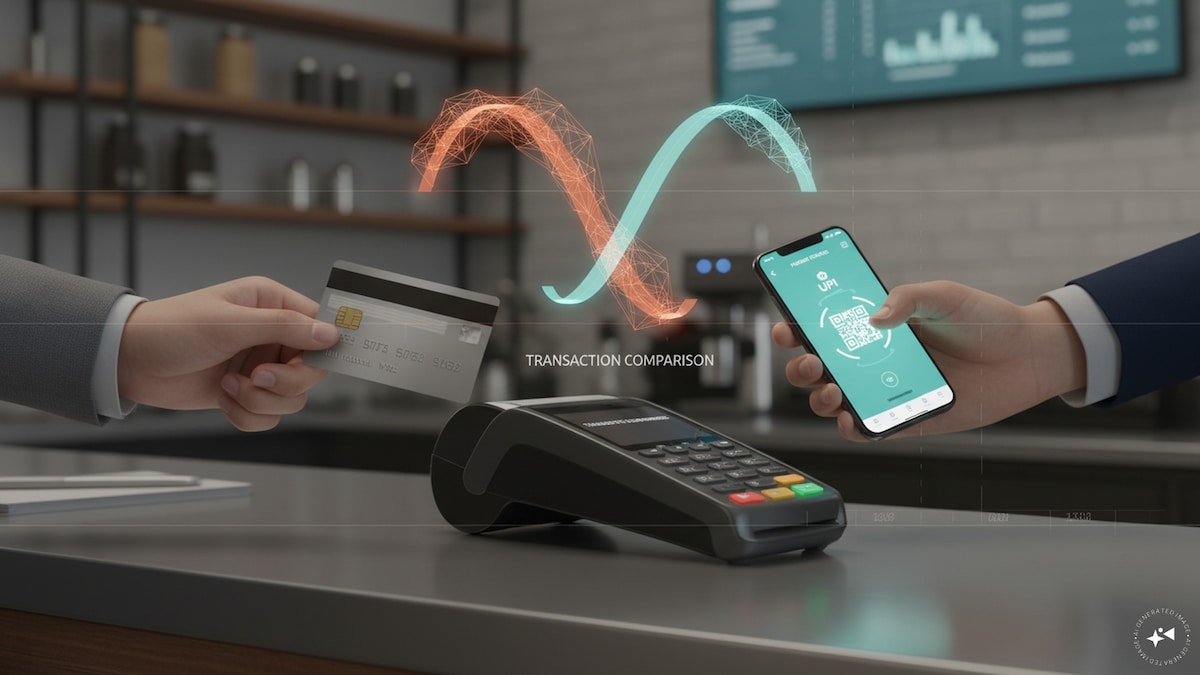
How does this compare with debit-card MDR?
Debit-card MDR has a separate RBI-prescribed framework.
Under RBI’s December 2017 rules, the maximum MDR for small merchants with annual turnover of up to ₹20 lakh was 0.40% for physical point-of-sale and online card transactions and 0.30% for QR-code-based card acceptance, subject to a ₹200 per-transaction cap.
For other merchants, the corresponding maximum rates were 0.90% and 0.80%, respectively, subject to a ₹1,000 per-transaction cap.
Therefore, the new 0.4% UPI MDR should not be described as the same as the debit-card MDR. It is comparable with some of the RBI’s historical debit-card MDR ceilings, but the applicability and structure are different.
What about credit cards?
Credit-card payments operate under a different MDR framework.
There is no single RBI-prescribed MDR rate for all credit-card transactions that can be put alongside the new 0.4% UPI rate as a like-for-like comparison. RBI’s payment-system framework has historically treated debit and credit cards differently, including because credit cards involve an unsecured credit product and a different payment structure.
As a result, the actual merchant cost of accepting a credit card can depend on the commercial arrangements between the parties involved in the card-payment ecosystem.
So, saying “UPI MDR is now the same as card MDR” would be inaccurate.
Why is the 0.4% UPI MDR significant?
The significance of the new framework is that UPI merchant payments are moving from a largely zero-MDR model to a defined merchant-side charge for a specified category of transactions.
The government has said the framework is designed to keep low-value payments protected while creating a revenue stream to support the UPI ecosystem. Transactions up to ₹2,000 remain outside the standard MDR, while the framework also provides separate rates for specified categories.
For merchants processing a large number of eligible transactions above ₹2,000, the cost could become a new component of payment acceptance expenses.
At the same time, the ₹300 cap limits the MDR on transactions of ₹75,000 and above.
Is UPI still cheaper than cards?
This needs some qualification.
Rohit Taneja, Founder & CEO, Decentro, a full-stack banking-as-a-service (BaaS) and fintech infrastructure platform, said the framework creates a path for banks, PSPs and other ecosystem participants to build sustainable business models while continuing to invest in payment infrastructure and fraud prevention.
Ranadurjay Talukdar, Partner and Payments Sector Leader, EY India, a professional services organization that provides consulting, assurance, tax, and strategy services, said UPI remains significantly cheaper than most card-based acceptance even after the new MDR.
That is an industry assessment, rather than a universal regulatory rate comparison. The actual cost to a merchant can vary depending on the payment instrument, merchant category, transaction type and commercial arrangement.
What does it mean for merchants?
For merchants, the important change is that certain UPI transactions will now carry a defined payment-acceptance cost.
A merchant processing a ₹5,000 eligible UPI payment would face a ₹20 MDR at the standard 0.4% rate. The same merchant’s cost for accepting a card payment cannot simply be assumed to be 0.4% because card MDRs operate under a different framework.
The impact will also differ by merchant category. The new UPI framework provides zero MDR for small merchants meeting the specified monthly threshold, while certain sectors have concessional rates.
Why the comparison matters
For years, one of UPI’s advantages for merchants was the absence of a conventional MDR on UPI payments. The new framework introduces a cost for a defined segment of merchant transactions.
Suresh Kumar, CEO and Founder, Emergency Pasia, operated by Suburban Finance & Investment, an RBI-registered NBFC., said the focus should be on creating sustainable payment infrastructure without adversely affecting consumers or smaller merchants.
Rohit Taneja said the next question would be how the charges are absorbed across different sectors and how the revenue is shared among ecosystem participants.
The comparison with cards is therefore less about whether UPI has become a “card-like” payment method and more about how merchants will weigh the cost of different payment options as UPI MDR comes into effect.