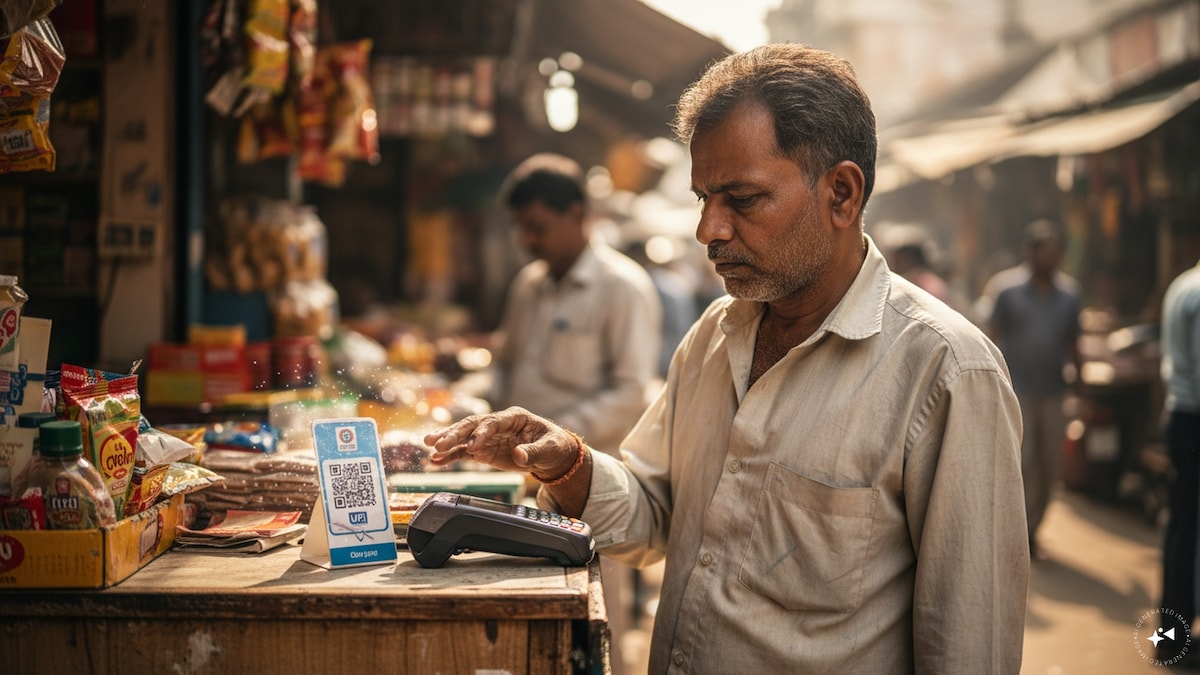
Kamath said UPI MDR could also lead to more competition in the payments market, instead of three apps accounting for more than 95% of the market.
On broking, Kamath said there is no guarantee that money transferred to a broker will actually result in a transaction. Brokers cannot force a customer to trade after transferring money, he said.
I think MDR on UPI was probably inevitable at some point, especially given how widespread UPI adoption has become. It could also lead to more competition, instead of just three apps accounting for more than 95% of the market.
That being said, there are some use cases, like…
— Nithin Kamath (@Nithin0dha) September 16, 2026
“If we can’t pass the UPI charge on to the customer, there is essentially no limit to the cost a customer can impose on a broker without generating any revenue,” Kamath said.
He gave an example of 10,000 customers each making 50 UPI transfers of ₹2 lakh in a month without executing a single trade. At the proposed MDR, this could potentially cost the broker around ₹2 crore, he said.
Kamath also highlighted the issue of quarterly settlement (QS), a Sebi regulation that requires brokers to send unused funds back to clients every month or quarter.
“Most customers then transfer these funds back to their broking accounts, with more than half of these transfers happening through UPI,” he said.
According to Kamath, regulation therefore forces this movement of money every month or quarter, and brokers could end up bearing the cost when the money comes back without generating any incremental benefit or revenue.
Kamath said Zerodha currently does not charge brokerage on equity delivery trades because the economics allow it to offer them for free. However, he said that if every UPI transfer starts carrying an additional cost regardless of whether the customer actually trades, he does not see how the broker can absorb that cost indefinitely.
“I think having an MDR is okay,” Kamath said, but suggested that a lower rate would be more suitable for broking.
He proposed an MDR of around 0.02% with a cap of ₹5 or ₹10 per transaction, saying this would be more reasonable for broking than a cap as high as ₹300.