“In India, of late we have been seeing that the merchant bankers have been pricing very aggressively and leaving very little money on the table for the investors. So, having attractive pricing, especially, the issue size is pretty large, this is 20,000 crore plus. So such a large issue, to sell, you require attractive pricing, and I think in all fairness to the investors because they have only contributed to the growth of NSE,” she said.
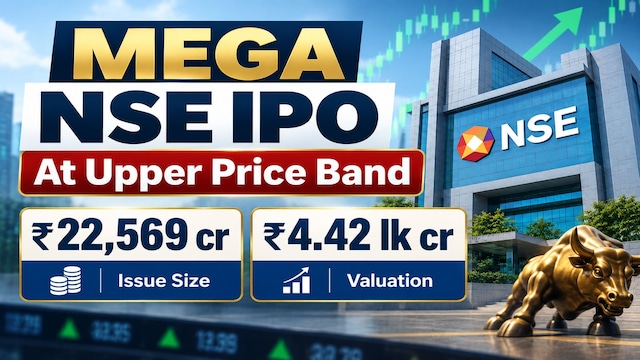
NSE’s ₹22,569 crore IPO opened at a price band of ₹1,700 to ₹1,785 per share, valuing India’s largest stock exchange at ₹4.42 lakh crore. The issue closes on September 21, with shares offered in multiples of eight and a ₹170 discount for employees.
The anchor round drew ₹2,883 crore from foreign portfolio investors and ₹3,588 crore from domestic institutions, with Life Insurance Corporation of India (LIC) as the top anchor investor at ₹450 crore — choosing to add to its stake rather than sell. State Bank of India (SBI) remains the largest seller in the offer for sale, followed by CPPIB, Randa Investments, and Morgan Stanley.
Mehta expects the listing to pull more companies toward public markets over time. She pointed to small and medium enterprises (SMEs) as a growing source of new listings, saying she regularly meets SME owners who want to list eventually. If that motivation continues, she said.
Mehta identified regulatory risk as a key concern facing NSE and its investors, citing recent tightening around futures and options (F&O) trading by the Securities and Exchange Board of India (SEBI) and past disputes over closing-price calculation methods. But she argued the impact fades quickly.
“The risks are… momentary, they are there for a short period of time,” she said, pointing to past disruptions — the shift to online trading, and the move to T+1 and T+0 settlement cycles (trades settling one day or the same day after execution) — that were followed by trading volumes recovering and continuing to grow.Asked to compare NSE with its longtime rival BSE, Mehta said both exchanges have grown and will keep operating alongside each other, adding that competition benefits the country more than a single dominant player would. Personally, she said, “BSE is close to my heart, but NSE is not far off,” noting she has watched NSE’s growth since its founding.
For the full interview, watch the accompanying video

Catch all the latest updates from the stock market here