
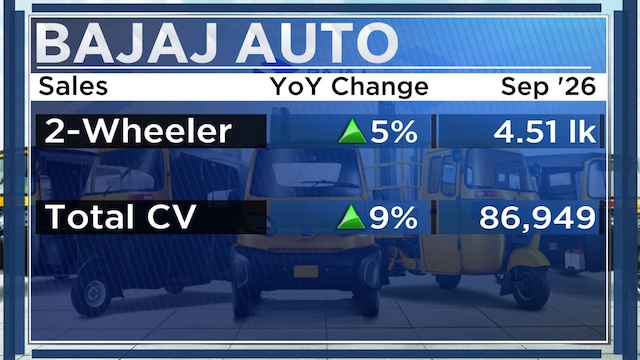
The company fell short of its 570,000-unit target last month by approximately 40,000 vehicles, a deficit driven entirely by component shortages and shipping bottlenecks rather than any underlying weakness in demand, according to Joint Managing Director Rakesh Sharma.
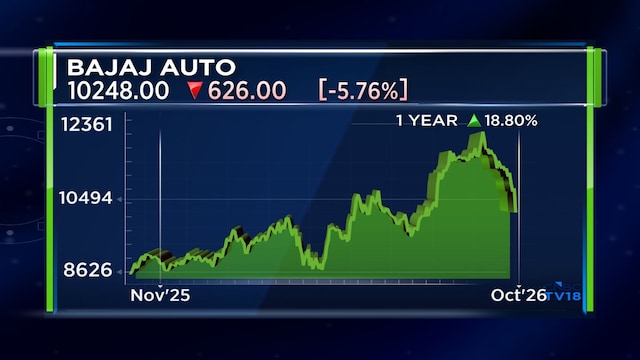
Bajaj Auto’s shares dropped 9% during the session to trade below the ₹10,000 mark, marking the stock’s steepest single-day decline in two years.
Half of the 40,000-unit September shortfall occurred in the Chetak electric vehicle lineup, where delayed component shipments capped production at 42,000 units against a planned output of more than 60,000. With the supply bottleneck resolved in recent days, the company anticipates manufacturing 62,000 Chetak units in October to meet demand that currently exceeds 65,000 vehicles.
Outbound logistics accounted for another 15,000 units of the September deficit. A shortage of shipping containers, many of which have been diverted to China-Europe and China-US trade routes, forced the postponement of export shipments despite efforts to utilise alternative ports in Gujarat and South India.
The remaining shortfall of 5,000 to 7,000 units stemmed from higher-than-expected demand for 10 new models launched in the second quarter. “Those models in the mix have shown very, very high levels of growth and we just simply ran out of the components,” Sharma noted, highlighting strong reception for the Pulsar N160 and other 150cc-plus motorcycles.
Despite the broader supply challenges, Bajaj Auto achieved its highest-ever three-wheeler production of 90,000 units, supported by robust demand across both electric and internal combustion engine models.
Export markets also showed pockets of strength, with September sales in Nigeria reaching between 35,000 and 37,000 units, compared to the earlier monthly run-rate of 30,000.
Globally, Latin America and Africa are experiencing rapid growth, while the Middle East and North Africa remain negative. Asia presents a mixed picture, with the Philippines and Sri Lanka performing well, contrasting with underperformance in Nepal and Bangladesh.
Looking ahead to the festive season, the outlook remains optimistic. Year-to-date overall growth stands at 13%, while the 150cc-plus segment expanded by a spectacular 28% between April and August. Historically, third-quarter sales are 1.4 times the April-to-August run rate, a trend the automaker expects to maintain. “We will have to see how it goes, but… I don’t see any weakness in festive per se,” Sharma added.
For the entire discussion, watch the accompanying video
