
He argues that the US economy is weaker than headline data suggests, with underlying job creation slowing and inflation pressures largely driven by temporary supply shocks rather than excessive demand.
Lee also remains constructive on India despite recent market underperformance. While he continues to favour the US as the most efficient destination for capital, he sees India as one of the strongest emerging-market opportunities and a credible alternative in global supply chains. He believes recent weakness in Indian markets could present a buying opportunity, supported by long-term investments in technology, energy and infrastructure.
All eyes are now on the Federal Reserve’s policy decision due later tonight, marking Kevin Warsh’s first meeting as Fed Chair. Investors will be watching closely for the central bank’s assessment of recession risks, inflation and the labour market. According to the CME FedWatch Tool, markets are pricing in a 99.6% probability that rates will remain unchanged, with the federal funds target range currently at 3.50%-3.75% (350-375 basis points).
This is an edited transcript of the interview.Q: The big thing that everyone will be eyeing tonight would be comments coming in from the new Fed Chair, Kevin Warsh. What are you pinning your hopes on? Will the commentary be dovish or more realistic, given the increase we’ve seen in prices since his appointment?
A: There’s been so much anticipation around the new Warsh view of the economy, the new Warsh monetary procedures and the new Warsh Fed. Let’s face it, he’s one person, and he has yet to convince the rest of the Federal Open Market Committee (FOMC) about how he views the economy. So, I would give him some time.
Let’s remember the kind of economy he is facing. The latest jobs number, which everyone says shows a strong labour market, is a head fake. If you strip away some of the World Cup hiring and the unsustainable pace of local government hiring, we are back to a world where maybe 65,000-70,000 jobs are being created per month.
When people say inflation is very high, remember these are war-induced supply shocks. They are not the result of excess demand pushing underlying inflation out of control. These are temporary distortions. The underlying economy is experiencing slow employment growth and inflation that is beginning to cool, partly because of strong productivity gains.
Warsh will spend a lot of time trying to convince markets and other FOMC members that conditions are not as good as they appear on the labour market front and not as bad as they appear on the inflation front. I think that will frame the outlook for what he does.
Most people expect him to do nothing at this first meeting because he has just arrived. It will take time for him to convince others of his view of the economy. We probably will not see a rate cut until the end of this year or early next year. I do think the Fed’s next move will be a cut rather than a rate increase.
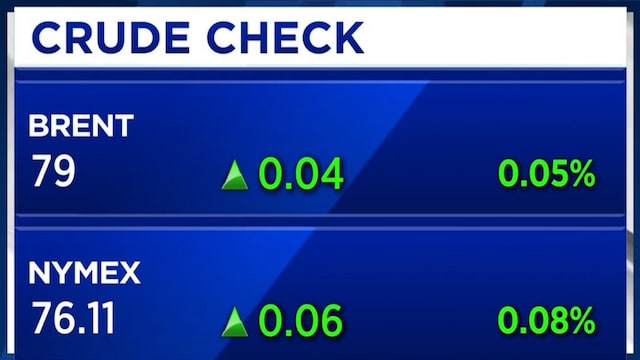
Q: Oil prices have fallen sharply, and Iran may soon be able to sell oil more freely. Will central banks, including those in emerging markets such as India, quickly factor this into their outlooks?
A: What you are saying is true. No central bank should be raising rates in response to supply shocks that are not causing underlying inflation expectations to rise. Right now, there is no reason for inflation expectations to move higher because the oil price shock has largely reversed.
However, I am less optimistic than many commentators about how quickly things can return to normal. I find it difficult to believe that if Iran could not be convinced to change its behaviour under extreme pressure, it will suddenly become fully compliant at the negotiating table.
I expect a lot of back and forth and a lot of changing positions, especially because the more radical factions within Iran are trying to assert themselves. The more moderate side is clearly looking for ways to rebuild the economy, and the West is ready to invest heavily in Iran. But that money will only come if there is confidence that the government will remain cooperative.
I don’t think that certainty will be in place for quite some time.
Q: Do you think a deal will be reached and the Strait of Hormuz will remain open?
A: It may remain open for 60 days, but what happens after that depends on who is really in charge inside Iran. If the more radical factions regain control, we could see renewed tensions and instability.
For me, I am not as comfortable as oil markets seem to be. Markets are pricing in a quick resumption of oil flows, but I have my doubts. I would be looking at alternative sources of energy, including supplies from the United States, as a buffer.
Q: As geopolitical risks ease, could capital flows start returning to emerging markets such as India? And what is your current view on gold?
A: I still view gold as a very speculative asset class. As I have said before, I would rather buy shares in India than buy ounces of gold.
It’s unfortunate for India and many emerging markets that institutions such as HSBC are recommending investors underweight India. Among all emerging markets, India has a better chance than most of becoming a credible alternative to China. That is exactly what many global supply chains are looking for.
That said, I remain a strong believer in investing where capital is most efficient, and for me that is still the United States. It would take a lot for me to allocate more money to emerging markets than to the US.
But if I am diversifying into emerging markets, India would rank much higher on my list than some recent market calls would suggest.
Q: Is that despite the recent underperformance in Indian markets, or because of it?
A: In fact, the underperformance creates a buying opportunity.
When you look at where India is headed, particularly in its relationship with the United States, there are important developments underway. These include technology transfers such as the GE fighter engine programme and, more importantly, small modular nuclear reactors that can help strengthen India’s power grid.
Watch the full conversation here

These kinds of structural investments are laying the groundwork for long-term growth. A lot of the foundation is being built right now, and that is why I remain constructive on India’s outlook.
Catch all the latest updates from the stock market here