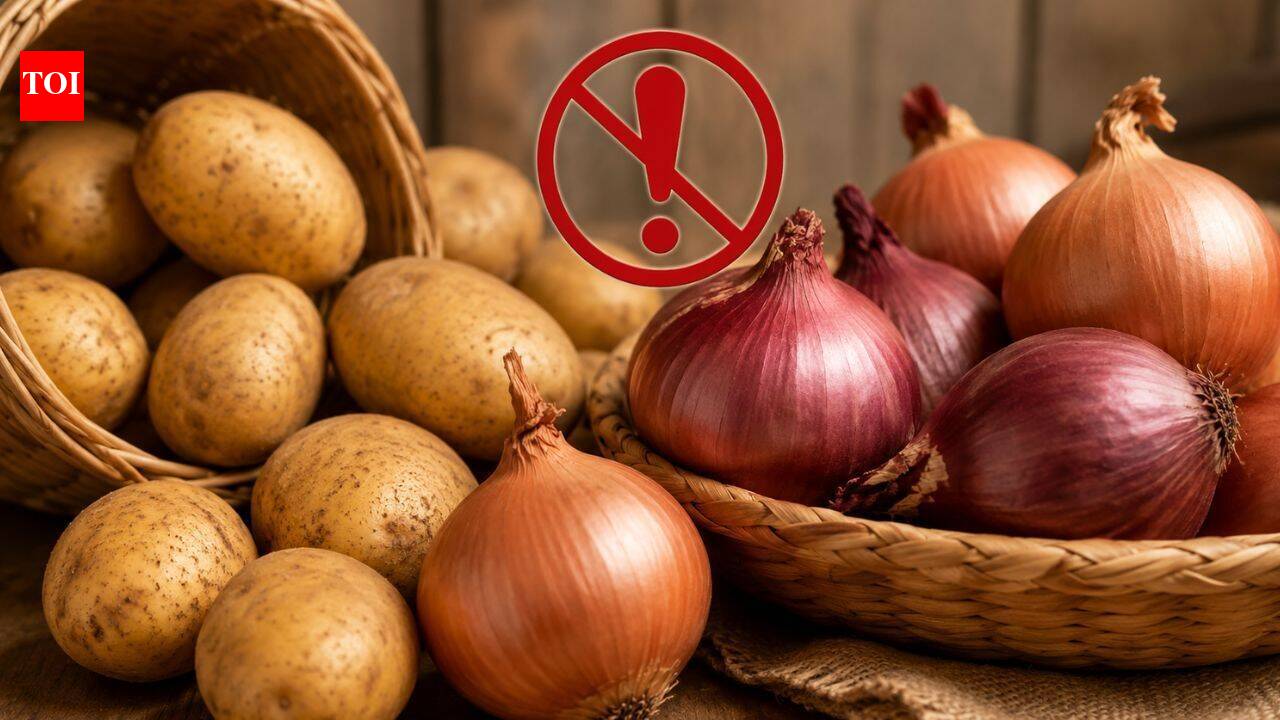
A basket of onions beside a sack of potatoes has long been a familiar sight in kitchens, pantries and cellars. At first glance, the pairing makes sense. Both are pantry staples, both last longer than many fresh vegetables, and neither usually needs refrigeration. Yet the two crops have surprisingly different storage needs. What keeps an onion firm and usable for months is not necessarily what keeps a potato in good condition.The difference comes down to biology rather than convenience. Potatoes are living tubers that continue to respond to temperature, light and gases after harvest. Onions, meanwhile, are bulbs that have already been cured to reduce moisture and extend their shelf life. Put them together under the same conditions, and each can encourage the other to deteriorate sooner than expected. Food storage experts say separating them is one of the simplest ways to reduce spoilage at home.
Why potatoes and onions should not be stored together
The problem is not simply that the two foods prefer slightly different environments. They can actively affect one another.While the ingredients may belong together in countless recipes, keeping them side by side in storage can shorten their lifespan. Potatoes may absorb onion odours, and the conditions that favour one crop are not ideal for the other.As per the EcoServants Project, onions release ethylene as part of their natural ageing process. Ethylene acts as a plant hormone and can influence nearby produce. In storage areas where air circulation is limited, exposure to this gas may encourage potatoes to sprout sooner than they otherwise would.Potatoes and onions differ in their preferred moisture levels. Potatoes generally tolerate slightly more humidity, while onions remain at their best in drier surroundings. Keeping them together often means neither receives ideal conditions.
Why potatoes need cool, dark and well-ventilated storage
Potatoes may appear dormant, but they remain active long after they leave the field. According to the International Fresh Produce Association (IFPA), potatoes keep best in a cool, dark environment at roughly 45–50°F (7–10°C). Light exposure can trigger the development of green patches beneath the skin, while warmer conditions encourage sprouting.Temperature matters as much as light. Refrigeration is not recommended because cold conditions alter the potato’s starches, converting them into sugars. This can affect both flavour and cooking performance.Potatoes also benefit from some air circulation. They are often happiest in baskets, paper bags or other containers that allow moisture to escape gradually without completely drying them out. A tightly sealed environment can create conditions that encourage decay, especially if one damaged potato begins to spoil.
How to store onions properly for maximum shelf life
Onions are handled differently before they ever reach the supermarket. They undergo a curing process that removes excess moisture from their outer layers. That preparation is one reason they can remain usable for long periods when stored properly.According to IFPA, onions prefer cool, dark surroundings too, but dryness becomes particularly important. Excess moisture can encourage mould growth and softening. For this reason, mesh bags, wire baskets and other ventilated containers are often recommended.Not all onions behave the same way. That pungent varieties generally keep longer than sweet onions because naturally occurring sulphur compounds help extend storage life. Sweet onions tend to contain more water and usually deteriorate sooner, making them better suited to relatively quick use.
How to store potatoes and onions for longer freshness
Potatoes
- Store in a cool, dark location, ideally around 7–10°C (45–50°F).
- Keep away from direct sunlight to prevent greening.
- Use paper bags, baskets or other containers that allow airflow.
- Do not refrigerate.
- Keep away from onions, garlic and ripening fruit.
- Check periodically for bruised or sprouting potatoes and remove damaged ones.
Onions
- Store in a cool, dark and dry place.
- Use mesh bags, wire baskets or ventilated containers.
- Avoid sealed plastic bags that trap moisture.
- Keep separate from potatoes.
- Store away from fruit that produces ethylene gas.
- Use sweet onions sooner, as they generally have a shorter storage life than pungent varieties.