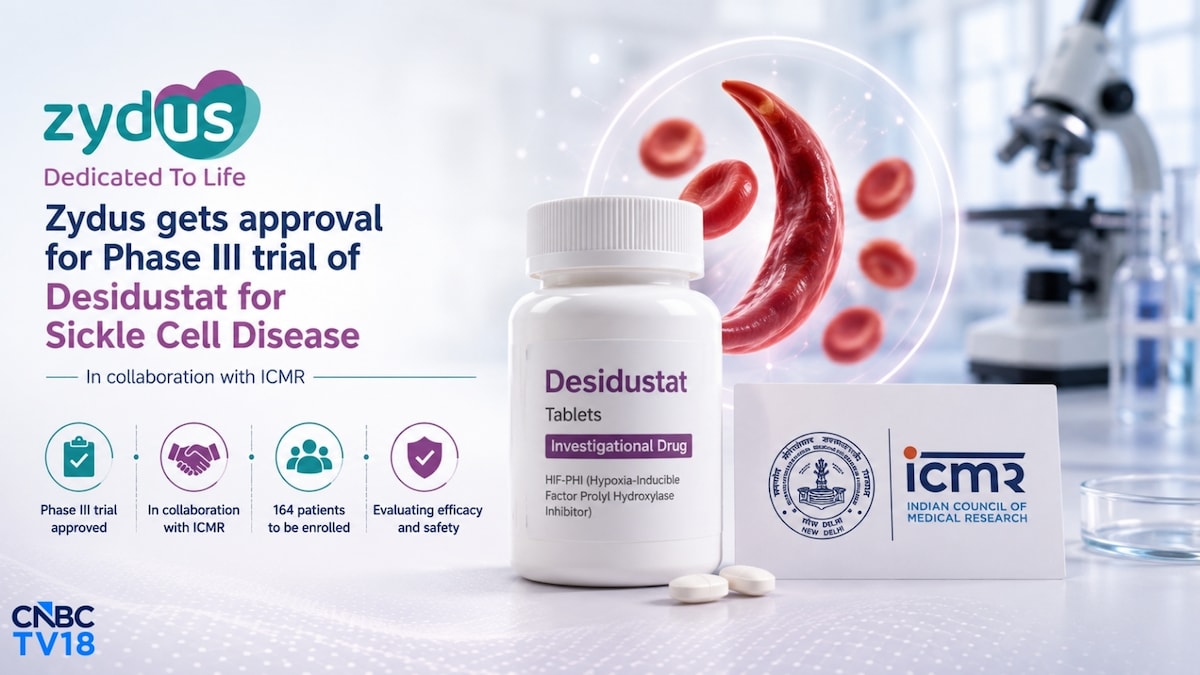
The 203-day, double-blind, randomised, placebo-controlled, parallel, multicentre study will enrol 164 patients and evaluate the efficacy and safety of Desidustat oral tablets for treating anaemia associated with sickle cell disease.
In an exchange filing, the company said that the approval follows the successful completion of a Phase II proof-of-concept trial, jointly conducted by Zydus and ICMR, which met its primary endpoint and demonstrated positive efficacy and safety outcomes.
The study showed Desidustat was well tolerated at doses of up to 150 mg, with only mild adverse events reported and no serious adverse events during the trial.
Desidustat also showed a promising trend towards improving haemoglobin levels and higher responder rates compared with placebo, while maintaining a favourable safety profile across all dose groups.
Dr Rajiv Bahl, Secretary, Department of Health Research and Director General of ICMR, said the successful completion of the Phase II study marked “a significant leap forward for patients who have limited options beyond hydroxyurea.”
“As we move towards Phase III trials, we see a huge potential of this Indian innovation in addressing severe health challenge. This collaboration reflects our commitment to clinical research through strong public-private partnerships,” he said.
According to Zydus Life, the US Food and Drug Administration (USFDA) has granted Orphan Drug Designation to Desidustat for the treatment of both sickle cell disease and beta-thalassaemia.
Zydus said the therapy represents a potential first-in-class treatment opportunity for sickle cell disease, which will now be evaluated further in the Phase III study.
Sickle cell disease remains a major public health challenge in India, particularly among tribal populations. According to estimates from the National Health Mission, around 20 million people live with the condition in the country, while approximately 50,000 children are born with sickle cell anaemia each year.
Sharvil Patel, Managing Director of Zydus Lifesciences, said sickle cell disease represents a significant unmet medical need.
“We are happy to collaborate with ICMR to develop new and effective therapeutic options for patients living with Sickle Cell Disease. Desidustat, discovered and developed at the Zydus Research Centre, reflects our commitment to advancing novel innovations and improve quality of life for patients,” he said.
Desidustat, a hypoxia-inducible factor (HIF) prolyl hydroxylase inhibitor, is already approved in India for treating anaemia in patients with chronic kidney disease (CKD) and received approval in China earlier this year for renal anaemia in CKD patients.
Shares of the company were trading off the day’s lows at ₹1,125.50 as of 10.45 am on Thursday. The stock has gained about 28% in the past six months.
Also read: Here’s why Eternal shares can rise up to 75% from current levels despite competition as per analysts